

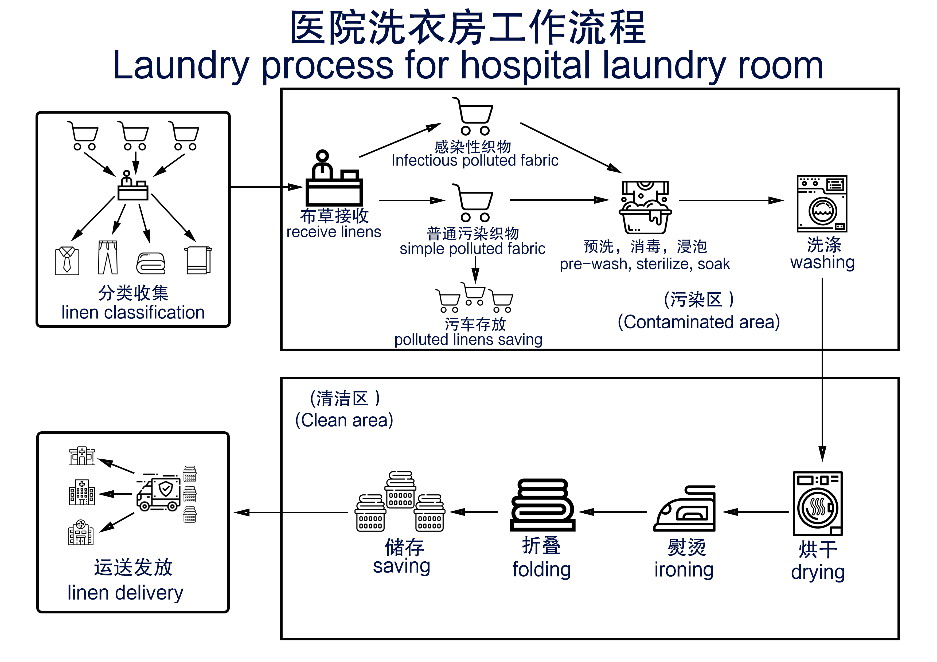
Soiling and stains on healthcare textiles may contain pharmaceutical residues, blood stains, bacteria, viruses, and other contaminants. Since many patients may potentially carry infectious pathogens, hygiene and safety are of critical importance throughout the washing and transportation process. Preventing cross-contamination of linen and the spread of pathogenic microorganisms is essential. Healthcare institutions therefore apply very strict hygiene standards to linen processing, and clean linen must not carry harmful microorganisms. For this reason, hospital laundry rooms need to be divided into a soiled area and a clean area. Healthcare linen is transported to the soiled area for washing, while drying and ironing are carried out in the clean area to ensure the required washing quality and hygiene standards. (Please refer to the diagram below for the workflow and layout of a hospital laundry room.)
The following example uses a small hospital to illustrate how to select suitable industrial laundry equipment:
Basic information and data provided by the hospital
1. 200 hospital beds
2. 200 medical and nursing staff
Calculated based on a 100% hospital occupancy rate
Laundry capacity calculation
Daily laundry volume (calculated based on one 8-hour shift per day)
| Category | Details | Daily Laundry Volume | Required Hourly Processing Capacity | Laundry Equipment Configuration |
|---|---|---|---|---|
| Patient Wards | Duvet cover 1.3 kg/pc |
2.55 kg×200 beds =510 kg |
510 kg÷8 hours ≈64 kg |
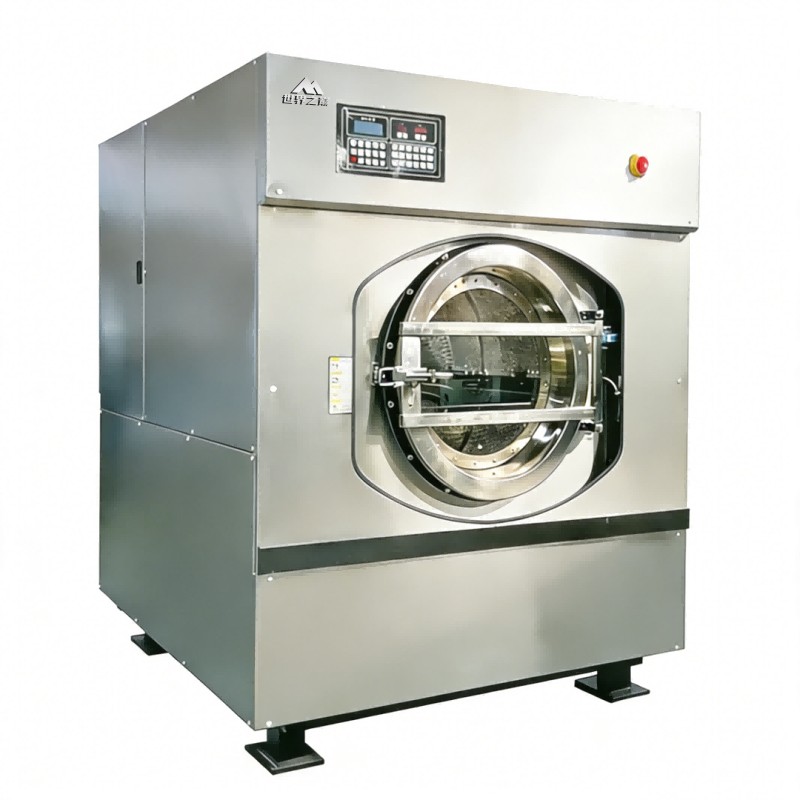
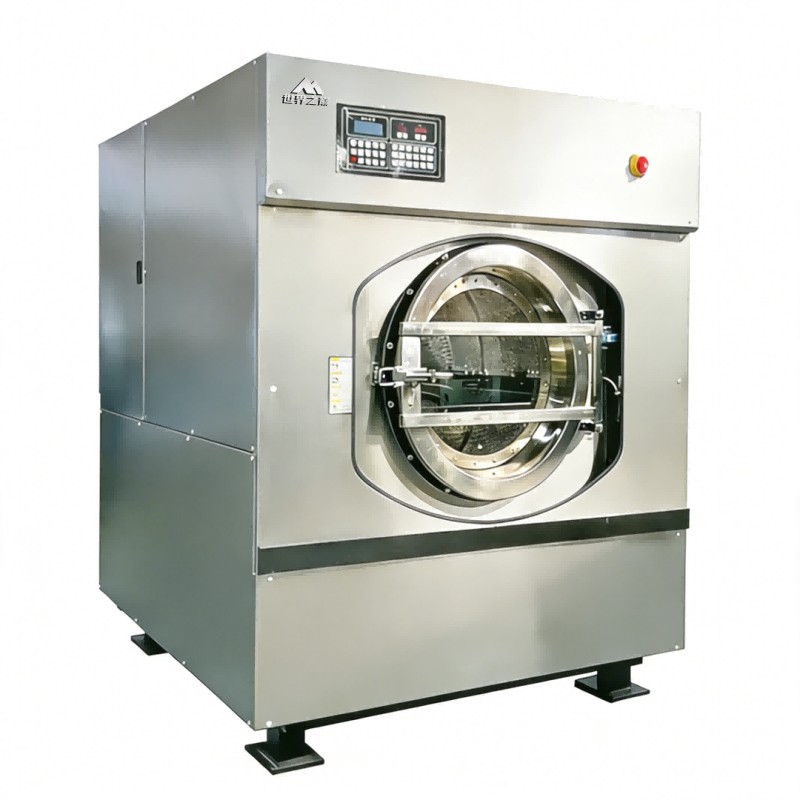
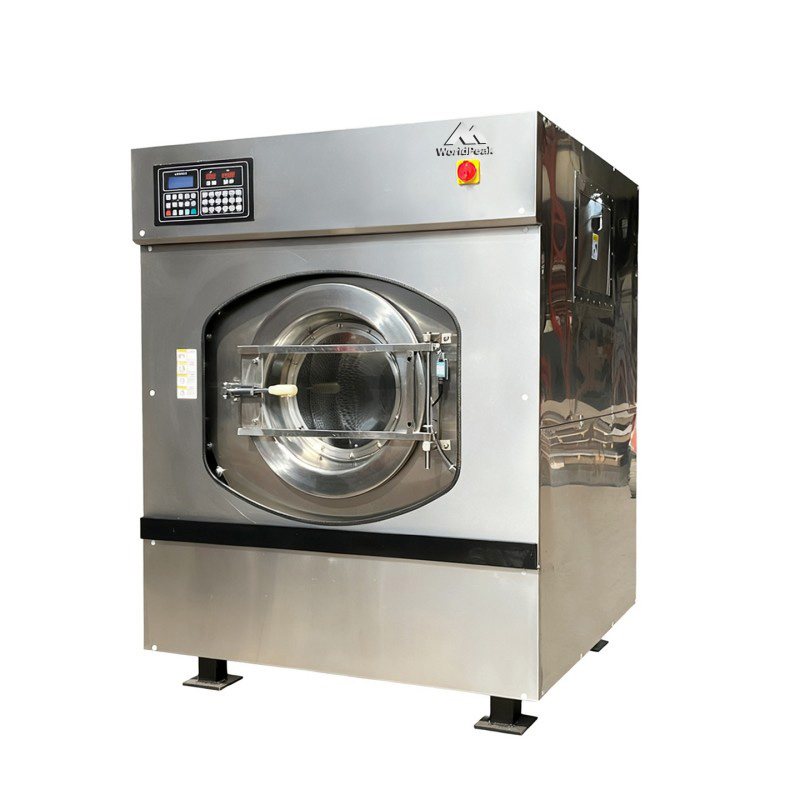
Based on one 100 kg washer-extractor. Each cycle takes approximately 60 minutes, including washing and linen loading/unloading, with a rated dry-load capacity of 100 kg. The total processing capacity over an 8-hour working day is: 100 kg×8 hours×1 unit=800 kg |
| Bed sheet 0.8 kg/pc | ||||
| Patient clothing 0.45 kg/set | ||||
| Medical and Nursing Staff | Medical uniform 1.1 kg/set |
1.1 kg×200 persons =220 kg |
220 kg÷8 hours =27.5 kg |
|
| Total | 3.65 kg | 730 kg | 91.25 kg |
Recommended Equipment Configuration
| No. | Equipment | Model | Specification | Quantity (Units) | Remarks |
|---|---|---|---|---|---|
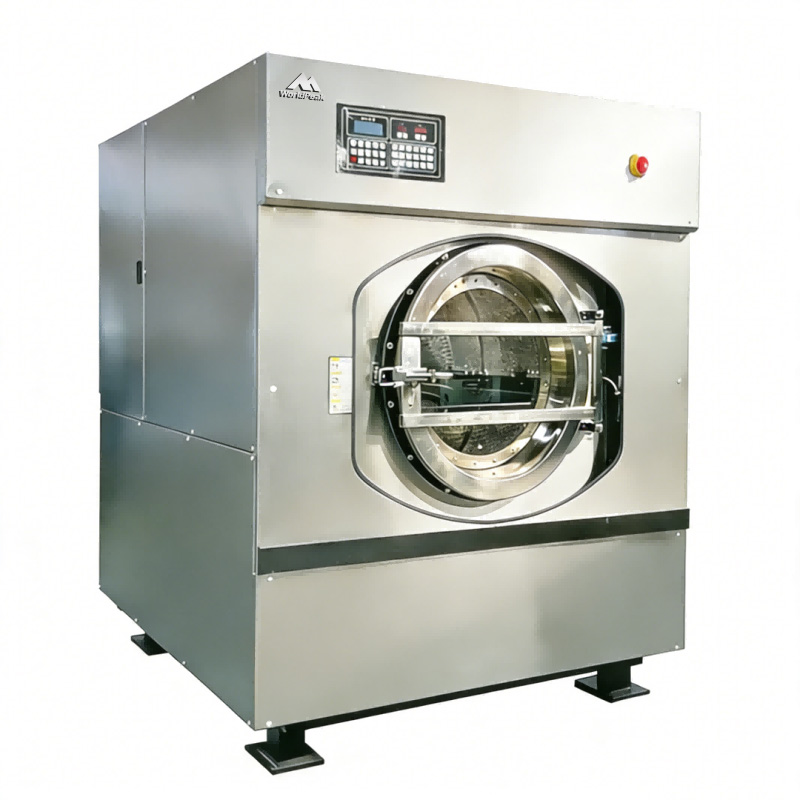
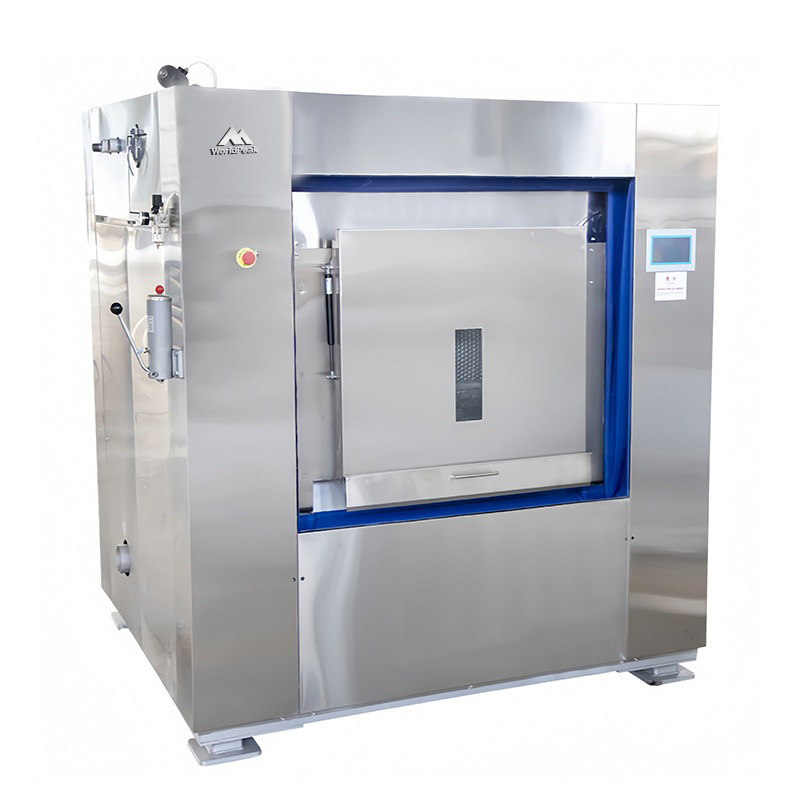
| 1 | Fully Automatic Washer-Extractor | XGQ-100F | 100KG | 1 | Barrier Type |
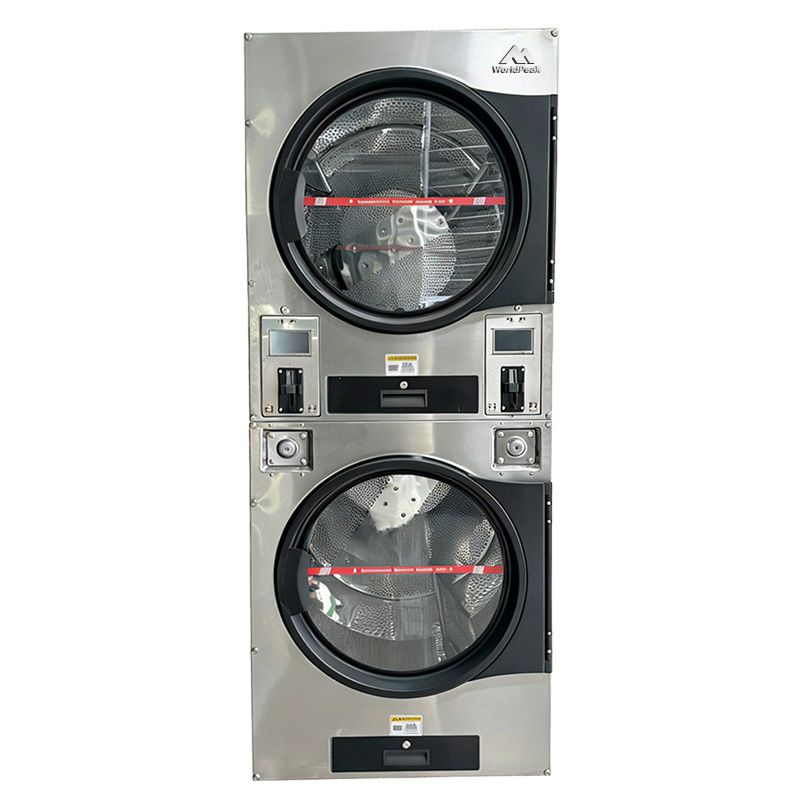
| 2 | Fully Automatic Tumble Dryer | GDZ-100Q | 100KG | 1 | Electric Heating |
| 3 | Ironing Table | HL-101-S1 | / | 1 | Equipped with Steam Iron |
| 4 | Manual Universal Garment Press | WJ-120 | / | 1 | Steam Heated |
| 5 | Steam Generator | LND0.032-0.7 | 24KW | 1 | Electric Heating |
| 6 | Compressed Air Dryer | Ambient Temperature 8m³ | 1 | 220V Power Supply | |
| 7 | Air Compressor | 30L | 1 | ||
| Total | 7 |
A hospital laundry room generally needs to process a wide range of healthcare textiles, including ward linen, doctors' coats, nurses' uniforms, operating room linen, and other items. This makes it more complicated to calculate the required laundry capacity and select the appropriate industrial laundry equipment. However, there is no need to worry. Please feel free to contact Foshan Jiejihuang Laundry Machinery Equipment Co., Ltd. We can provide a customized laundry room design solution for you free of charge. If you are planning to build or upgrade a hospital laundry facility, please contact us for consultation.
Frequently Asked Questions About Hospital Laundry Equipment Configuration
Q1: How should laundry processing capacity be calculated based on the number of hospital beds?
According to the Technical Specification for Washing and Disinfection of Medical Textiles in Hospitals (WS/T 508), capacity should be calculated by textile category: general wards typically generate approximately 2.5–3.5 kg of textiles per bed per day, while key departments such as operating rooms and ICUs generate approximately 4–6 kg per bed per day. An additional 15%–20% of dedicated processing capacity should be reserved for infectious textiles. Taking a 500-bed general hospital as an example, the average daily processing volume is approximately 1.5–2 tons. At least two 100 kg medical barrier washer extractors and corresponding drying equipment should be configured. Separate processing lines for "general textiles + infectious textiles" must be established, and cross-contamination through mixed washing is strictly prohibited.
Q2: Why must hospitals use medical barrier washer extractors? Can't ordinary industrial washing machines be used?
This is a mandatory requirement for infection control. Medical barrier washer extractors feature a double-door design. Contaminated textiles are loaded from the contaminated side, and after washing and disinfection, the clean textiles are unloaded from the clean side, creating a physical separation that ensures "dirty in, clean out" and completely prevents secondary contact between clean textiles and contaminated environments or personnel. Ordinary industrial washing machines use single-sided loading and unloading and cannot meet the requirements for separating contaminated and clean areas, particularly for infectious textiles and sterile textiles from operating rooms and other high-risk categories.
Q3: What special configuration requirements apply to drying equipment in hospital laundries?
Medical drying equipment must meet both disinfection requirements and infection-control zoning requirements: First, the equipment should provide precise high-temperature constant-temperature control and be capable of maintaining a drying temperature above 75°C for at least 30 minutes to meet thermal disinfection standards. Some models can be equipped with program locks to prevent the disinfection cycle from being interrupted arbitrarily. Second, dedicated dryers for infectious textiles should be independently installed, with unloading on the clean-side area and physical separation from the drying area for general textiles. Third, humidity sensing is recommended to prevent excessive drying from damaging the waterproof and fluid-resistant functional layers of surgical gowns and isolation gowns.
Q4: What ironing and finishing equipment should be configured in a hospital laundry?
Equipment should be configured according to the different types of medical textiles: For large flatwork textiles such as hospital bed sheets and duvet covers, roller flatwork ironers should be installed, with an ironing surface temperature of at least 150°C to provide both physical disinfection and smooth finishing. For garments such as surgical gowns, lab coats, and patient clothing, form finishers and vacuum ironing tables can be configured to maintain proper garment shape while minimizing contamination caused by manual handling. For small sterile textiles such as surgical drapes and treatment towels, dedicated folding equipment can be installed so that finished items can be transferred directly to the clean storage area without returning to the contaminated area.
Q5: What auxiliary equipment is required for a hospital laundry that meets infection-control requirements?
Four categories of auxiliary equipment are essential for infection control: ① Automated chemical dosing system: Precisely dispenses detergents and disinfectants, avoiding dosage deviations caused by manual dosing and ensuring stable and controllable disinfectant concentrations; ② Water softening equipment: Removes calcium and magnesium ions from the water to prevent soap-scale residue from reducing disinfection effectiveness while extending the service life of equipment and textiles; ③ Dedicated transport equipment for clean and contaminated areas: Enclosed carts for contaminated textiles and carts for clean textiles must be strictly separated and must never be used interchangeably; ④ Clean textile storage and disinfection facilities: Clean storage cabinets equipped with ultraviolet disinfection functions should be provided to store disinfected backup textiles and prevent secondary contamination.