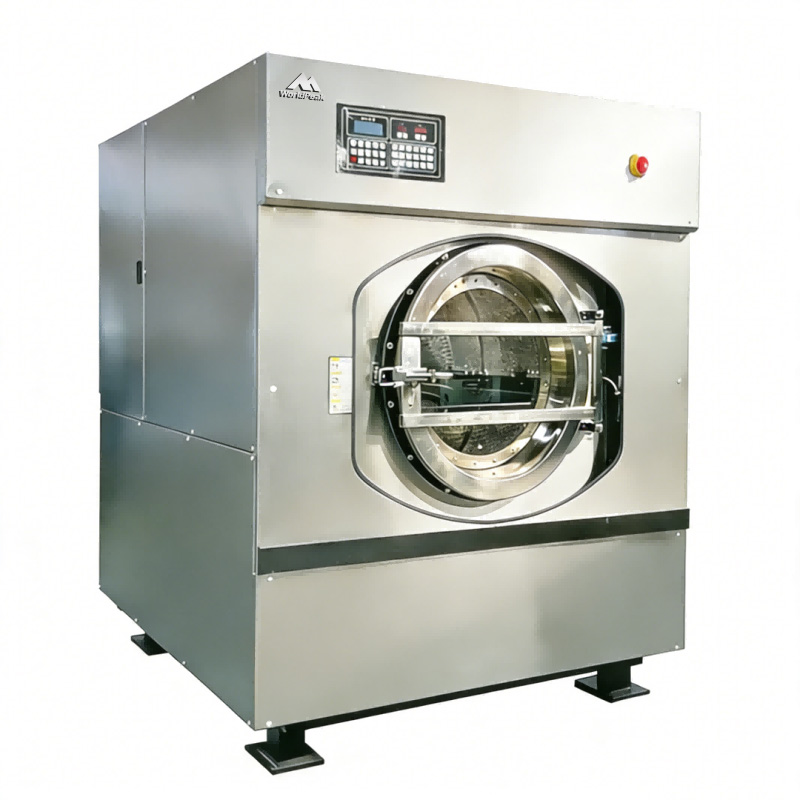

For large star-rated hotels in general, the amount of laundry is quite substantial, so a well-designed laundry room and supporting facilities have become essential hardware for hotels. To better reflect a hotel’s class and service level, how the hotel laundry room is equipped according to actual needs is also an important indicator. However, there are many types of laundry equipment, and even the same type comes in different capacities. If too many or too large machines are selected, costs will increase (space, labor, water, electricity, etc.); if too few are selected, the hotel laundry demand cannot be met. Now Shanghai Ruili Ironing Equipment Co., Ltd. will teach you how to choose suitable laundry equipment for a hotel laundry room.
Step 1: Calculate the daily laundry volume
A hotel does not only wash guestroom linens; it may also include restaurant tablecloths, sauna and foot-massage towels, and other items, so both wet laundry volume and dry-cleaning volume must be calculated.
Take a hot spring hotel as an example:
1. 700 guest rooms (occupancy rate 70%);
| Hotel linen washing volume calculation table | |||
|---|---|---|---|
| Number of guest rooms | 700 rooms | ||
| Linen type | Unit weight | Quantity per room | Total weight per room |
| Bath towel | 0.6kg | 2 pieces | 1.2kg |
| Face towel | 0.2kg | 2 pieces | 0.4kg |
| Square towel | 0.01kg | 2 pieces | 0.02kg |
| Bath mat | 0.4kg | 1 piece | 0.4kg |
| Pillowcase | 0.15kg | 4 pieces | 0.6kg |
| Bedsheet | 0.65kg | 2 pieces | 1.3kg |
| Duvet cover | 1.3kg | 2 pieces | 2.6kg |
| Total linen weight per room | 6.52kg | ||
| Occupancy rate | 70% | ||
| Daily washing volume (calculated by occupancy rate) | 3195kg | ||
2. Restaurant seating capacity: 1,400 people (about 140 tables)
3. Number of employees: about 290 (increasing by 10% every year)
4. Hot spring foot traffic: about 800 people
Daily laundry volume calculation
1. Daily guestroom laundry volume (occupancy rate 70%):
2. Banquet dining tables: 140 tables
Each table includes 1 large tablecloth, weighing 2kg each, plus 10 napkins, weighing 0.06kg each. Therefore, the linen weight per table is 2.6kg. Assuming 2 service rounds per day and a 70% dining rate, the daily wet laundry volume is: 140 tables × 2 rounds × 2.6kg × 70% = 509.6kg
3. Employees: about 290 people
There are about 290 employees. With shift work, about 70% are on duty. Employee uniforms are changed every 2 days on average, with each set weighing 1kg. About 10% of uniforms require dry cleaning, replaced weekly on average, with each dry-cleaned uniform weighing about 1.5kg.
Wet laundry volume for uniforms: 1kg × 290 people × 1/2 day × 90% × 70% = 91.35kg
Dry-cleaning volume for uniforms: 1.5kg × 290 people × 1/7 day × 10% × 70% = 4.35kg
Annual incremental employee clothing volume: 9.135kg and 0.435kg
4. Guest laundry:
For 700 guest rooms, based on a 70% occupancy rate, 30% require laundry. Wet laundry is 1kg and dry laundry is 0.5kg.
Guest wet laundry volume: 1kg × 1 day × 700 rooms × 70% × 30% ≈ 147kg
Guest dry-cleaning volume: 0.5kg × 1 day × 700 rooms × 70% × 30% ≈ 73.5kg
5. Hot spring foot traffic: 800 people/day
Each person needs 4 large bath towels per day, each weighing about 0.6kg, for a total of 2.4kg per person.
800 × (4 × 0.6kg) = 1920kg
The total wet laundry volume for the above four items is: 3195kg + 509.6kg + 91.35kg + 147kg + 1920kg = 5863kg
The total dry-cleaning volume is: 4.35kg + 73.5kg = 77.85kg
Step 2: Configure the daily washing capacity (calculated based on 12 working hours per day)
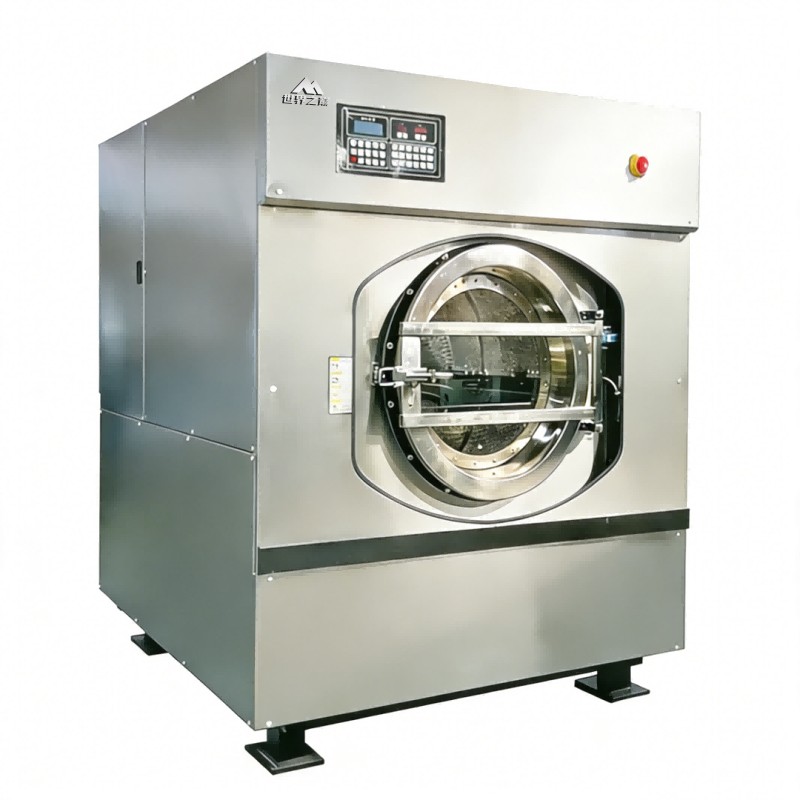
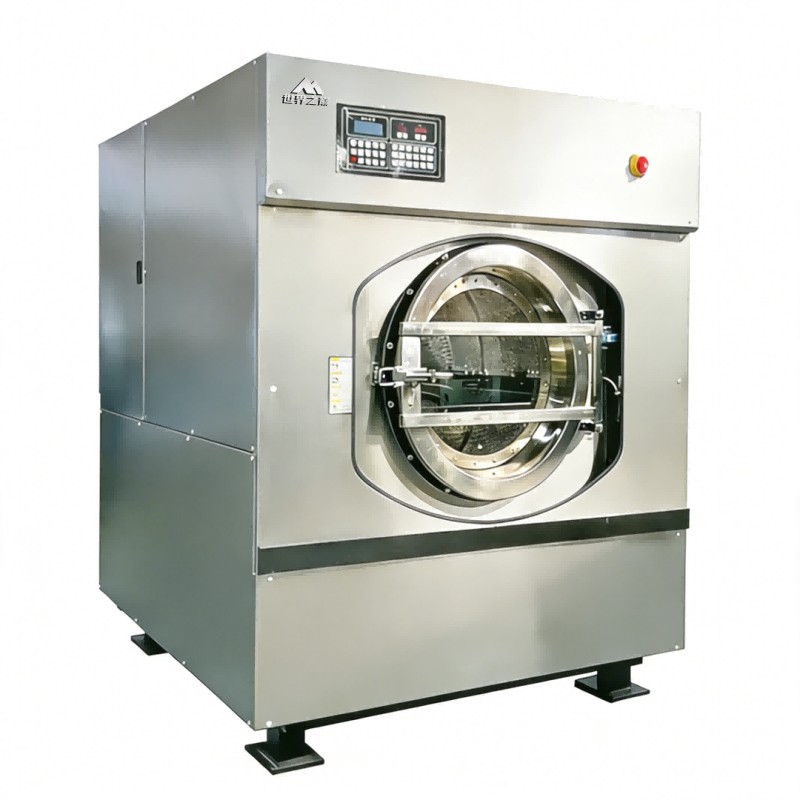
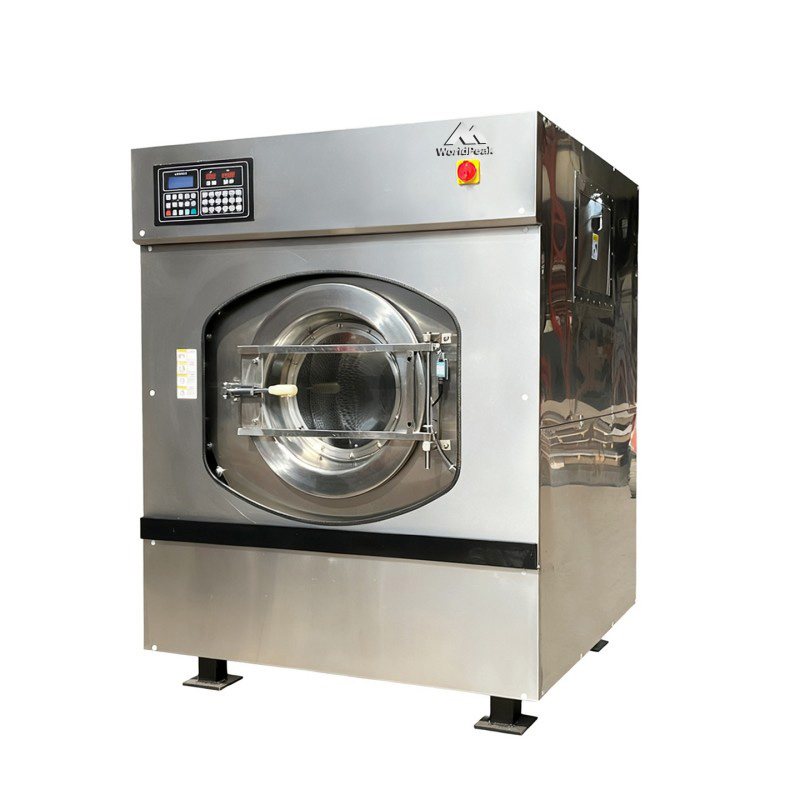
1. If equipped with 3 sets of 100kg washing machines, each cycle takes 50 minutes (including loading and unloading linens), each machine can wash 100kg of dry goods. In 12 hours per day, the washing capacity is: 100kg × (12 × 60 ÷ 50) × 3 machines = 4320kg
2. If equipped with 2 sets of 50kg washing machines, each cycle takes 50 minutes (including loading and unloading linens), each machine can wash 50kg of dry goods. In 12 hours per day, the washing capacity is: 50kg × (12 × 60 ÷ 50) × 2 machines = 1440kg
3. If equipped with 1 set of 25kg washing machine, each cycle takes 50 minutes (including loading and unloading linens), each machine can wash 25kg of dry goods. In 12 hours per day, the washing capacity is: 25kg × (12 × 60 ÷ 50) × 1 machine = 360kg
The total maximum daily washing capacity is: 4320kg + 1440kg + 360kg = 6120kg
4. If equipped with 1 set of 8kg dry-cleaning machine, each cycle takes 60 minutes including washing and drying, and it can process 8kg of dry goods. In 8 hours per day, the washing capacity is: 8kg × (12 × 1 hour) = 96kg
This can meet the daily dry-cleaning volume of 77.85kg
Laundry equipment configuration reference
| No. | Equipment name | Model/Specification | Quantity (units) |
|---|---|---|---|
| 1 | Fully automatic washer-extractor | XGQ-100F | 3 |
| 2 | Fully automatic washer-extractor | XGQ-50F | 2 |
| 3 | Fully automatic washer-extractor | XGQ-25F | 1 |
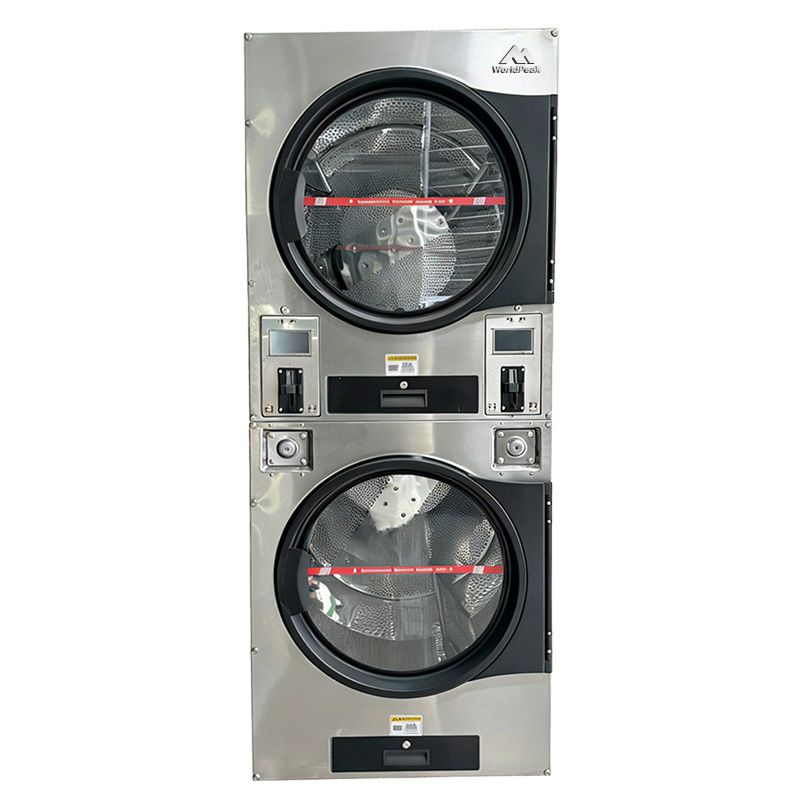
| 4 | Fully automatic tumble dryer | GZP-100Q | 3 |
| 5 | Fully automatic tumble dryer | GZP-50Q | 2 |
| 6 | Fully automatic tumble dryer | GZP-25Q | 1 |
| 7 | Flatwork ironer | TP-3300 | 1 |
| 8 | Fully automatic fully enclosed dry-cleaning machine (8kg) |
|
1 |
| 9 | Automatic folding machine | ZD3300-V | 1 |
| 13 | Spotting table |
|
1 |
| 14 | Single-arm ironing table |
|
2 |
| 15 | Stainless steel linen cart | 1180*700*830 mm | 6 |
| 16 | Stainless steel garment cart | 1200*550*1600mm | 4 |
| Total | - | - | 31 |
The above is a reference case for hotel laundry room construction. If you have any hotel laundry room construction needs, please feel free to contact us. We can design a solution according to your requirements. In addition to recommending the above laundry room supporting equipment, we can also analyze the equipment’s energy consumption and provide a layout plan for the laundry room equipment. You are welcome to inquire.
FQA
Q1: What is the typical payback period for building an in-house laundry?
Take a 150-room hotel with a 70% occupancy rate as an example: the annual outsourced laundry cost is approximately RMB 260,000 (calculated at RMB 1.8/lb).
The annual operating cost of an in-house laundry is approximately RMB 120,000 (including utilities, labor, and consumables).
The initial equipment investment is approximately RMB 550,000.
The investment payback period is approximately 4-5 years. Industrial laundry equipment typically has a service life of 12-20 years, providing significant long-term economic benefits.
Q2: Is it necessary for a small hotel with fewer than 50 rooms to build its own laundry?
Generally, a fully in-house laundry is not recommended. However, if the hotel is located in a remote area with very high outsourced laundry logistics costs, or has special linen processing requirements, the following options may be considered:
Install small-capacity commercial washer-extractors and tumble dryers for guest laundry and emergency linen turnaround.
Continue outsourcing the main hotel linen volume.
Use available staff for part-time laundry operation instead of creating dedicated laundry positions.
Q3: How do you calculate the required laundry equipment capacity?
Core formula: Number of guest rooms × Occupancy rate × Linen weight per occupied room (approximately 3-4 kg/room/day) = Total daily laundry processing volume.
For a 100-room hotel with an 80% occupancy rate: the daily processing volume is approximately 240-320 kg, and two 50-60 kg washer-extractors are generally sufficient.
For hotels with more than 300 rooms: at least three 100 kg or larger-capacity washer-extractors should be installed, together with flatwork ironers and folding machines.
It is recommended to size the equipment at 1.2-1.5 times the average daily laundry volume to provide sufficient processing capacity during peak periods.
Q4: What is the standard linen laundry process?
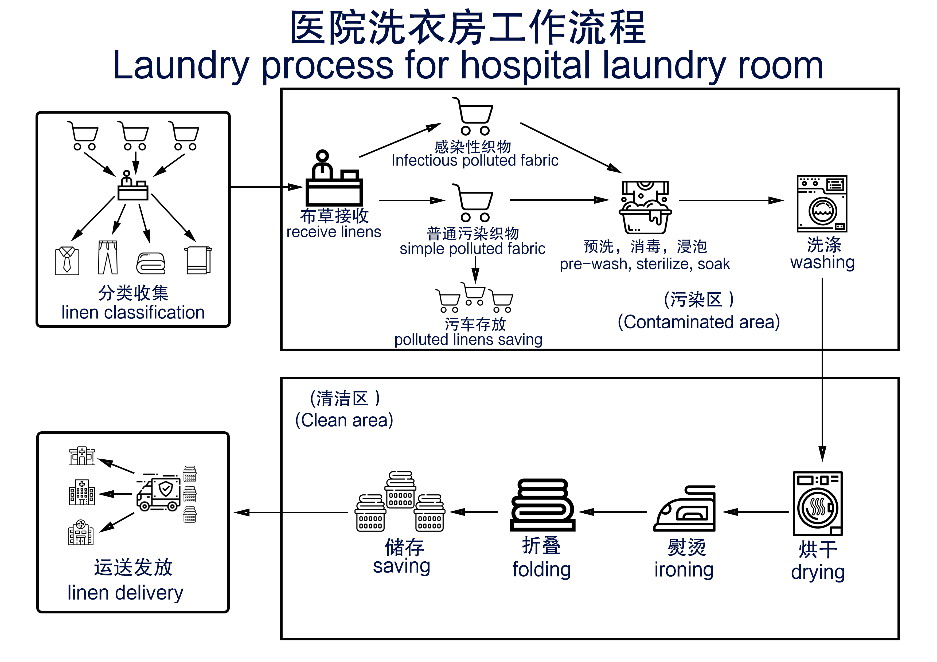
Soiled linen collection → Classification and sorting → Stain pre-treatment → Weighing and loading → Main washing cycle (prewash → main wash → rinsing → neutralization → softening) → High-speed extraction → Tumble drying / flatwork ironing → Quality inspection and repair → Folding and finishing → Clean linen storage → Distribution and issue