
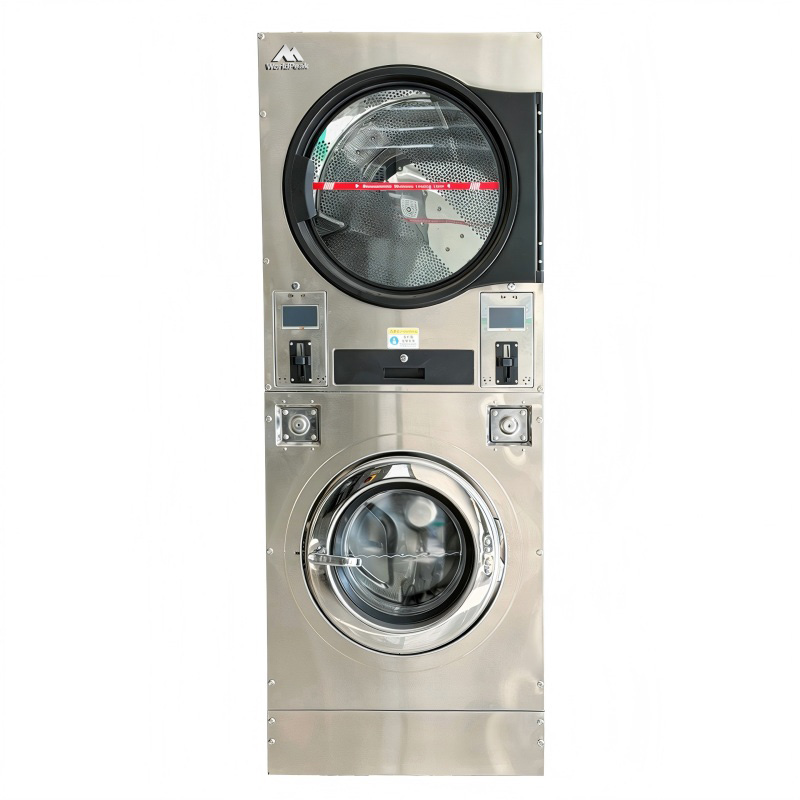
Anyone planning a hotel laundry, hospital laundry room or commercial linen plant will eventually ask the same question: how much does a complete automatic linen laundry equipment line cost?
There is no single answer.
A small hotel laundry may only need one washer-extractor, one dryer and a basic flatwork ironer. A professional linen plant handling thousands of sheets and towels every day may need several large-capacity washers, dryers, automatic feeders, multi-roll ironers and folding machines.
That difference can turn a relatively modest equipment budget into a six-figure investment.
For most buyers, the useful question is not simply “How much is the whole set?” It is “What equipment do I actually need for the amount of linen I process every day?”
What Equipment Is Included in a Complete Linen Laundry Line?
A commercial linen laundry line is usually built around four stages: washing, drying, ironing and folding.
Depending on how automated the plant needs to be, a typical system may include:
-
Industrial washer-extractors, industrial tumble dryers, flatwork ironers, automatic feeders, sheet folding machines, towel folders, conveyors, boilers or steam generators, water treatment equipment and other supporting systems.
Not every laundry needs every machine.
A hotel processing its own bed linen may still fold some items manually. A commercial laundry serving dozens of hotels usually cannot afford to do that because labor quickly becomes a bottleneck.
This is why two suppliers can both quote a “complete laundry line” and still give very different prices.
How Much Does a Complete Automatic Laundry Equipment Line Cost?
As a rough planning guide, a basic commercial linen laundry system can start at around US$20,000 to US$40,000. A more complete medium-sized system often falls in the US$40,000 to US$100,000 range, while a highly automated production line can easily exceed US$100,000.
Large plants with several washing machines, high-capacity dryers, automatic feeding, multi-roll ironing and automatic folding can cost US$150,000 to US$300,000 or more, especially when installation, steam systems and plant infrastructure are included.
These numbers should be treated as budgeting ranges rather than fixed quotations.
Current supplier listings show why the range is so wide. Industrial washer-extractors are listed from a few thousand dollars to well above US$10,000 depending on capacity and construction, while flatwork ironers commonly run into several thousand dollars. Automatic sheet folders alone can be quoted at more than US$10,000. Complete hotel or hospital laundry equipment packages can reach tens of thousands of dollars before site work and utilities are considered.
The Washer-Extractor Usually Comes First
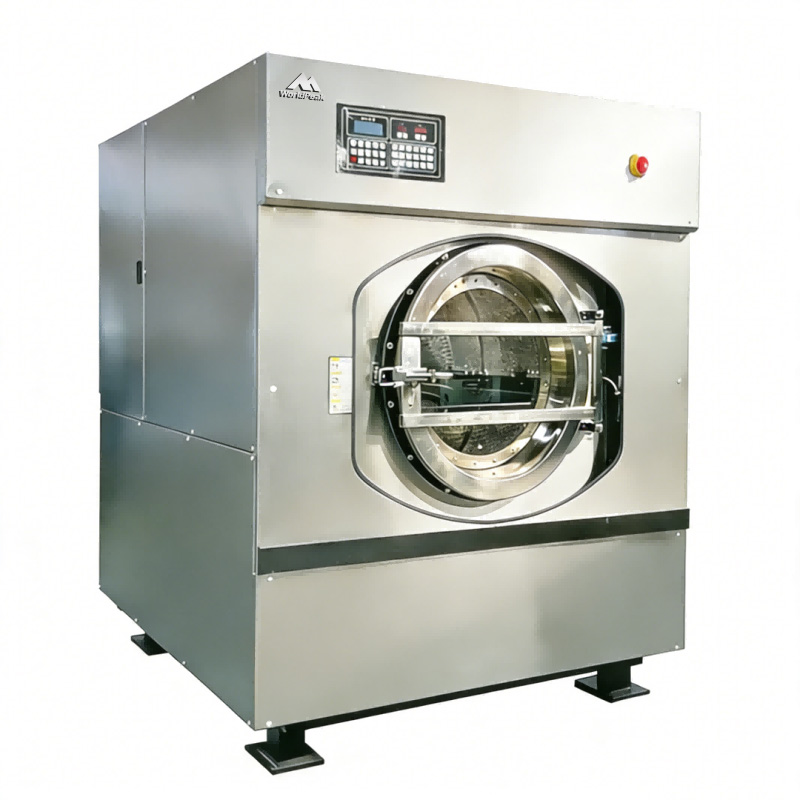
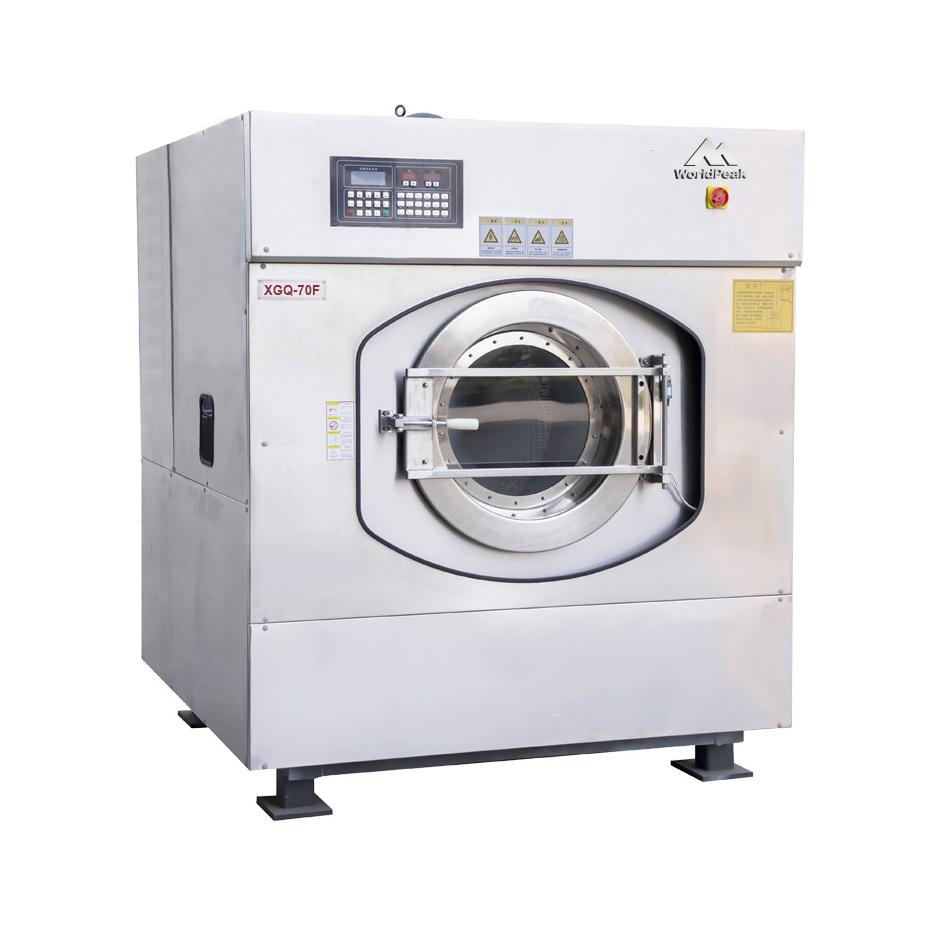
The washer-extractor is the heart of most commercial laundry systems.
Typical capacities include 30KG, 50KG, 70KG, 100KG and 120KG. Larger models are available for high-volume plants.
For a small hotel, a 30KG or 50KG machine may be enough. A commercial linen plant will often use 100KG machines or several units operating at the same time.
Capacity has an obvious effect on price, but it is not the only factor.
Two 100KG washer-extractors may look similar from the outside and still have very different costs. Stainless steel thickness, bearing quality, inverter systems, suspension design, extraction speed, heating method and control components all affect the final price.
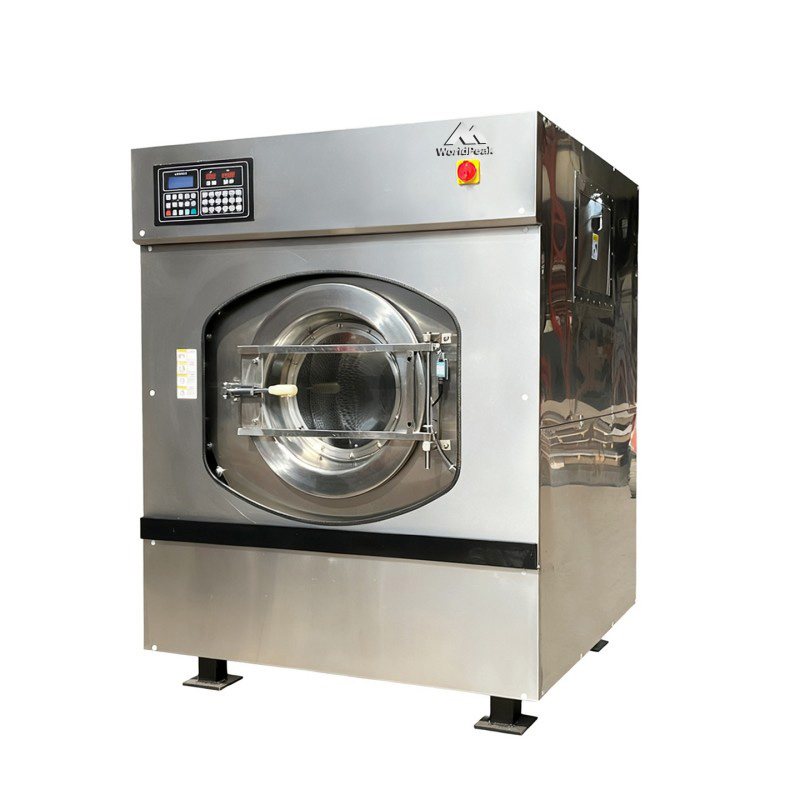
Current supplier listings illustrate the spread. Automatic industrial washer-extractors are advertised at roughly US$3,000 and upward, while some larger commercial models are quoted around US$8,000 to US$13,000.
For a laundry that operates ten or twelve hours a day, buying only on the basis of the lowest machine price is usually a false economy. Downtime matters far more when the washer is the first machine in the production line.
Don’t Undersize the Drying Section
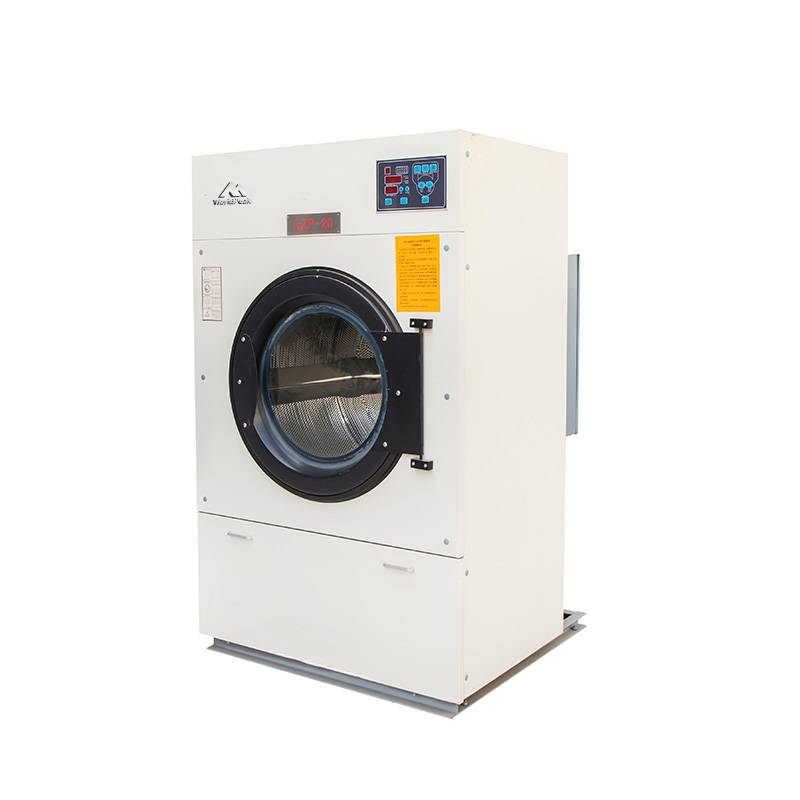
Drying capacity is often overlooked when a new laundry is planned.
If you install two large washer-extractors but only one small dryer, clean wet linen will begin piling up as soon as the plant gets busy.
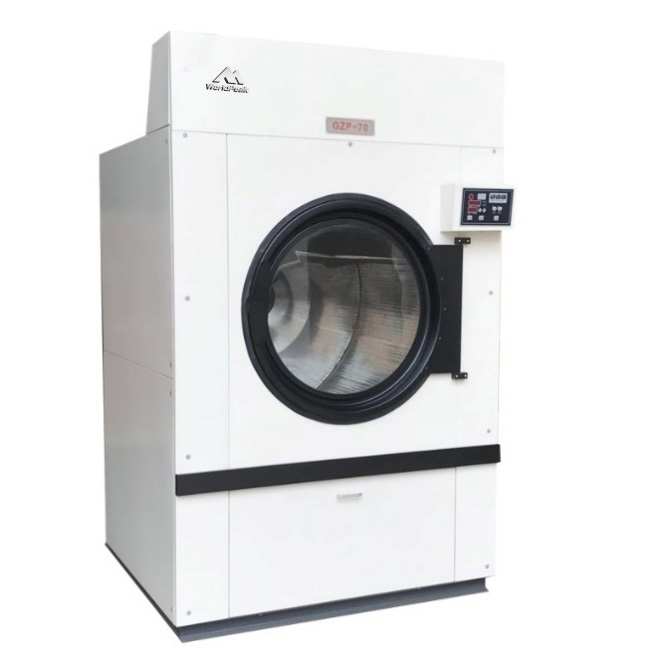
Industrial tumble dryers are available in many of the same capacities as washer-extractors, although the correct ratio depends on linen type and moisture content after extraction.
A strong extraction cycle can noticeably reduce drying time. This matters because dryers are among the heavier energy users in a laundry plant.
Steam, gas and electric dryers also have very different operating costs. A hotel without a boiler may prefer electric or gas heating, while an established commercial laundry with central steam may choose steam-heated dryers.
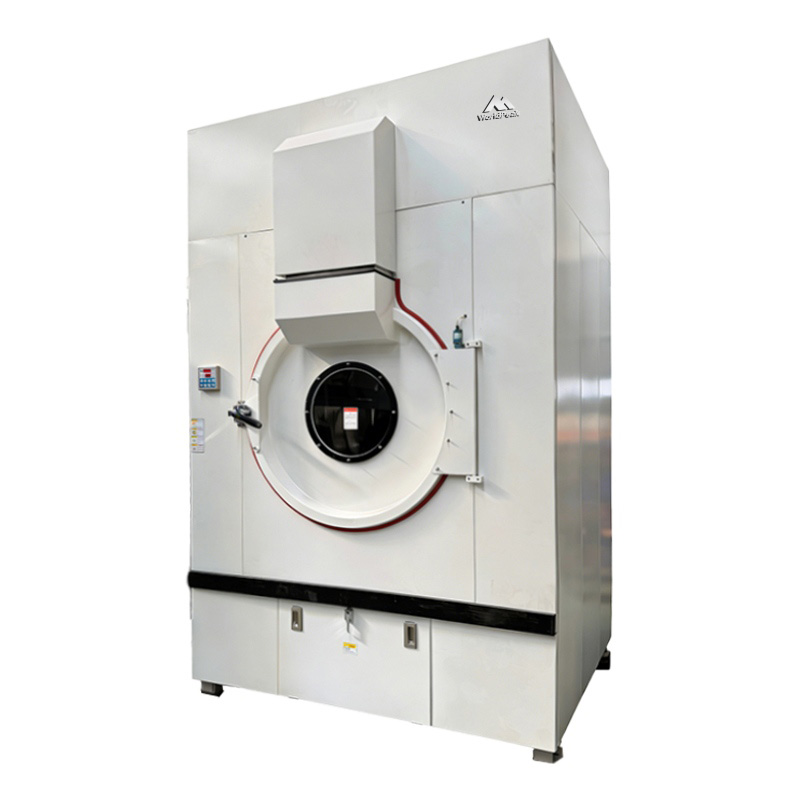
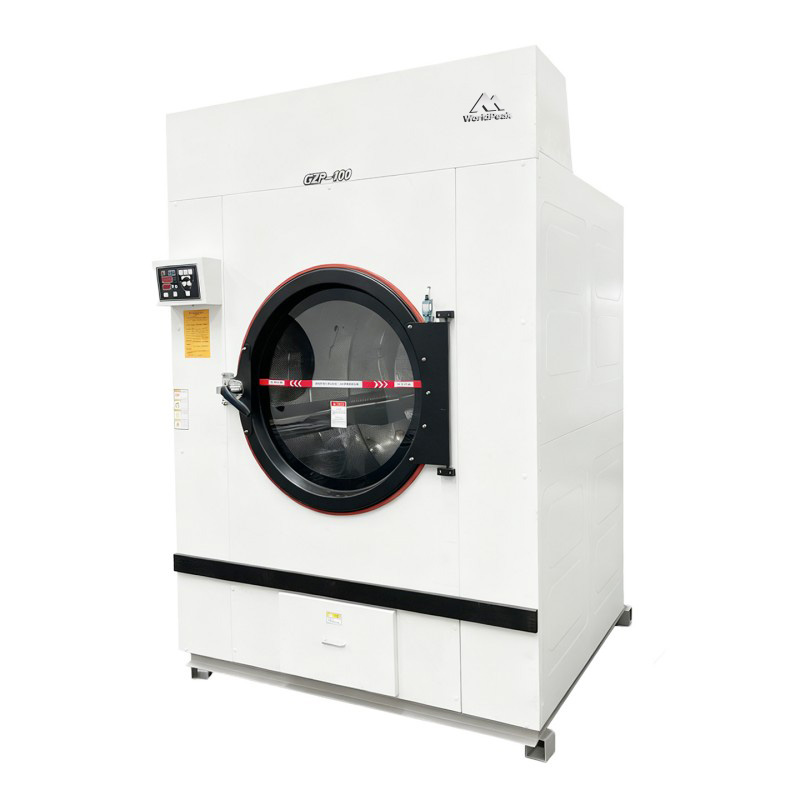
Current commercial listings show large industrial dryers ranging from roughly US$1,000 for smaller/basic units to several thousand dollars for higher-capacity machines.
The cheapest dryer is not necessarily the best match. What matters is whether it can keep up with the washing section during peak production.
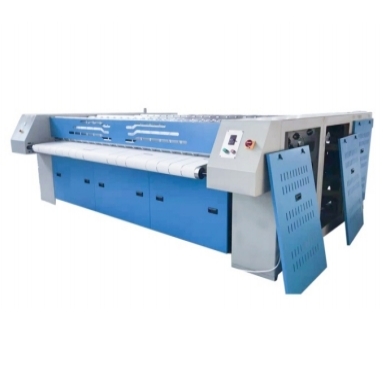
Flatwork Ironers Can Change the Budget Quickly
Hotels generate a large amount of flat linen: bed sheets, duvet covers, pillowcases and tablecloths.
These items normally need ironing after washing and drying.
For a smaller operation, a basic single- or double-roll flatwork ironer may be enough. Larger laundries usually move toward two-, three- or four-roll systems because ironing speed becomes critical once daily linen volume increases.
Current supplier listings put many commercial flatwork ironers at roughly US$3,500 to US$11,400, depending on roller configuration, working width and heating system.
This is one area where simply asking for “an ironing machine” can produce misleading quotations.
A basic ironer and a high-speed multi-roll machine may perform the same broad task, but their hourly output is very different.
Automatic Folding Is Where Labor Savings Become More Obvious
Automatic folding equipment is one of the biggest differences between a basic laundry room and a genuinely automated linen plant.
A small hotel may be able to fold sheets by hand.
A commercial laundry processing several thousand sheets every day probably cannot.
Automatic sheet folders can receive ironed linen, perform multiple folds and discharge consistently folded pieces for packing or stacking. More advanced systems can be linked directly to ironing lines.
They are also relatively expensive.
Recent listings show automatic sheet folding machines around US$11,500 to US$18,000 or more, which means adding automatic folding can significantly increase the cost of a complete laundry line.
But this is also where automation starts to replace a meaningful amount of manual work.
When labor is expensive or staff turnover is high, buyers often find it more useful to calculate the cost per piece of processed linen rather than looking only at the equipment price.
A US$30,000 Laundry Line and a US$150,000 Laundry Line Are Not the Same Business
A low-cost setup can work perfectly well in the right situation.
Suppose a hotel processes its own sheets, towels and restaurant linen. The laundry operates at a predictable volume and does not need to serve outside customers. One or two washer-extractors, matching dryers and a relatively simple ironer may be enough.
A commercial laundry plant faces a different problem.
Orders arrive from multiple hotels. Production peaks at certain times of the day. Machines may operate for long shifts. Linen needs to move quickly from washing to drying, ironing, folding and dispatch.
In that environment, additional washers, dryers and automated finishing equipment are not luxuries. They are required to prevent production bottlenecks.
That is why comparing complete laundry equipment prices without comparing daily capacity tells you very little.
How Daily Linen Volume Affects Equipment Cost
Before asking suppliers for a quotation, estimate the amount of dry linen that needs to be processed every day.
For hotels, this usually means calculating bed sheets, duvet covers, pillowcases, bath towels, hand towels and restaurant linen.
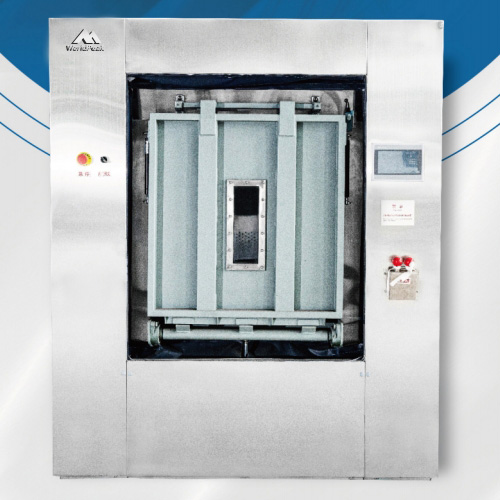
Hospitals must also consider uniforms, bedding and hygiene separation requirements.
Commercial laundry plants should use peak-day volume rather than an average quiet-day figure.
If a plant normally handles three tons per day but regularly reaches five tons during busy periods, equipment should not be sized around three tons alone.
At the same time, oversized machines also waste money.
Running a 100KG washer with only 40KG of linen on most cycles is rarely an efficient use of water, heating energy or capital.
Good equipment sizing sits somewhere between those two extremes.
What Does “Fully Automatic” Actually Mean?
The phrase fully automatic laundry equipment is used rather loosely in the market.
A washer-extractor can be described as fully automatic because washing, rinsing and extraction are controlled automatically. That does not mean the entire laundry plant is automated.
Someone may still have to load the washer, move linen into the dryer, transfer sheets to the ironer and fold the finished pieces.
At plant level, real automation means reducing those manual transfers.
A higher-level system may use automatic tilting washers, shuttle conveyors, feeding machines, high-speed ironers, folding machines and stacking systems.
The more handling stages that are automated, the higher the initial equipment cost—but also the lower the labor requirement per kilogram of linen.
When asking for a quotation, it is worth defining exactly what you expect “fully automatic” to include.
Don’t Forget the Costs Outside the Machines
The equipment quotation is not always the final project cost.
Large commercial laundry machines need adequate water supply, drainage, electricity and ventilation. Steam-heated equipment may require a boiler or steam generator. Heavy machines may require foundation work or reinforced floors.
There may also be costs for piping, electrical distribution, water softening, compressed air, exhaust ducts, freight, installation and commissioning.
For an overseas project, shipping and import duties can add another substantial amount.
This is why a supplier quotation of US$60,000 for machinery does not necessarily mean the laundry can be opened for US$60,000.
The building has to be ready for the machines.
Should You Buy the Whole Laundry Line from One Supplier?
There are advantages to doing so.
When the washer, dryer, ironer and folding equipment are selected as one system, capacity matching is easier. Installation drawings, utility requirements and production flow can also be planned together.
It can also simplify after-sales support.
That does not mean every piece of equipment has to come from the same manufacturer. Experienced laundry operators sometimes mix brands to get the machine they prefer at each stage.
For a first-time investor, however, buying a properly matched system is generally easier than assembling machines based only on individual prices.
How to Get an Accurate Laundry Equipment Quote
A supplier cannot give a meaningful complete-line price from the words “hotel laundry equipment” alone.
Before requesting a quotation, prepare the basic project information: daily linen volume, working hours per day, linen type, available floor space, local voltage, heating source and required level of automation.
Also make clear whether you need only washing and drying or a full system extending through ironing and automatic folding.
A serious supplier should be able to turn those details into a capacity plan rather than simply sending a product catalog.
So, How Much Should You Budget?
For a small hotel or in-house laundry, US$20,000 to US$40,000 may be enough for a practical washing, drying and basic finishing setup.
For a medium commercial laundry that needs higher capacity and some automatic finishing, US$40,000 to US$100,000 is a more realistic planning range.
For a larger plant built around several high-capacity machines, automatic feeding, multi-roll ironing and automatic folding, the budget can move beyond US$100,000 and may reach US$150,000 to US$300,000 or more.
There is no advantage in buying the most expensive line if production volume does not require it.
There is equally little sense in saving money on the washing section only to discover six months later that the plant cannot handle peak orders.
The best commercial laundry equipment line is not necessarily the cheapest or the most automated. It is the one where washing, drying, ironing and folding capacities are properly matched to the amount of linen the business actually handles.
That is the figure worth calculating before asking, “How much does a complete automatic linen laundry equipment line cost?”