


As campus logistics services continue to improve, boarding schools, colleges, universities, and other educational institutions are increasingly installing dedicated laundry rooms to provide students with convenient, hygienic, and reliable garment-care services. Compared with hotel laundries or large industrial laundry plants, school laundry rooms serve a dense student population, operate frequently, and mainly process uniforms, bedding, and everyday clothing. Their equipment configuration therefore focuses on safety, convenience, hygiene, durability, ease of operation, and simple management rather than extremely high production capacity. A properly designed school laundry equipment system can improve student living conditions while reducing the operational burden on campus logistics departments.
- What Equipment Does a School Laundry Room Need?
- Commercial Washing Equipment for Schools
- Commercial Dryers for Campus Laundry Rooms
- Ironing and Finishing Equipment
- Auxiliary Equipment and Hygiene Management
- Self-Service Laundry Systems for Campuses
- Equipment Configuration by School Size
- How to Choose School Laundry Equipment
- Frequently Asked Questions
What Equipment Does a School Laundry Room Need?
A complete campus laundry room does not usually require the same complex production line used by a large commercial laundry plant. Instead, the equipment should match student usage patterns, daily laundry volume, dormitory size, available floor space, and the school's preferred management model.
The main equipment categories generally include:
- Commercial washing machines or washer-extractors
- Commercial tumble dryers
- Basic ironing and finishing equipment
- Folding and sorting worktables
- Water treatment and drainage equipment
- Clean and soiled laundry storage equipment
- Self-service payment and control systems
Small boarding schools may require only several washing and drying machines, while large universities may need multiple self-service laundry stations distributed across different dormitory buildings.
Commercial Washing Equipment for Schools
Washing equipment is the core of a school laundry room. Students regularly need to wash uniforms, T-shirts, trousers, sportswear, bed sheets, duvet covers, pillowcases, towels, and other personal textiles. When laundry demand is concentrated in boarding environments, household machines may not provide sufficient capacity or durability for frequent shared use.
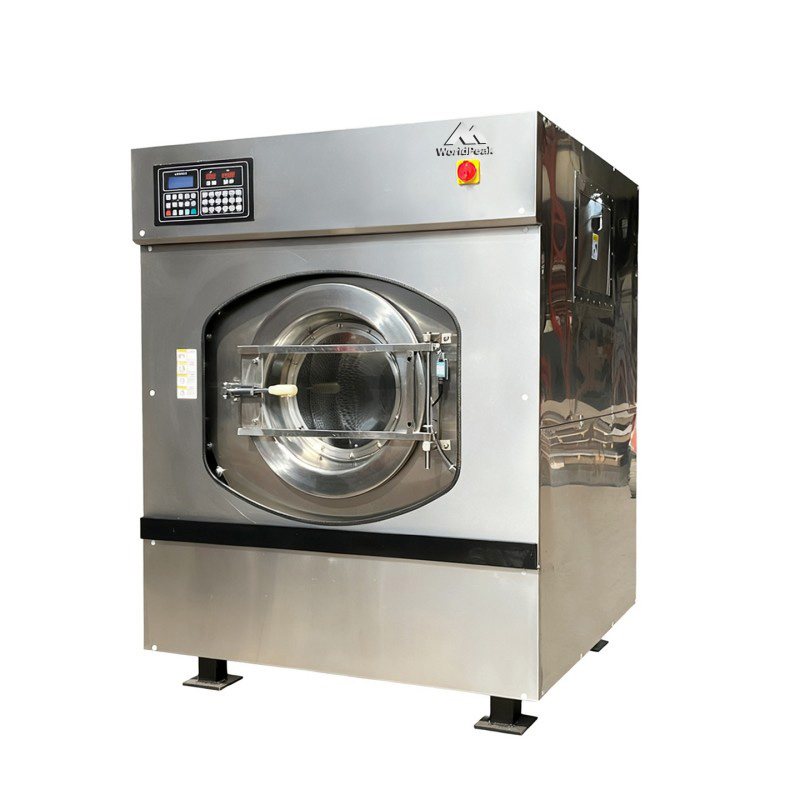
Commercial washing equipment designed for campus environments generally provides larger capacities, programmable controls, durable construction, and simplified operation. This allows schools to support either centralized laundry services or student self-service operation.
Programmable Washing Cycles
Modern commercial washing machines can provide different programs for common campus textiles, including school uniforms, cotton bedding, sportswear, and everyday garments. Washing temperature, cycle time, drum speed, rinse frequency, and extraction speed can be adjusted according to textile type.
Appropriate programs help remove perspiration, dust, food stains, and general daily soil while reducing unnecessary mechanical stress on garments.
One-Touch Automatic Operation
Simple automatic controls are particularly important in student self-service environments. Users can select a suitable program and start the machine without needing complex professional training.
For centralized laundry rooms operated by school logistics staff, programmable machines also help standardize washing procedures and reduce differences between operators.
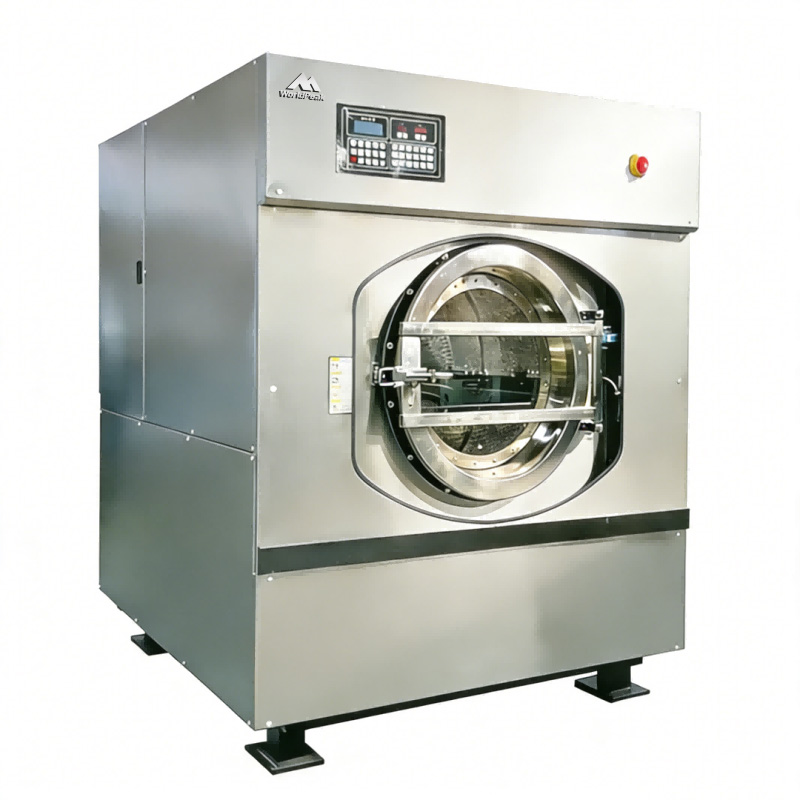
Commercial Washer-Extractors
Schools with higher daily laundry volumes may use commercial washer-extractors. These machines combine washing, rinsing, and high-speed extraction in one unit, helping reduce residual moisture before drying and improving the overall efficiency of the laundry process.
Commercial Dryers for Campus Laundry Rooms
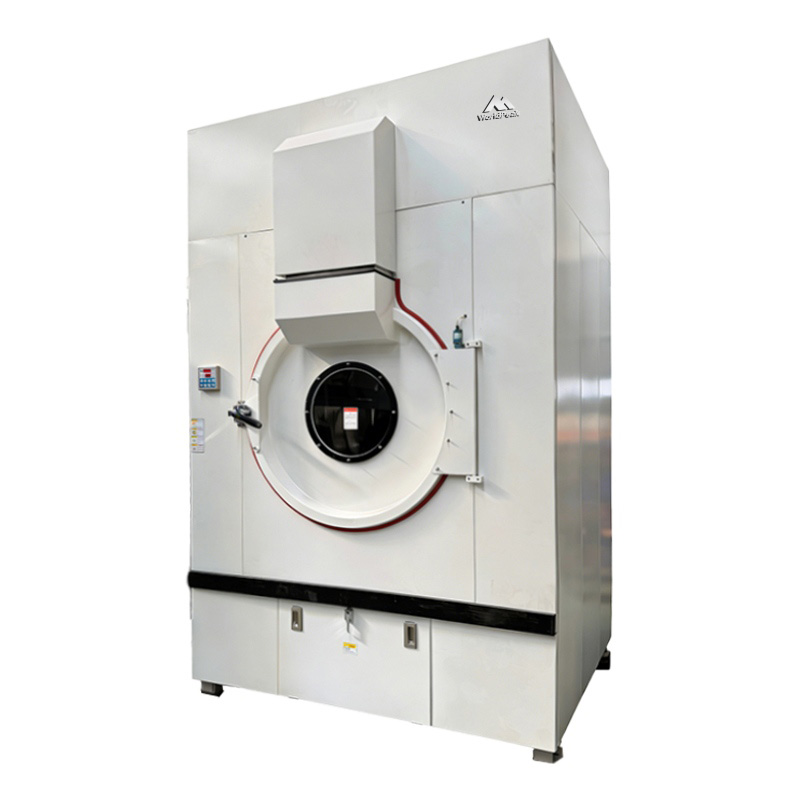
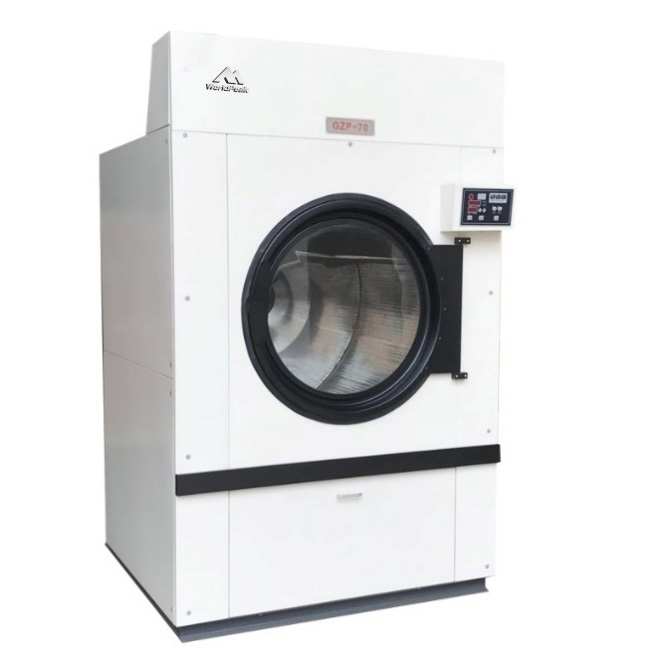
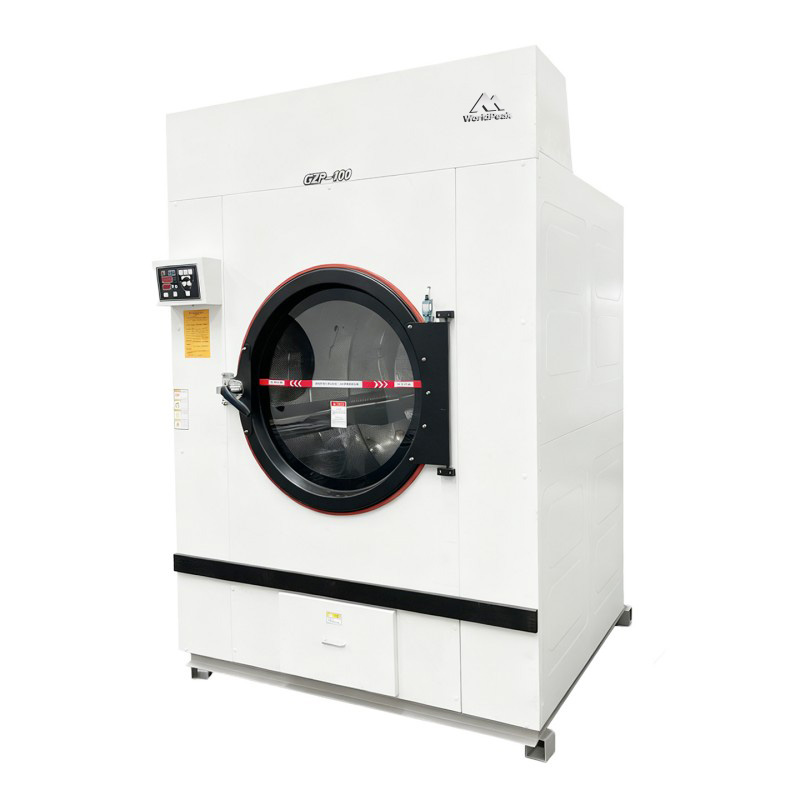
Commercial tumble dryers are another essential component of campus laundry facilities, particularly in regions with humid climates, long rainy seasons, or cold winters.
Dormitories often have limited space for naturally drying large quantities of clothing and bedding. During prolonged wet weather, garments may remain damp for extended periods, creating unpleasant odors and increasing the risk of mold growth.
Why Schools Need Commercial Dryers
A commercial tumble dryer provides a more predictable drying process than natural air drying. Temperature and drying time can be controlled according to textile type, allowing clothing and bedding to be dried efficiently throughout the year.
Drying equipment is particularly useful for:
- School uniforms
- Sportswear
- Bed sheets
- Duvet covers
- Pillowcases
- Towels
- Heavy winter clothing
Matching Washer and Dryer Capacity
The number and capacity of dryers should be reasonably matched with the washing equipment. If a laundry room has many washing machines but insufficient drying capacity, wet clothing can accumulate during busy periods and create queues.
Schools should therefore plan washing and drying capacity as one integrated system rather than purchasing the two types of equipment separately.
Ironing and Finishing Equipment for School Laundry Rooms
Not every campus laundry room requires extensive ironing equipment, but basic finishing facilities can be useful in schools that provide centralized washing of uniforms or bedding.
Ironing Tables and Finishing Workstations
Simple ironing tables or finishing workstations can be used to organize school uniforms, bedding, and other textiles after washing and drying. This helps maintain a clean and tidy appearance and supports standardized campus logistics management.
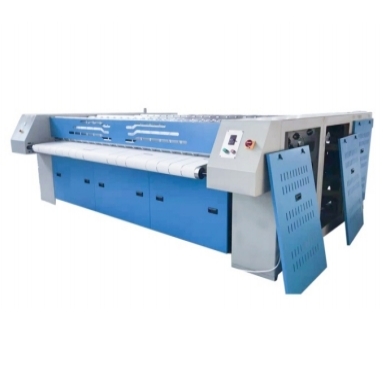
Compact Folding Equipment
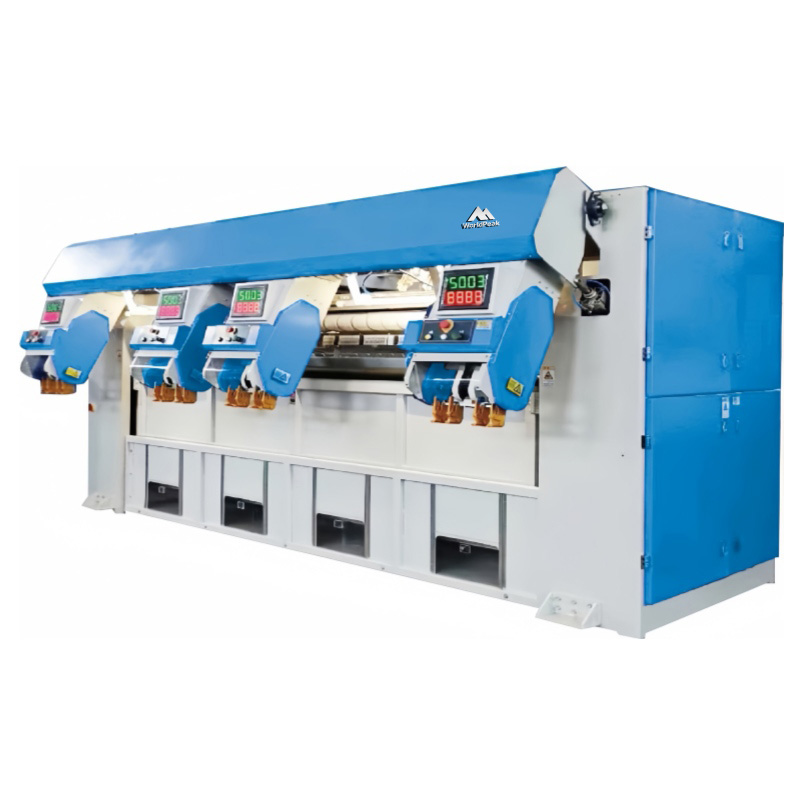
Large universities or boarding schools that centrally process significant quantities of bedding may consider compact folding equipment. Automated or semi-automatic folding can reduce repetitive manual work and improve the efficiency of organizing sheets, pillowcases, and duvet covers.
Auxiliary Equipment and Hygiene Management
For a school laundry room to operate safely and reliably over the long term, washing and drying machines should be supported by appropriate auxiliary equipment and a clear hygiene management system.
Water Treatment Equipment
Water softening or treatment equipment may be useful in locations with hard water. It can help reduce scale buildup inside heating systems, pipes, and washing machines and may contribute to more stable long-term equipment operation.
Drainage and Wastewater Management
Laundry rooms require adequate drainage capacity because multiple machines may discharge large volumes of water within a short period. Floor drainage, wastewater piping, and treatment requirements should be considered during the planning stage.
The specific wastewater treatment and discharge requirements depend on local regulations and campus environmental management policies.
Separate Storage for Soiled and Clean Laundry
Soiled clothing and clean laundry should be stored and transported separately wherever practical. Schools can use dedicated laundry baskets, carts, storage racks, or clearly defined zones to reduce unnecessary contact between unwashed and cleaned textiles.
Laundry Carts and Sorting Tables
For centralized campus laundry services, transport carts and sorting tables can simplify the collection, classification, washing, and return of garments and bedding.
Self-Service Laundry Systems for Campuses
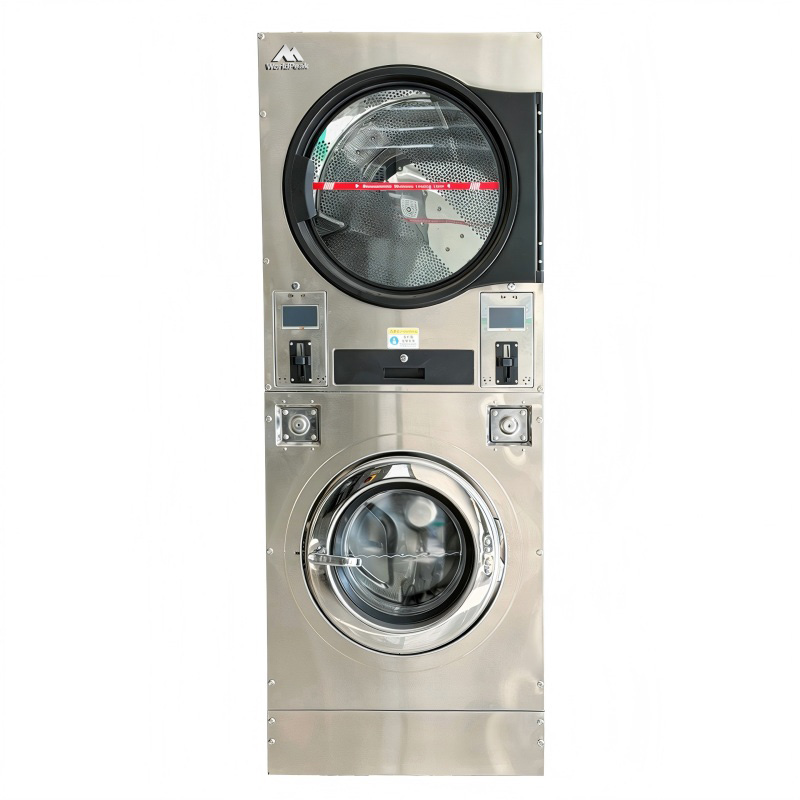
A self-service laundry system is one of the most distinctive features of modern university and boarding-school laundry facilities.
Instead of requiring dedicated staff to operate every machine, students can independently select a washer or dryer, complete payment, choose a program, and start the cycle.
Common Payment Methods
Depending on the equipment and management platform, campus laundry machines may support:
- Campus card payment
- QR-code payment
- Mobile payment
- Coin operation
- Prepaid laundry accounts
Advantages of Self-Service Laundry Systems
- Reduced staffing requirements
- Convenient access for students
- Extended operating hours
- Centralized equipment monitoring
- Simplified payment management
- Better utilization of shared laundry equipment
For large campuses, networked self-service systems may also allow operators to monitor machine status, usage frequency, fault information, and transaction records.
School Laundry Equipment Configuration by Campus Size
The ideal laundry equipment configuration varies according to student population, boarding ratio, daily laundry demand, and whether the facility operates as a self-service laundry or a centralized logistics service.
Small Boarding School
A small boarding school or compact primary or secondary school campus may require only a basic combination:
- Several commercial washing machines
- Matching commercial tumble dryers
- Basic folding or finishing worktables
- Laundry baskets and storage racks
- Simple payment or access-control system if required
This configuration is suitable where daily laundry volume is moderate and available floor space is limited.
Medium-Sized Boarding Campus
Schools with larger dormitory populations may require multiple washers and dryers installed in the same laundry area. Machines of different capacities can also be provided so students can choose according to load size.
The system may include:
- Multiple commercial washers
- Multiple commercial dryers
- Self-service payment system
- Sorting and folding tables
- Water treatment equipment
- Ventilation and drainage systems
Large University Campus
Large universities with thousands or tens of thousands of students usually benefit from distributed multi-station laundry facilities rather than one centralized laundry room.
Self-service washing and drying areas can be installed in different dormitory zones to distribute demand and reduce congestion during evenings and weekends.
Centralized School Laundry Service
Some boarding schools provide centralized washing of school uniforms, bedding, or other textiles through logistics departments. In these cases, higher-capacity washer-extractors and dryers may be more suitable than multiple small self-service machines.
The equipment configuration should be based on the total dry weight of laundry processed each day, available operating hours, staffing, and required turnaround time.
How to Choose School Laundry Room Equipment
1. Estimate Student Laundry Demand
The school should first estimate the number of students using the laundry room, boarding ratio, peak usage periods, and average number of laundry loads per student.
2. Choose the Right Machine Capacity
Small machines provide flexibility for individual users, while larger machines are more suitable for bedding or centralized washing. A combination of different capacities can improve equipment utilization.
3. Prioritize Simple and Safe Controls
Student-operated equipment should have clear interfaces, straightforward program selection, safety locks, and automatic fault protection.
4. Match Washing and Drying Capacity
A balanced washer-to-dryer ratio helps prevent bottlenecks and reduces student waiting time during peak periods.
5. Consider Noise and Vibration
Laundry rooms are often located close to dormitories. Equipment with stable suspension systems, proper installation, and lower operating noise can help reduce disruption to surrounding residential areas.
6. Check Water, Power, Drainage, and Ventilation
Before installation, schools should confirm that the laundry room has sufficient electrical capacity, water supply, drainage, ventilation, and maintenance access for all planned machines.
7. Evaluate Maintenance and After-Sales Support
Campus laundry equipment may be used by many different students every day, so reliable maintenance support, spare-parts availability, and responsive after-sales service are important for minimizing downtime.
Frequently Asked Questions About School Laundry Equipment
What equipment is needed for a school laundry room?
A typical school laundry room requires commercial washing machines, tumble dryers, laundry baskets, sorting or folding tables, and appropriate drainage and ventilation. Larger campuses may also use self-service payment systems, water treatment equipment, and centralized management platforms.
Are commercial washing machines better than household machines for schools?
Commercial machines are generally more suitable for shared campus environments because they are designed for higher operating frequency, larger loads, and more intensive daily use. The best choice depends on student numbers and actual laundry volume.
How many washing machines does a school need?
The required number depends on student population, boarding rate, operating hours, average laundry frequency, and machine capacity. Large universities may distribute multiple laundry stations across several dormitory buildings to reduce waiting times.
Do school laundry rooms need dryers?
Dryers are highly useful in boarding schools and universities, especially in regions with humid or rainy weather. They provide predictable drying times and reduce dependence on limited outdoor or balcony drying space.
What size washing machine is suitable for a campus laundry?
For self-service student laundries, smaller commercial machines can provide convenient individual-load washing. For centralized uniform or bedding services, larger-capacity washer-extractors may be more efficient.
Can a school laundry room operate without staff?
Yes. A properly configured self-service laundry can use card, QR-code, coin, or mobile payment systems and allow students to operate washers and dryers independently. Regular inspection, cleaning, and maintenance are still required.
How can schools reduce laundry room queues?
Schools can increase machine numbers, distribute laundry stations across dormitory areas, balance washer and dryer capacity, provide machines of different load sizes, and use digital systems that allow students to check machine availability.
How should clean and dirty laundry be managed?
Where centralized laundry services are provided, soiled and clean textiles should be sorted, stored, and transported separately whenever practical. Dedicated baskets, carts, shelves, and clearly defined areas can support better hygiene management.
Conclusion
A well-designed school laundry room should focus on safety, convenience, hygiene, durability, and ease of management. Unlike large industrial laundry plants that prioritize maximum production capacity, campus laundry systems are designed around student convenience, frequent shared use, straightforward operation, and stable day-to-day service.
For small boarding schools, a basic combination of commercial washers, dryers, and simple finishing equipment may be sufficient. Large universities may require multiple self-service laundry stations, intelligent payment systems, and centralized monitoring, while schools that provide centralized uniform or bedding services may benefit from higher-capacity washer-extractors and dryers.
By carefully considering student population, daily laundry demand, machine capacity, available space, utilities, payment methods, hygiene management, and maintenance support, schools can build a practical campus laundry equipment system that improves student living conditions and supports efficient long-term campus logistics management.