When purchasing industrial laundry equipment, hotels, nursing homes, hospitals, and commercial laundry plants usually focus first on equipment quotations. However, prices for machines with similar functions can vary significantly across the market. There is no single standard industrial laundry equipment price, because quotations are affected by machine capacity, automation level, construction materials, heating method, brand, and supporting systems. Buyers should therefore avoid comparing only the listed price of an individual machine. A better approach is to evaluate the complete equipment configuration together with installation, energy consumption, maintenance, and long-term operating costs.
- Industrial Laundry Equipment Price Overview
- Industrial Washer-Extractor Prices
- Industrial Tumble Dryer Prices
- Flatwork Ironer and Folding Machine Prices
- Complete Laundry Equipment Package Prices
- Factors Affecting Industrial Laundry Equipment Quotations
- Supporting Equipment and Additional Costs
- New vs. Used Industrial Laundry Equipment
- What Should Be Included in a Laundry Equipment Quotation?
- Frequently Asked Questions
Industrial Laundry Equipment Price Overview
The price of industrial laundry equipment varies considerably according to machine type and processing capacity. Small washer-extractors used in hotels or institutional laundry rooms may cost only tens of thousands of RMB, while complete automated laundry production lines for large commercial plants can require an investment of several hundred thousand to more than RMB 1 million.
For this reason, buyers should first determine daily linen volume, operating hours, textile categories, required automation level, available utilities, and future expansion plans before requesting a quotation.
Industrial Washer-Extractor Prices
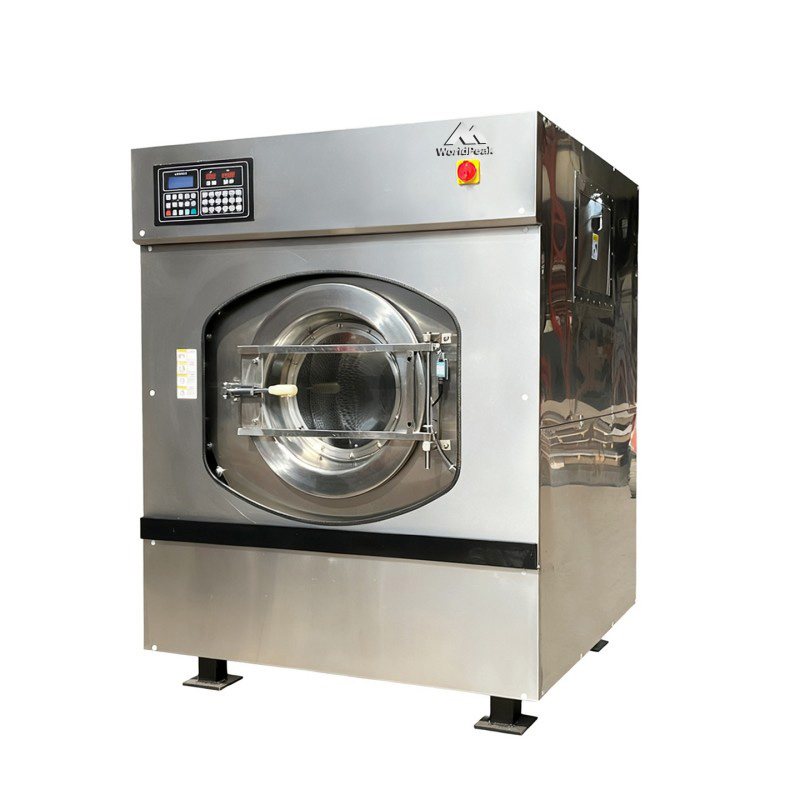
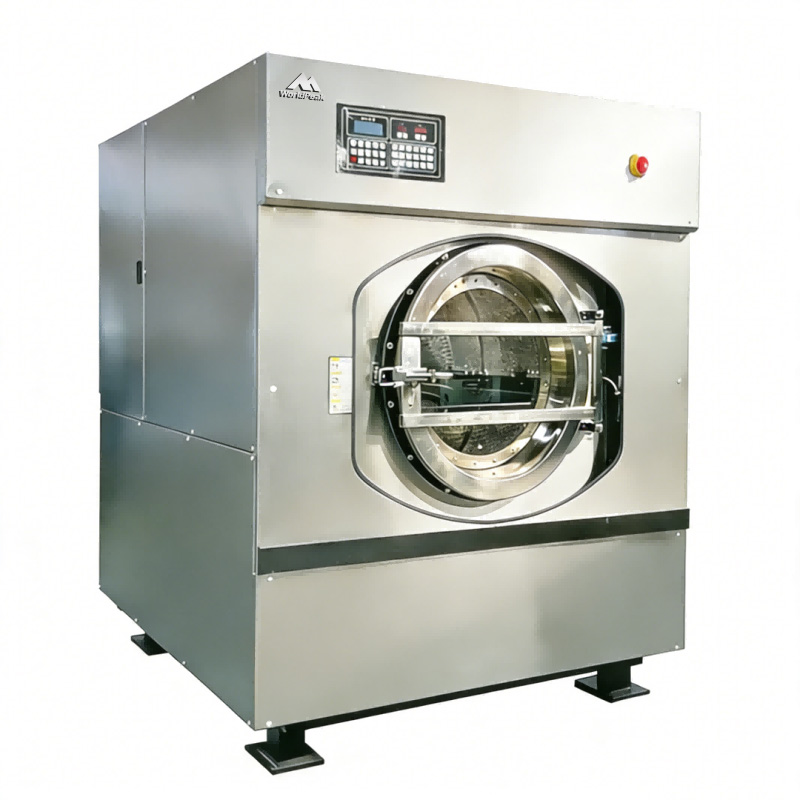
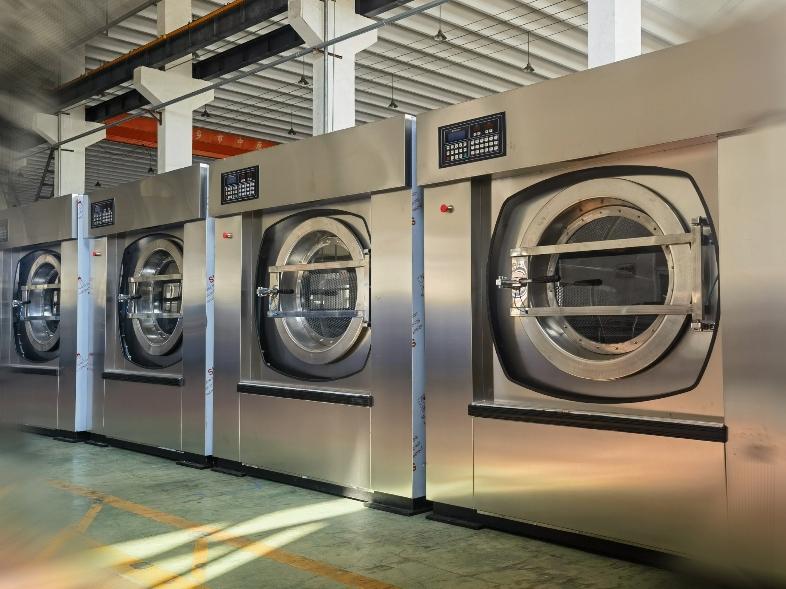
Industrial washer-extractors are the core machines in most commercial laundry systems. Their prices are mainly influenced by capacity, drive system, extraction speed, stainless steel construction, heating method, and control system.
20-30 kg Washer-Extractor Price
Small industrial washer-extractors with capacities of approximately 20-30 kg are commonly used in small hotels, nursing homes, schools, spas, and other in-house laundry facilities. Basic models are generally priced at around RMB 18,000-35,000.
50-100 kg Washer-Extractor Price
Fully automatic washer-extractors in the 50-100 kg range are among the most widely used machines in commercial linen processing. Standard fixed-frequency models may cost approximately RMB 45,000-70,000, while variable-frequency models with more robust stainless steel construction typically range from RMB 70,000-100,000.
Medical Barrier Washer-Extractor Price
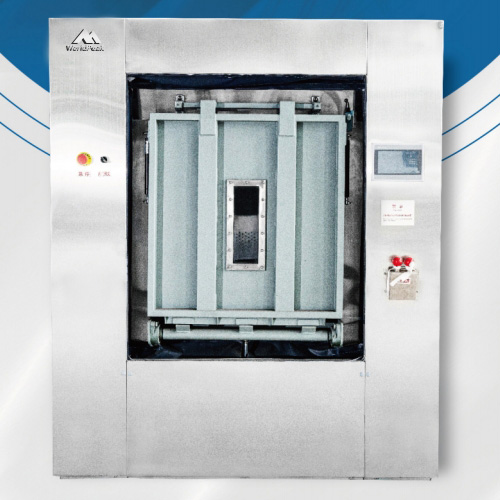
Hospitals and healthcare laundries may require double-door barrier washer-extractors to support physical separation between contaminated and clean linen areas. Compared with conventional washer-extractors of similar capacity, barrier models may increase the purchase price by approximately RMB 30,000-50,000, depending on configuration and hygiene requirements.
Industrial Tumble Dryer Prices
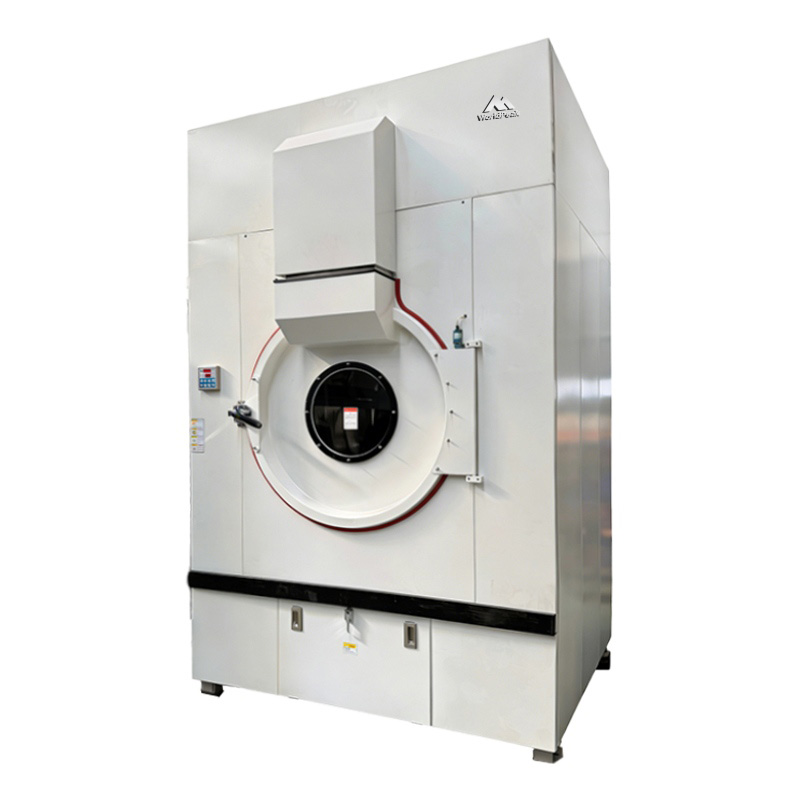
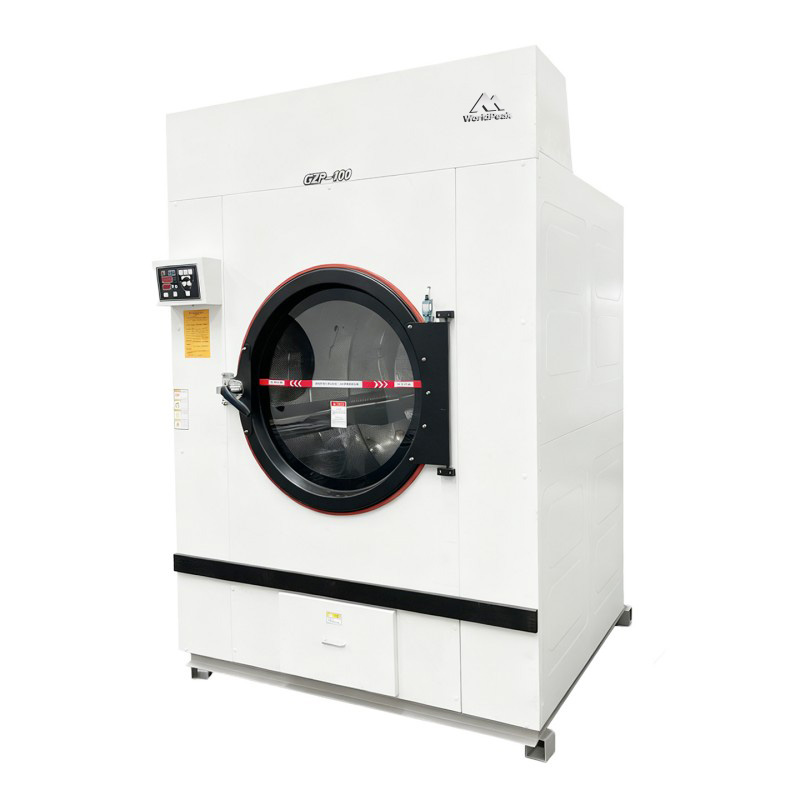
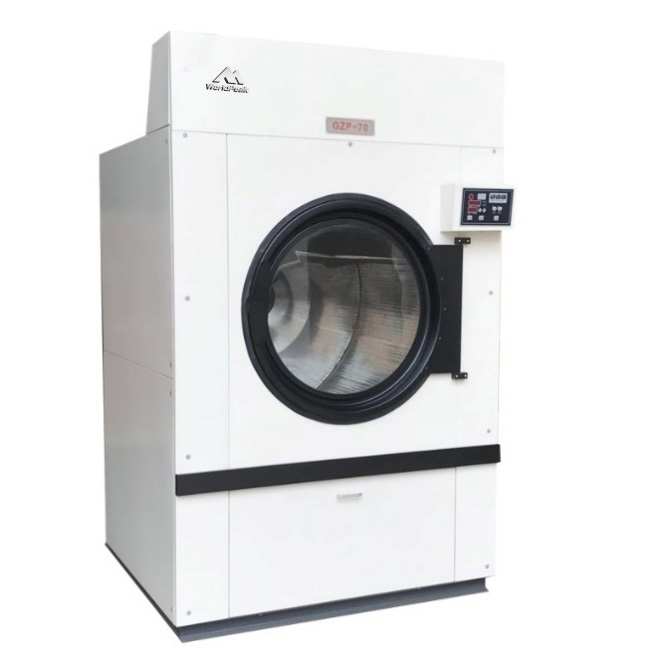
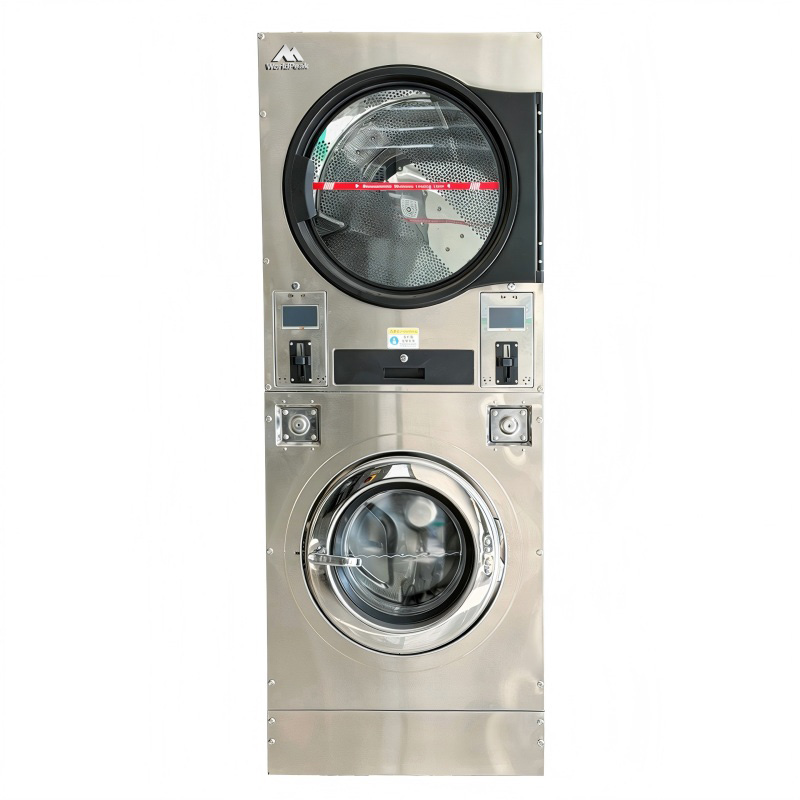
Industrial tumble dryers are usually matched to washer-extractor capacity. Commercial dryers with capacities of approximately 30-100 kg are generally priced between RMB 12,000 and RMB 60,000 per unit.
Conventional Tumble Dryers
Conventional electric-, steam-, or gas-heated tumble dryers generally have a lower initial purchase price and are widely used in hotels, institutional laundries, and small to medium-sized commercial laundry facilities.
Heat-Pump and Energy-Efficient Dryers
Heat-pump dryers and other energy-saving drying systems typically require a higher initial investment, but they may reduce long-term energy consumption depending on daily operating hours, local energy prices, and production volume.
Flatwork Ironer and Folding Machine Prices
Finishing equipment can account for a substantial part of the total laundry equipment investment, especially in hotels and commercial linen plants that process large quantities of sheets, duvet covers, pillowcases, and table linen.
Single-Roll Flatwork Ironer
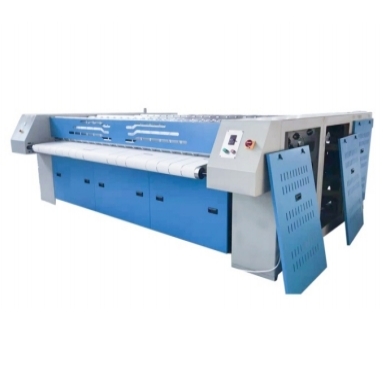
A basic single-roll flatwork ironer is generally priced at approximately RMB 30,000-60,000. These machines are suitable for small hotels and laundry facilities with moderate linen volumes.
Double-Roll Flatwork Ironer
Double-roll models typically cost around RMB 60,000-90,000 and provide higher production capacity than entry-level single-roll machines.
Four-Roll High-Speed Flatwork Ironer
Four-roll high-speed flatwork ironers designed for larger commercial laundries may cost approximately RMB 100,000-150,000 or more, depending on ironing width, heating system, roll diameter, and automation level.
Automatic Feeder and Folding Machine
Automatic linen feeders and fully automatic folding systems reduce manual handling in the finishing section. Depending on capacity and functionality, individual automatic folding machines may start from approximately RMB 60,000 and increase significantly for higher-speed production lines.
Complete Laundry Equipment Package Prices
For most buyers, the price of a complete equipment package is more useful than the price of individual machines. The correct configuration should be based primarily on daily linen processing volume and the required level of automation.
Small Hotel or Institutional Laundry: RMB 80,000-180,000
Facilities with relatively low daily laundry volumes, such as small and medium-sized hotels, nursing homes, guesthouses, and institutional laundry rooms, may use a basic equipment package consisting of washer-extractors, tumble dryers, simple finishing equipment, and basic auxiliary machines.
A complete set of new equipment for this type of operation generally costs around RMB 80,000-180,000. This configuration is suitable for routine in-house linen processing without a high level of automation.
Small to Medium Commercial Laundry: RMB 200,000-300,000
Commercial laundries handling external orders and processing several hundred to more than one thousand sets of linen per day usually require a more complete system.
A typical configuration may include:
- 100 kg-class washer-extractors
- Matching industrial tumble dryers
- Double-roll flatwork ironer
- Folding equipment
- Steam generation system
- Basic chemical dosing equipment
Mainstream prices for this type of complete commercial laundry equipment package are approximately RMB 200,000-300,000.
Medium Commercial Laundry Plant: RMB 380,000-500,000
Medium-sized commercial laundry plants with higher daily order volumes typically require multiple washer-extractors and dryers together with more automated ironing and folding systems. Complete new equipment packages generally range from approximately RMB 380,000-500,000.
Large Automated Laundry Plant: RMB 700,000-1.2 Million
Large standardized laundry plants, centralized linen service companies, and healthcare laundry facilities may require multiple high-capacity machines, barrier washing systems, automatic feeders, folding lines, water treatment equipment, and more advanced automation.
The total equipment quotation for these projects may reach approximately RMB 700,000-1.2 million or more, depending on production capacity, hygiene requirements, machine brand, and automation level.
Factors Affecting Industrial Laundry Equipment Quotations
Even when equipment has similar rated capacities, quotations from different manufacturers may vary considerably. Several factors explain these differences.
1. Stainless Steel Construction
The grade and thickness of stainless steel used in the inner drum, outer cylinder, cabinet, and other wet-contact components affect both equipment durability and manufacturing cost. More robust construction generally costs more but may provide better resistance to corrosion and mechanical stress.
2. Fixed-Frequency vs. Variable-Frequency Drive
Fixed-frequency machines generally have a lower purchase price. Variable-frequency washer-extractors cost more initially but provide more precise speed control during washing and extraction and are often better suited to frequent commercial operation.
3. Heating Method
Industrial laundry machines may use electric, steam, gas, or other heating systems. Electric-heated equipment can be easier to install where steam infrastructure is unavailable, while steam heating is commonly used in larger laundries with centralized boilers or steam supply systems.
The most economical heating method depends on operating volume, local energy prices, and available utilities.
4. Automation Level
Automatic chemical dosing, linen feeding, folding, stacking, conveying, and centralized control systems increase the initial investment but can reduce repetitive manual work and improve consistency.
5. Brand and Component Quality
Motor quality, bearings, seals, control systems, inverters, door locks, valves, and other components can create substantial differences between machines that appear similar from the outside.
6. Warranty and After-Sales Service
Installation, commissioning, operator training, spare-parts supply, warranty coverage, and on-site maintenance should all be considered when comparing quotations. A lower equipment price may not represent better overall value if technical support is limited.
7. Complete-Package Purchase
Purchasing washer-extractors, dryers, ironers, and folding equipment as a complete package may provide better capacity matching and simplified installation. Manufacturers may also offer package pricing for larger orders.
Supporting Equipment and Additional Costs
When purchasing industrial laundry equipment, buyers should not focus only on the main machines. Supporting systems can represent a meaningful part of the total project investment.
Common Auxiliary Equipment
- Steam generator or boiler
- Automatic chemical dosing system
- Water softening and treatment equipment
- Wastewater treatment equipment
- Linen transport carts
- Sorting tables and storage racks
- Air compressor
- Ventilation and exhaust systems
Depending on the project, auxiliary equipment and supporting systems may account for around 10% or more of the total investment. Building modifications such as drainage, electrical upgrades, steam piping, ventilation, and equipment foundations should also be included in the initial budget.
New vs. Used Industrial Laundry Equipment
The market also offers used and refurbished commercial laundry machines, often at significantly lower prices than new equipment. In some cases, used machines may cost around half the price of comparable new models.
Advantages of Used Equipment
- Lower initial investment
- Suitable for temporary operations
- Can be used as backup equipment
Potential Risks
- Limited or no warranty
- Higher maintenance frequency
- Unknown service history
- Potential wear on bearings, motors, drums, and seals
- Higher energy and water consumption on older models
- Possible difficulty sourcing spare parts
For facilities that require stable, long-term daily production, new equipment generally provides more predictable reliability, warranty coverage, and after-sales support.
What Should Be Included in an Industrial Laundry Equipment Quotation?
When comparing quotations from different suppliers, buyers should review the complete scope of supply rather than looking only at the final price.
A Complete Quotation Should Clearly Identify:
- Equipment model and rated capacity
- Quantity of each machine
- Heating method
- Motor and drive system
- Stainless steel specification
- Control system and available programs
- Optional automatic dosing or feeding equipment
- Freight and transportation costs
- Installation and commissioning
- Operator training
- Warranty period
- Spare-parts support
- After-sales service
Buyers should also confirm whether steam generators, water treatment systems, chemical dosing equipment, installation materials, and utility connections are included or quoted separately. This helps avoid unexpected additional expenses after the purchase order has been confirmed.
Frequently Asked Questions About Industrial Laundry Equipment Prices
How much does industrial laundry equipment cost?
The price depends on machine type, capacity, configuration, and automation level. Small equipment packages may start at around RMB 80,000, while large automated commercial laundry production lines may cost RMB 700,000 to RMB 1.2 million or more.
How much does a 100 kg industrial washer-extractor cost?
A 100 kg washer-extractor may cost approximately RMB 45,000-100,000 depending on the drive system, stainless steel construction, heating method, extraction speed, brand, and additional functions.
What equipment is included in a complete industrial laundry system?
A complete system may include washer-extractors, tumble dryers, flatwork ironers, linen feeders, folding machines, steam equipment, automatic chemical dosing, water treatment systems, and linen handling equipment.
Why do industrial laundry equipment quotations vary so much?
Price differences are usually caused by machine capacity, materials, component quality, heating method, automation, manufacturer, warranty, installation services, and after-sales support.
Is steam-heated laundry equipment cheaper to operate?
Steam heating can be economical for high-volume laundries that already have suitable boiler or steam infrastructure. However, actual operating costs depend on local electricity, fuel, steam, and maintenance expenses.
Is used industrial laundry equipment worth buying?
Used equipment can reduce initial investment, but buyers should evaluate machine age, maintenance history, remaining service life, spare-parts availability, warranty coverage, and expected downtime before making a decision.
Is it better to buy a complete equipment package or individual machines?
For new laundry projects, a complete equipment package can simplify capacity matching, plant layout, installation, commissioning, and after-sales coordination. Individual machine purchases may be more appropriate when upgrading an existing laundry facility.
How can I get an accurate industrial laundry equipment quotation?
Provide the supplier with your daily linen volume, textile types, operating hours, required turnaround time, available floor space, heating source, power supply, water and drainage conditions, required automation level, and any hygiene requirements. The more complete the operating information, the more accurate the equipment configuration and quotation will be.
Industrial laundry equipment quotations should not be evaluated simply by choosing the lowest price, nor is it necessary to purchase the highest-end configuration for every project. The most suitable equipment package is one that matches actual daily laundry volume, textile type, available utilities, labor conditions, and long-term operating requirements.
When reviewing quotations, buyers should compare not only washer-extractor, dryer, and ironing machine prices, but also supporting equipment, installation, commissioning, energy consumption, maintenance requirements, warranty coverage, and after-sales service. Evaluating the total cost of ownership rather than the purchase price alone makes it easier to select a commercial laundry equipment system that provides reliable performance and better long-term value.