

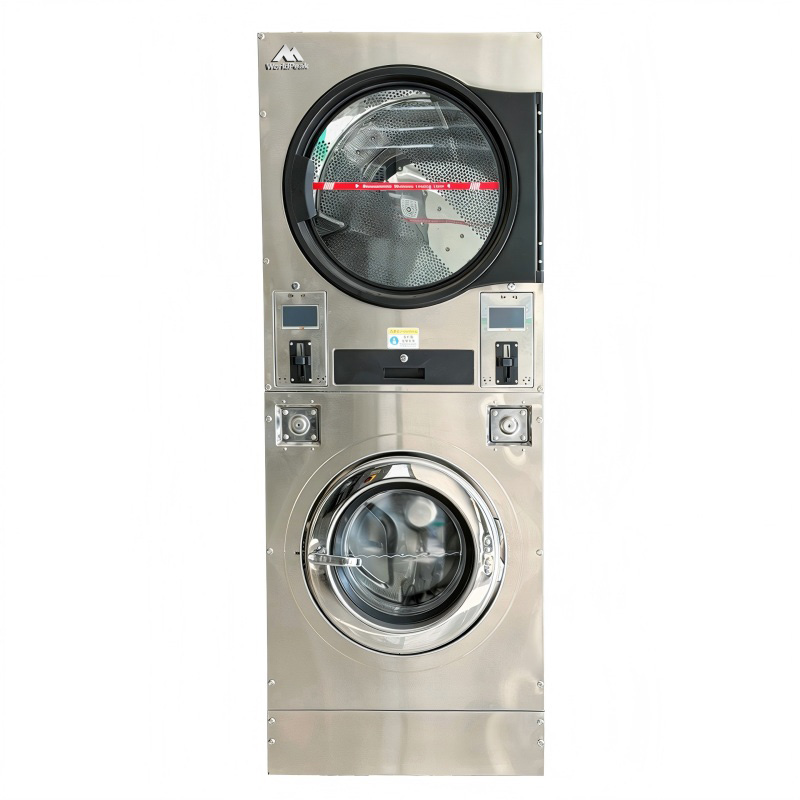
Hospitals are essential institutions for protecting public health and delivering medical care. While consultation rooms, operating rooms, and sterilization departments often receive the most attention, the hospital laundry room also plays an important role in infection prevention and daily hospital operations. Medical textiles such as bed sheets, patient gowns, surgical drapes, towels, and healthcare uniforms may be exposed to blood, bodily fluids, microorganisms, and other contaminants during use. For this reason, a properly designed hospital laundry equipment system should support safe linen handling, effective washing, drying, finishing, and clear separation between soiled and clean textiles.
- What Equipment Does a Hospital Laundry Room Need?
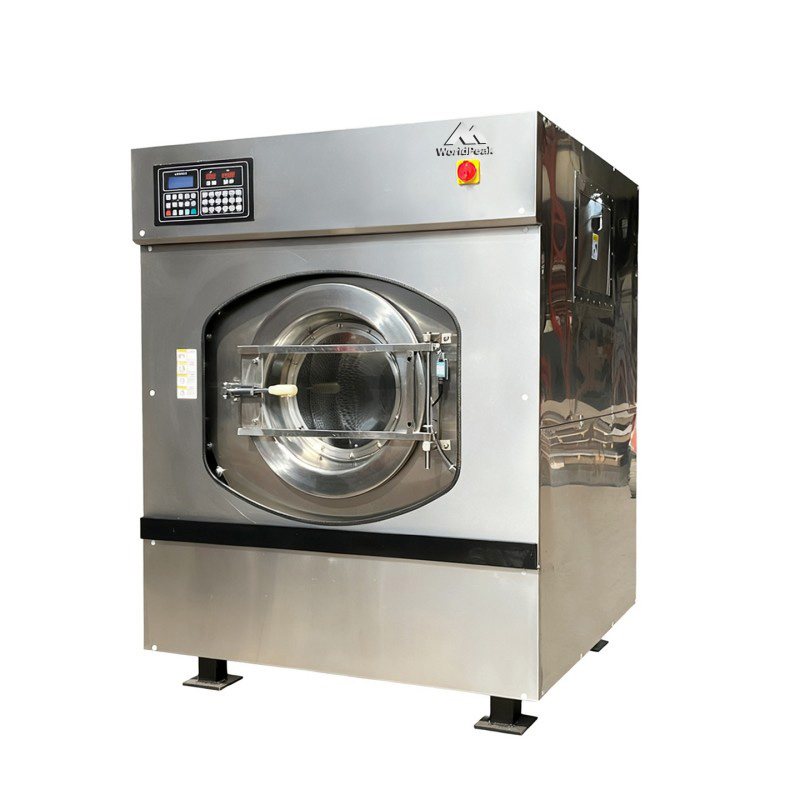
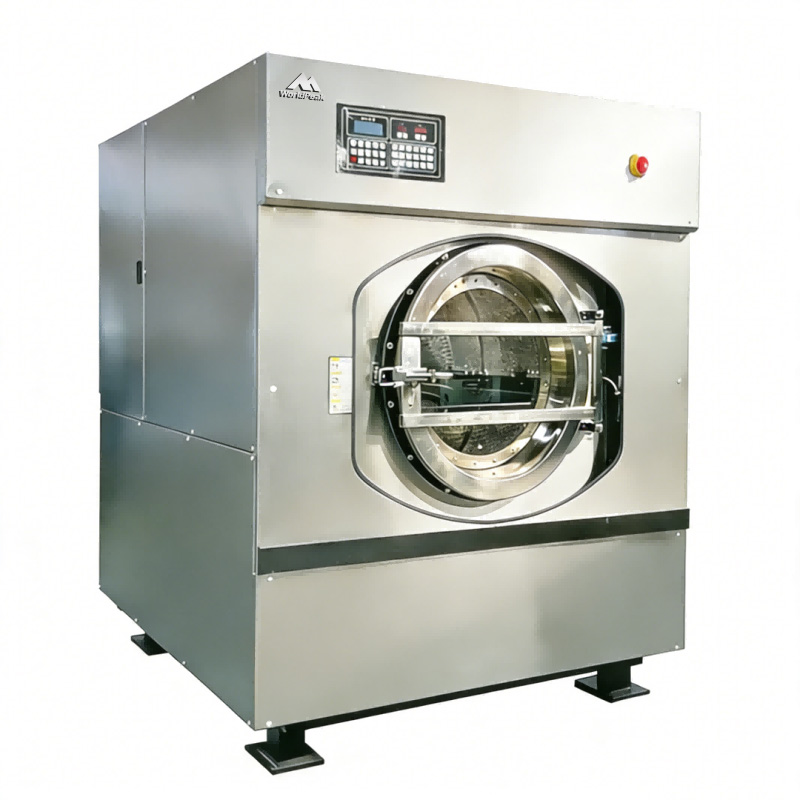
- Hospital Washer-Extractors
- Medical Barrier Washer-Extractors
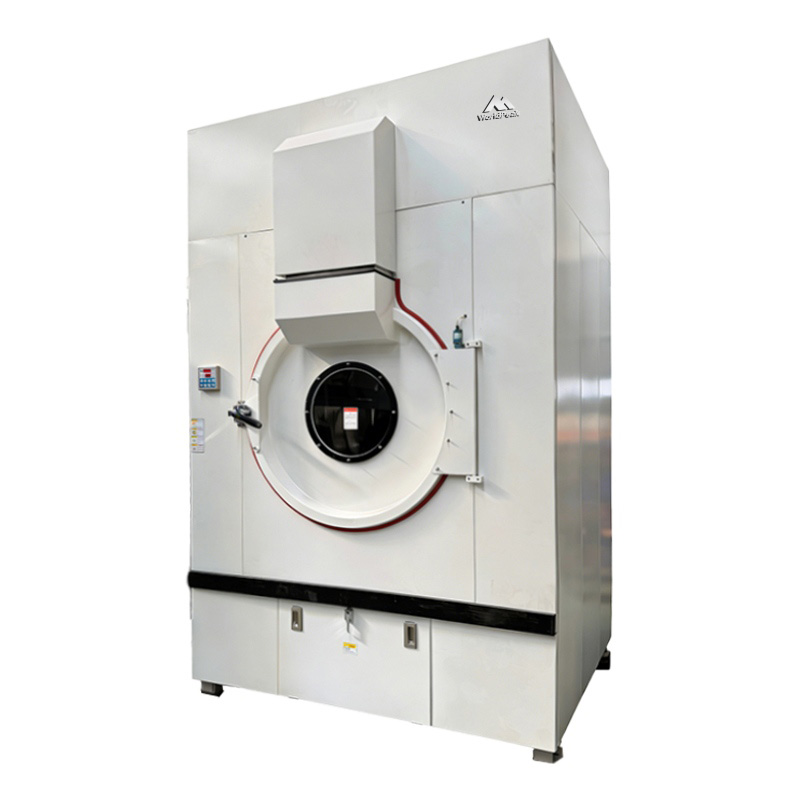
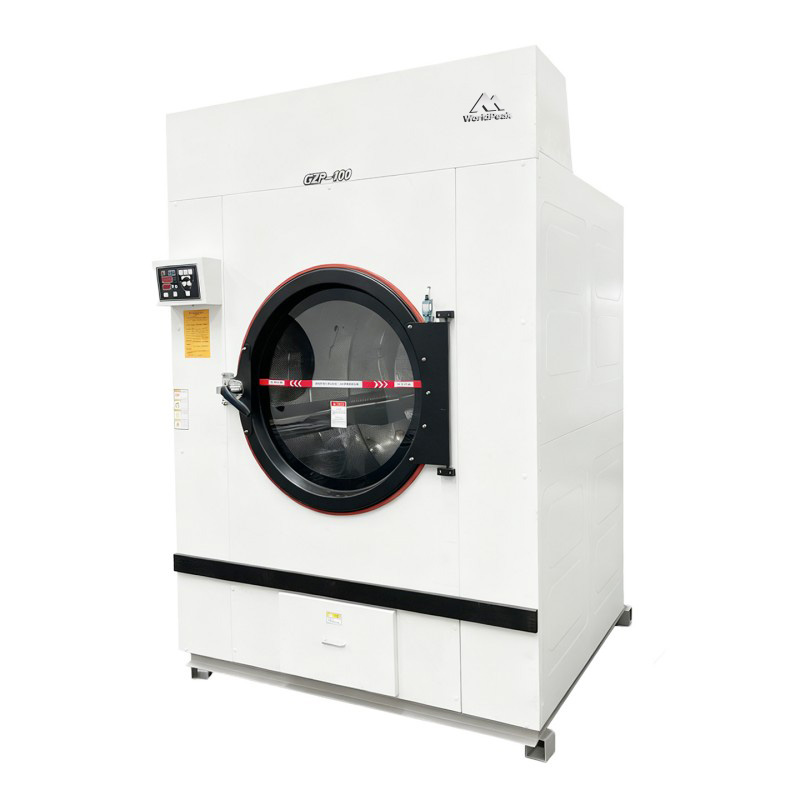
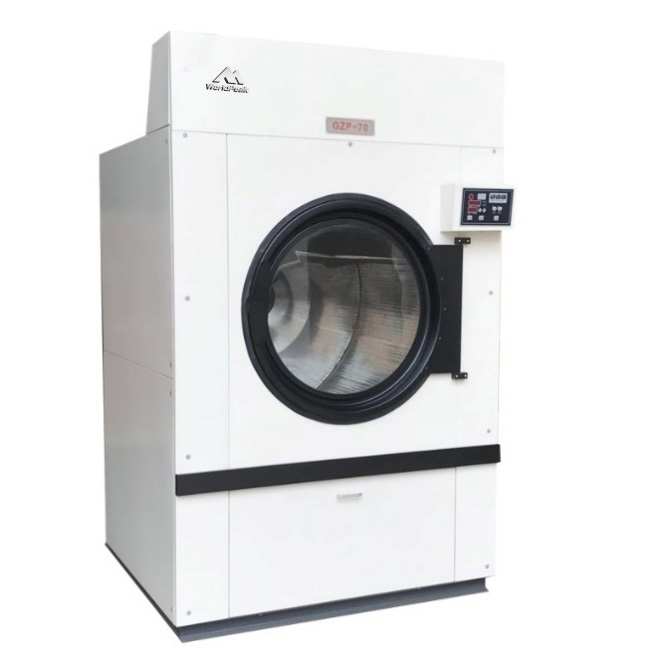
- Hospital Tumble Dryers
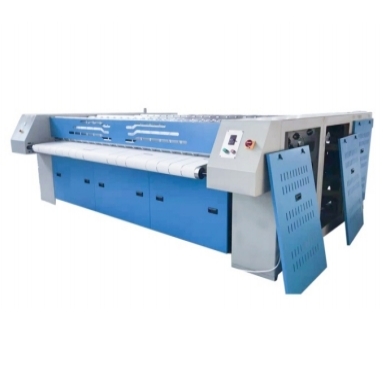
- Ironing and Folding Equipment
- Supporting Equipment for Medical Laundry Rooms
- Hospital Laundry Equipment by Facility Size
- Hospital Laundry Room Layout and Workflow
- How to Choose Hospital Laundry Equipment
- Frequently Asked Questions
What Equipment Does a Hospital Laundry Room Need?
A professional hospital laundry room normally requires more than a washing machine. A complete system may include equipment for receiving, sorting, washing, extracting, drying, ironing, folding, transporting, storing, and managing medical textiles.
Common hospital laundry equipment includes:
- Fully automatic washer-extractors
- Medical barrier washer-extractors
- Industrial tumble dryers
- Flatwork ironers
- Automatic linen feeders
- Automatic folding machines
- Garment finishing equipment
- Automatic chemical dosing systems
- Soiled and clean linen transport carts
- Sorting tables
- Water treatment systems
- Wastewater treatment or pretreatment equipment where required
The exact configuration depends on daily linen volume, hospital size, textile categories, contamination risk, available space, utility conditions, and applicable local healthcare hygiene requirements.
Hospital Washer-Extractors: Core Washing Equipment
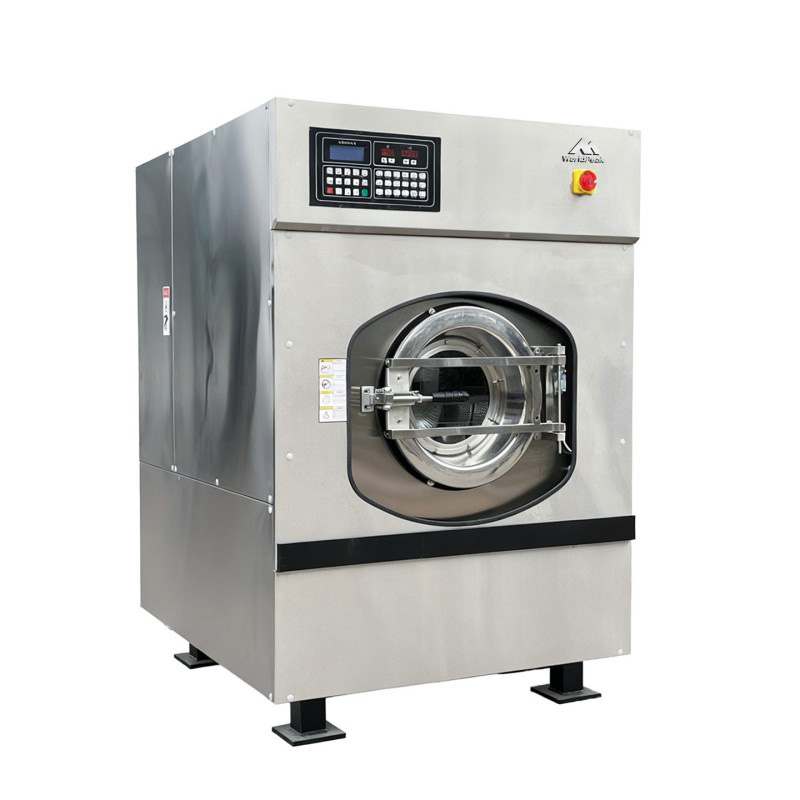
The washer-extractor is the core machine in a hospital laundry room. It combines washing, rinsing, draining, and high-speed extraction in one unit and is used for processing bed linen, patient clothing, towels, uniforms, and other reusable healthcare textiles.
Conventional Fully Automatic Washer-Extractors
Conventional washer-extractors generally use a single-door loading and unloading design. They may be suitable for lower-risk medical laundry applications, small clinics, outpatient facilities, or textile categories that do not require physical separation between the soiled and clean sides.
Modern machines can provide programmable settings for:
- Water temperature
- Wash time
- Water level
- Drum speed
- Rinse frequency
- Chemical dosing
- Extraction speed
Different programs can be created for ward linen, uniforms, towels, patient clothing, and other textile categories.
Stainless Steel Construction
Hospital washer-extractors commonly use corrosion-resistant stainless steel in the drum and other wet-contact components. This is particularly important in facilities where machines are frequently exposed to detergent, alkali, bleach, disinfectants, and repeated high-temperature washing cycles.
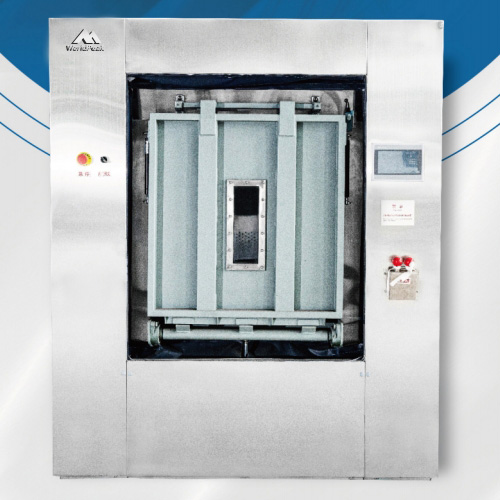
Medical Barrier Washer-Extractors
A medical barrier washer-extractor is designed to support physical separation between contaminated and clean laundry areas.
Unlike a conventional machine, a barrier washer has two doors and is normally installed through a partition wall.
How a Barrier Washer Works
Soiled textiles are loaded through the door on the contaminated side. After the programmed washing, rinsing, and extraction cycle is complete, clean textiles are unloaded through a separate door on the clean side.
This pass-through arrangement helps reduce unnecessary crossover between soiled and clean textile handling areas.
Where Barrier Washers Are Commonly Used
Barrier washer-extractors may be considered for:
- Large general hospitals
- Infectious disease hospitals
- Medical laundry centers
- Healthcare textile processing facilities
- Facilities requiring separated soiled and clean workflows
The need for barrier equipment should be determined according to applicable local hygiene, infection-control, and facility-design requirements rather than assuming the same configuration is mandatory for every medical institution.
Industrial Tumble Dryers for Hospital Laundry
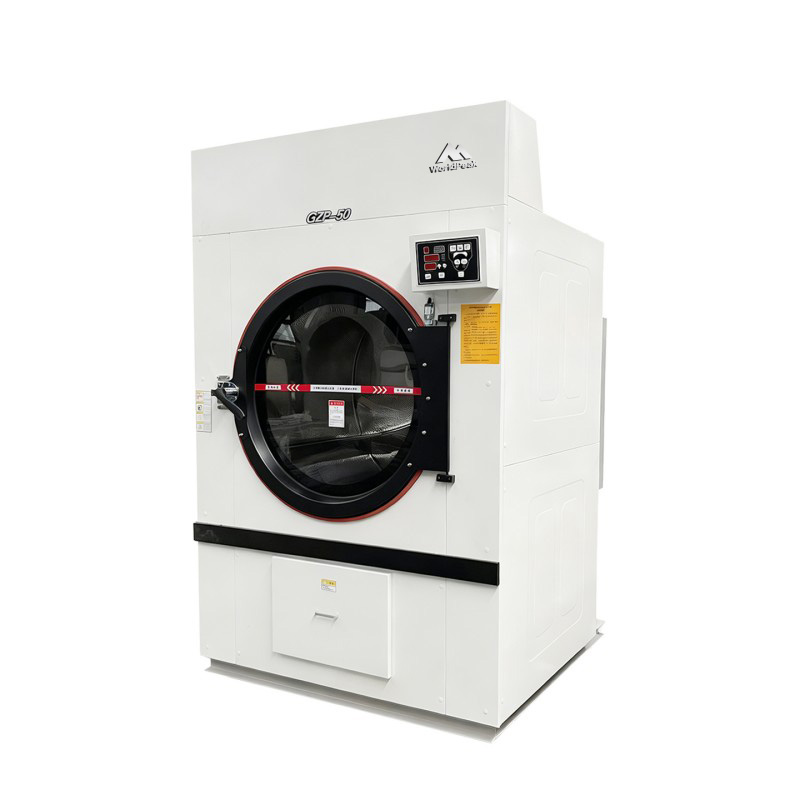
After washing and high-speed extraction, many healthcare textiles still require further drying. Industrial tumble dryers help reduce residual moisture and provide predictable linen turnaround regardless of weather or outdoor drying conditions.
Dryers for Small Medical Facilities
Smaller clinics or healthcare institutions with limited daily laundry volumes may use 30-50 kg commercial tumble dryers matched to their washer-extractors.
Dryers for Larger Hospitals
Large hospitals and centralized medical laundries may require 80-120 kg or larger tumble dryers, often installed in multiple units to match washing output.
Important Dryer Selection Factors
When selecting hospital tumble dryers, consider:
- Rated drying capacity
- Heating method
- Airflow design
- Temperature control
- Drying speed
- Moisture sensing
- Energy consumption
- Matching capacity with the washer section
Where specific textile-processing or hygiene procedures require controlled drying conditions, the dryer cycle should be configured according to the textile type and applicable hospital laundry protocol.
Ironing and Folding Equipment for Medical Linen
After drying, healthcare textiles may require ironing, finishing, folding, and stacking before they are returned to clinical departments or placed into clean storage.
Flatwork Ironers
Flatwork ironers are mainly used for large flat textiles such as:
- Bed sheets
- Duvet covers
- Pillowcases
- Flat medical linen
- Some types of surgical textiles
The machine uses heated rollers or ironing surfaces to dry, smooth, and finish linen continuously.
Single-Roll and Multi-Roll Ironers
Small healthcare laundries may use single-roll models, while larger hospitals and medical laundry centers can install double-roll or multi-roll flatwork ironers to increase throughput.
Garment Finishing Equipment
Healthcare uniforms, patient gowns, isolation gowns, and other shaped garments cannot always be processed efficiently through flatwork ironers.
Depending on the facility, these textiles may be finished using:
- Garment presses
- Vacuum ironing tables
- Garment tunnel finishers
- Other specialized finishing equipment
Automatic Folding Machines
Automatic folding machines can be connected directly to flatwork ironing lines to fold, count, stack, and organize finished linen.
For high-volume hospitals and centralized laundries, automatic folding reduces repetitive manual handling and helps improve consistency in clean-linen storage and distribution.
Supporting Equipment for Hospital Laundry Rooms
A complete medical laundry operation also depends on auxiliary systems that support textile separation, chemical control, transport, water quality, and wastewater management.
Linen Sorting Tables
Soiled textiles should be classified according to the facility's laundry procedures before washing. Sorting categories may include different textile types, soil levels, departments, or contamination-risk groups.
Separate Soiled and Clean Linen Carts
Transport carts can be assigned separately to soiled and clean textiles. Color coding, labels, enclosed carts, or other identification methods can help prevent accidental cross-use.
Automatic Chemical Dosing System
An automatic chemical dosing system delivers preset quantities of detergent, alkali, bleach, neutralizer, disinfectant, softener, and other chemicals according to the wash program.
This can help improve washing consistency and reduce dosing errors associated with manual chemical addition.
Water Treatment Equipment
Water hardness and mineral content can affect detergent performance, textile appearance, and equipment condition. Water softening or treatment may therefore be useful where incoming water quality is unsuitable for professional laundry processing.
Wastewater Management
Hospital laundry wastewater may contain detergent, lint, suspended solids, organic residues, and other contaminants. Treatment and discharge requirements vary by region, so healthcare facilities should confirm applicable local environmental regulations during project planning.
Hospital Laundry Equipment Configuration by Facility Size
Hospital laundry equipment should be selected according to actual daily processing volume rather than using the same system for every facility.
Small Clinics and Private Hospitals
Facilities processing less than approximately 300 kg of linen per day may use a streamlined system such as:
- One 30 kg fully automatic washer-extractor
- One matching tumble dryer
- One basic ironing table or compact finishing system
- Linen sorting table
- Separate linen transport carts
Actual equipment requirements should still be based on textile category, hygiene procedures, and local healthcare standards.
Medium-Sized Hospitals
Hospitals processing approximately 500-1,000 kg of linen per day may require:
- One or more conventional washer-extractors
- One or more barrier washer-extractors where required
- A 50 kg tumble dryer or larger dryer capacity
- Single-roll or double-roll flatwork ironer
- Automatic chemical dosing
- Separate soiled and clean linen handling equipment
Large General Hospitals and Medical Laundry Centers
Facilities processing more than approximately 1,500 kg of linen per day may require a more automated production line, including:
- Multiple barrier washer-extractors
- Large-capacity tumble dryers
- Automatic linen feeders
- Multi-roll flatwork ironers
- Automatic folding machines
- Garment finishing equipment
- Automatic chemical dosing
- Water treatment systems
- Dedicated linen transport and storage equipment
For very high daily volumes, a continuous batch washer or tunnel washer system may also be considered where the facility has sufficiently stable production demand.
Hospital Laundry Room Layout and Workflow
Equipment selection and laundry-room layout should be planned together. Even high-quality machines cannot provide an effective workflow if clean and soiled textiles repeatedly cross paths.
Typical One-Way Laundry Workflow
A hospital laundry process may follow this general sequence:
- Receiving soiled textiles
- Classification and sorting
- Washing and extraction
- Drying
- Ironing or garment finishing
- Folding and stacking
- Clean linen inspection
- Clean storage
- Distribution
Separate Clean and Soiled Areas
Where required by the facility's infection-control plan, physical or operational separation should be established between soiled-linen handling and clean-linen processing areas.
Barrier washer-extractors are particularly useful where a partitioned workflow is required because they allow textiles to move through the washing stage without being unloaded back into the contaminated area.
Avoid Cross-Traffic
The layout should minimize:
- Crossing of clean and soiled carts
- Unnecessary manual handling
- Storage of dirty textiles near clean textiles
- Repeated movement between incompatible work zones
How to Choose Hospital Laundry Equipment
1. Calculate Daily Linen Volume
Estimate the total dry weight of textiles processed per day, including bed linen, towels, patient gowns, staff uniforms, surgical textiles, and other reusable items.
2. Classify Textile Types
Different textile categories may require different washing programs, drying methods, finishing processes, and hygiene controls.
3. Determine Whether Barrier Washing Is Required
Evaluate the facility's infection-control requirements and local standards to determine whether conventional or barrier washer-extractors should be installed.
4. Match Washer and Dryer Capacity
The drying section must be capable of handling washer output. Insufficient dryer capacity can create wet-linen bottlenecks and slow the entire production line.
5. Match the Finishing Section
High-capacity washing systems should be supported by sufficient ironing and folding capacity, particularly in hospitals processing large quantities of bed linen.
6. Confirm Utility Requirements
Before selecting equipment, confirm:
- Electrical capacity
- Water supply
- Drainage
- Steam availability
- Gas supply where applicable
- Ventilation
- Compressed air requirements
7. Consider Automation
Automatic chemical dosing, linen feeding, folding, conveying, and unloading can reduce repetitive handling and may be useful in large hospitals and centralized medical laundries.
8. Evaluate After-Sales Support
Hospital laundry facilities often operate on fixed delivery schedules. Equipment downtime can affect linen supply to clinical departments, so spare-parts availability, technical support, maintenance service, and warranty coverage should be considered during procurement.
Frequently Asked Questions About Hospital Laundry Equipment
What equipment is needed in a hospital laundry room?
A hospital laundry room may require washer-extractors, barrier washer-extractors, tumble dryers, flatwork ironers, folding machines, garment finishing equipment, chemical dosing systems, linen carts, sorting tables, water treatment, and other supporting systems.
What is a medical barrier washer-extractor?
A barrier washer-extractor is a double-door industrial washing machine installed between soiled and clean laundry areas. Textiles are loaded from one side and unloaded from the other after washing, supporting physical separation between the two zones.
Do all hospitals need barrier washer-extractors?
Not necessarily. Equipment requirements vary according to hospital size, textile contamination risk, laundry-room layout, and applicable local healthcare regulations. Facilities should determine the need for barrier equipment according to their infection-control requirements.
What size washer-extractor is suitable for a hospital?
Smaller facilities may use 30 kg or 50 kg machines, while medium and large hospitals may require 70 kg, 100 kg, or multiple high-capacity machines. The correct size depends on daily dry-linen weight and operating hours.
Can hospital laundry use a tunnel washer?
Yes. Tunnel washers or continuous batch washers can be suitable for large centralized hospital laundries with stable, high-volume textile processing requirements.
What is the difference between a commercial washer and a hospital barrier washer?
A conventional commercial washer normally uses one loading and unloading side, while a barrier washer uses separate doors on the soiled and clean sides to support a pass-through workflow.
Do hospital laundry rooms need automatic chemical dosing?
Automatic chemical dosing is useful for maintaining consistent washing formulas and reducing manual dosing errors. Its value becomes especially significant in facilities that process many loads every day.
What type of dryer is suitable for hospital linen?
Industrial tumble dryers should be selected according to textile type, washer output, required drying speed, heating source, and applicable laundry procedures. Multiple dryers may be required in high-volume facilities.
Does hospital linen need ironing and folding equipment?
Flat textiles such as sheets and pillowcases are commonly processed using flatwork ironers and folding machines. Garments such as uniforms and patient gowns may require separate garment finishing equipment.
How should clean and soiled hospital linen be transported?
Facilities commonly use separately designated carts, routes, storage areas, or handling procedures for clean and soiled textiles to reduce unnecessary cross-contact.
Conclusion
The design of a hospital laundry equipment system should focus on safe textile handling, effective washing, efficient production, and appropriate separation between soiled and clean processes.
Small healthcare facilities may use conventional washer-extractors, compact dryers, and basic finishing equipment, while medium and large hospitals may require barrier washer-extractors, high-capacity tumble dryers, automated ironing and folding systems, chemical dosing, and more clearly separated clean and soiled workflows.
The appropriate equipment configuration should always be based on daily linen volume, textile categories, contamination risk, facility layout, staffing, available utilities, and applicable local healthcare hygiene requirements. By matching washing, drying, finishing, transport, and supporting systems as one integrated process, hospitals can create a more efficient and reliable medical textile laundry operation.