
As demand for professional linen processing continues to grow across hotels, hospitals, commercial laundries, factories, and other institutions, traditional standalone laundry machines are increasingly unable to meet the requirements of high-volume and standardized operations. A complete fully automatic laundry equipment system connects washing, extraction, drying, ironing, folding, and finishing into an integrated production process. Compared with purchasing individual machines without an overall plan, a properly configured automated laundry system can improve production efficiency, reduce manual handling, maintain consistent linen quality, and help control long-term operating costs.
- What Is a Complete Fully Automatic Laundry Equipment System?
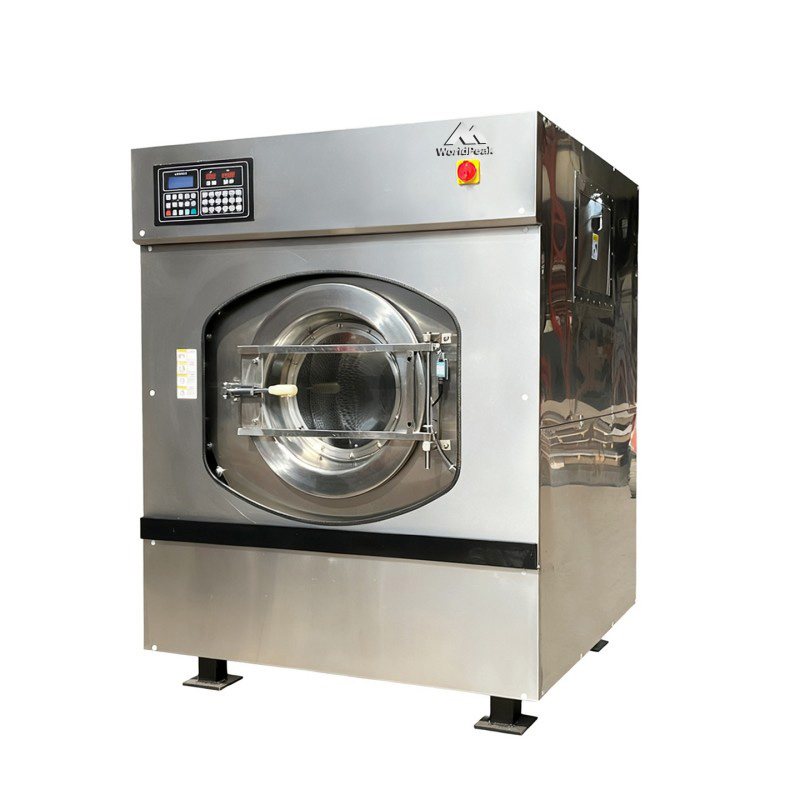
- Fully Automatic Washer-Extractor
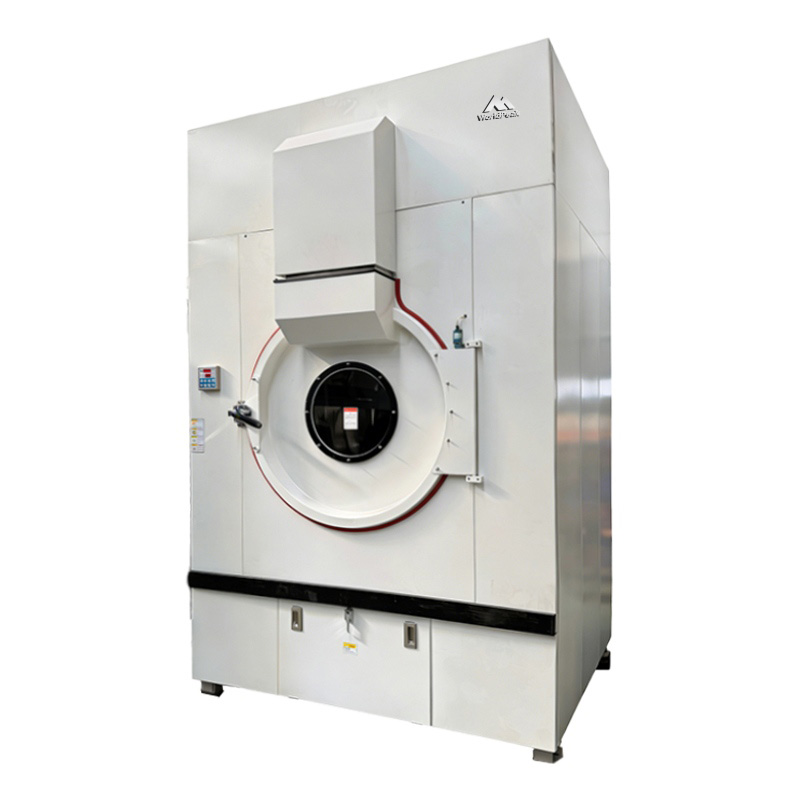
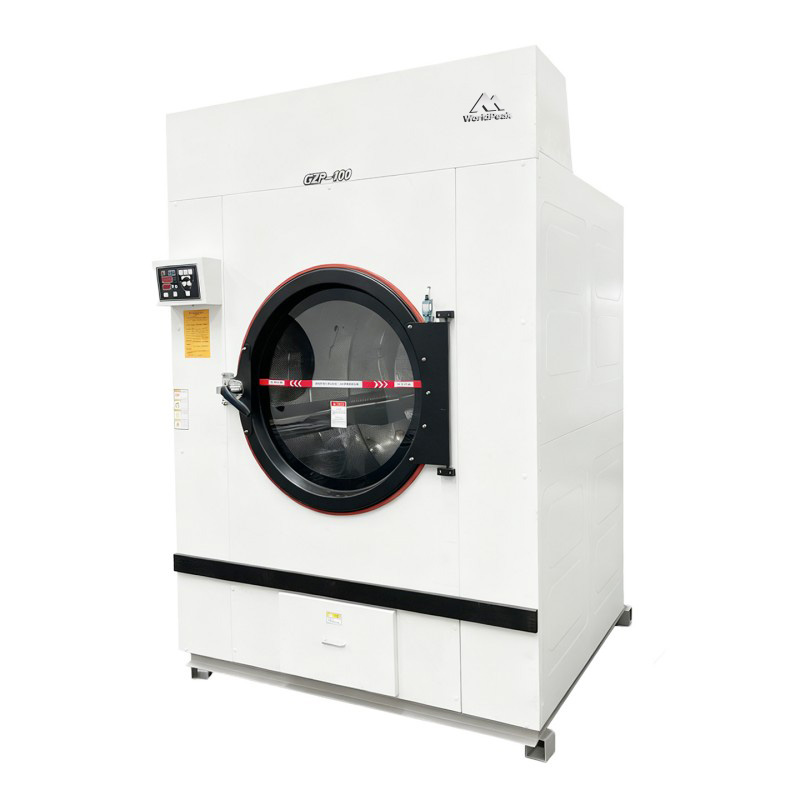
- Industrial Tumble Dryer
- Ironing and Finishing Equipment
- Self-Service Laundry Equipment
- Advantages of a Fully Automatic Laundry System
- Laundry Equipment Configuration by Business Type
- How to Choose a Complete Laundry Equipment System
- Frequently Asked Questions
What Is a Complete Fully Automatic Laundry Equipment System?
A complete fully automatic laundry equipment system is an integrated commercial laundry solution built around industrial washer-extractors and supported by drying, ironing, folding, finishing, and specialized fabric-care equipment. The exact configuration can be adjusted according to daily laundry volume, textile type, available space, hygiene requirements, and the operating model of the laundry facility.
Rather than operating each machine as an isolated unit, a complete laundry system is designed around the entire textile-processing workflow. Linen moves through washing, extraction, drying, ironing, folding, and collection in a planned sequence, helping reduce unnecessary handling and production bottlenecks.
Fully Automatic Washer-Extractor: The Core of the Laundry System
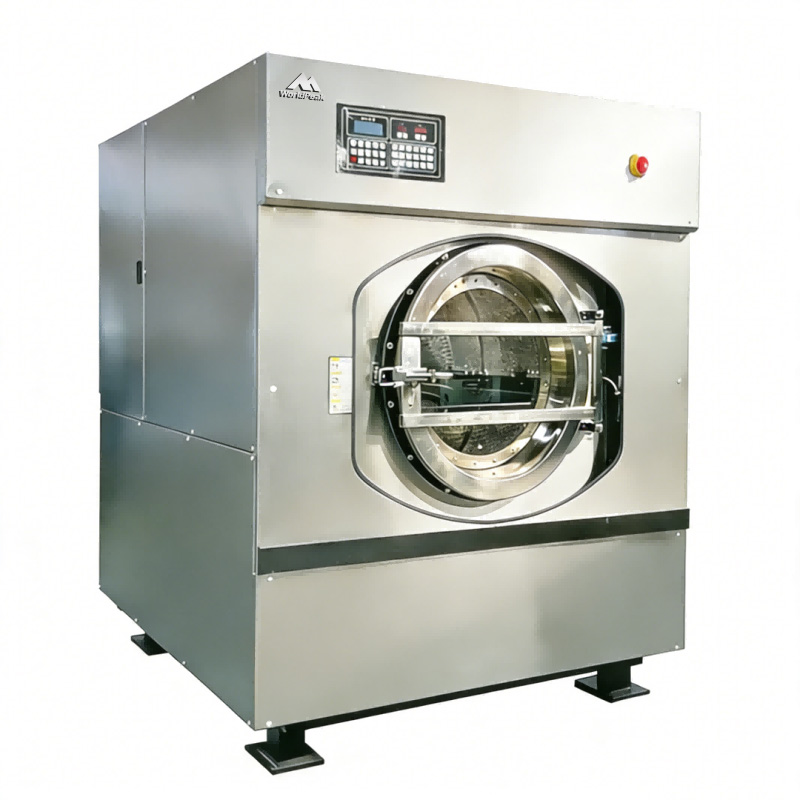
The fully automatic washer-extractor is one of the most important pieces of equipment in a commercial laundry system. It completes water filling, heating, washing, rinsing, and high-speed extraction through programmable automatic cycles.
Compared with traditional semi-automatic washing equipment, industrial washer-extractors require less manual intervention during the washing process. Modern machines are generally equipped with intelligent control systems that can store multiple washing programs for different types of textiles.
Typical laundry categories include:
- Hotel bed sheets and duvet covers
- Towels and bath towels
- Restaurant linen
- Workwear and uniforms
- Medical textiles
- Beauty salon and spa textiles
Operators can set parameters such as washing time, water temperature, water level, drum rotation, rinse cycles, and extraction speed according to the fabric and level of soiling.
Automatic Chemical Dosing
Some commercial washer-extractors can be connected to an automatic laundry chemical dosing system. Detergent, disinfectant, softener, and other chemicals are supplied according to preset programs, helping improve dosing consistency and reduce unnecessary chemical consumption.
Barrier Washer-Extractors for Hospitals
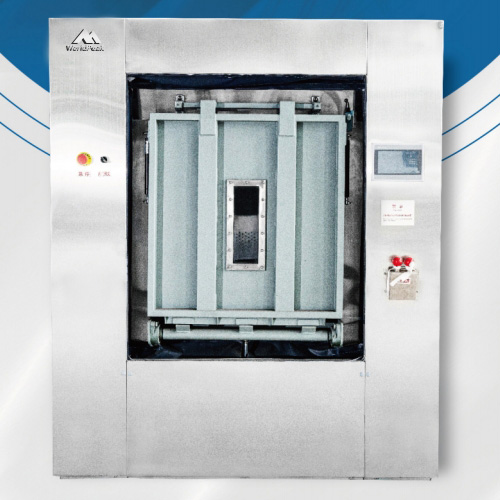
Healthcare facilities can use barrier-type medical washer-extractors. These machines normally feature two doors located on opposite sides of a physical partition. Contaminated linen is loaded from the soiled area, while cleaned linen is removed from the clean area.
This separation helps support infection-control procedures and reduces the risk of cross-contamination between dirty and clean textiles.
Common Washer-Extractor Capacities
Industrial washer-extractors are available in a wide range of capacities, commonly from approximately 12 kg to 100 kg or more. Small commercial laundries may use machines below 30 kg, while high-volume laundry plants often install several 50 kg or 100 kg units to increase daily processing capacity.
Industrial Tumble Dryer: Improving Drying Efficiency
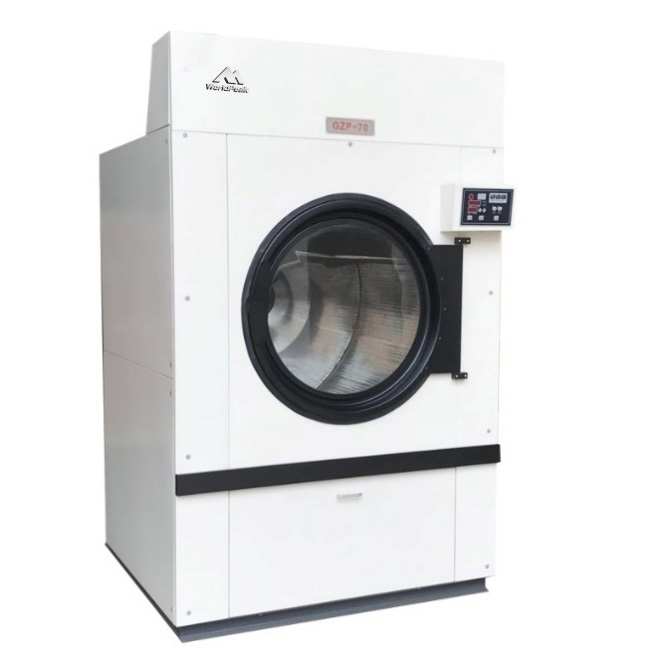
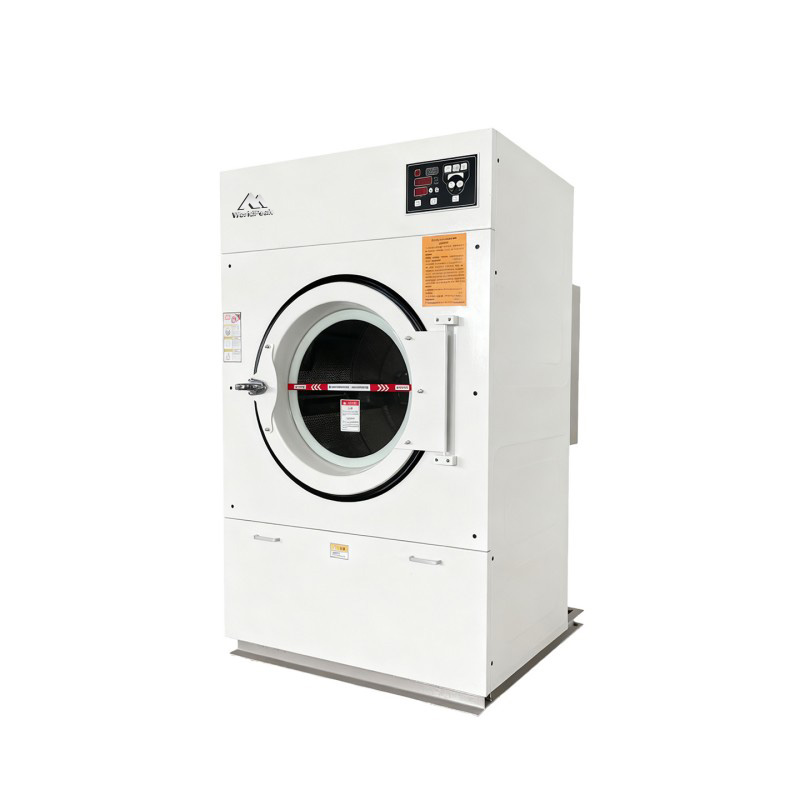
An industrial tumble dryer is another essential component of a complete laundry equipment system. After high-speed extraction, washed textiles still contain residual moisture and usually require further drying before finishing or reuse.
Commercial tumble dryers use controlled hot air circulation to dry textiles efficiently. Modern models normally allow operators to adjust temperature and drying time according to fabric type.
For example, towels and bath towels require sufficient drying to restore softness and bulk, while bed sheets, duvet covers, and other flat linen should be processed under appropriate temperature conditions to help prevent excessive heat exposure.
Choosing the Right Dryer Capacity
Dryer capacity should generally be matched with the washing capacity of the laundry facility. Small businesses may use compact dryers for towels and small textile loads, while hotels and professional laundries commonly use 50 kg or 100 kg industrial tumble dryers.
A properly matched drying system prevents large quantities of wet linen from accumulating between production stages and helps maintain a stable laundry workflow throughout the year.
Compared with natural air drying, mechanical drying also reduces dependence on weather conditions and requires less drying space, which is especially important during rainy or humid periods.
Ironing and Finishing Equipment for Commercial Laundries
For hotels, hospitals, and professional linen laundries, washing and drying are only part of the production process. Bed sheets, duvet covers, pillowcases, tablecloths, and other flat linen often require ironing, folding, and finishing before they can be returned to use.
A complete finishing line may include:
- Linen feeder
- Flatwork ironer
- Automatic folding machine
- Linen stacking and collection equipment
Flatwork Ironer
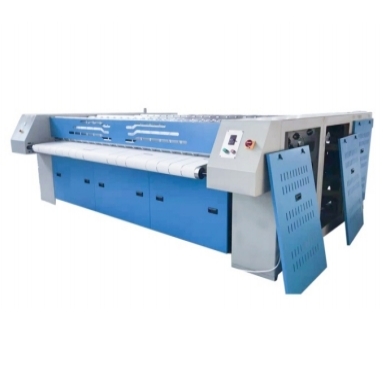
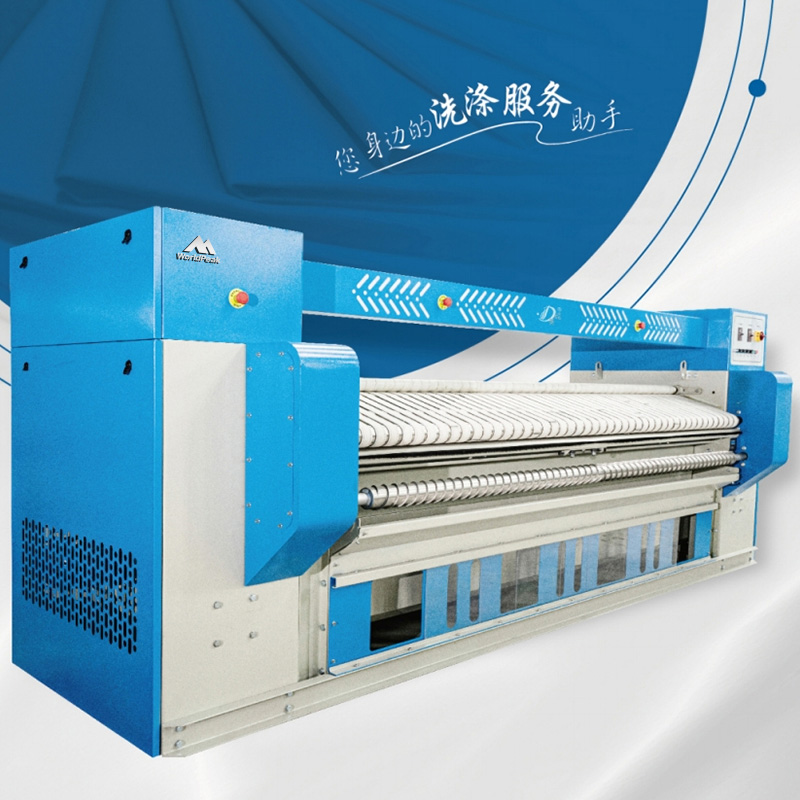
A flatwork ironer is designed for continuous ironing and drying of large flat textiles such as sheets, duvet covers, pillowcases, and table linen.
Single-roll flatwork ironers are often suitable for smaller hotels and laundries with moderate processing requirements. Multi-roll flatwork ironers provide greater production capacity and are commonly used in medium-sized and large commercial laundry facilities.
Linen Feeder
A linen feeder assists with spreading and feeding large textile items into the flatwork ironer. This reduces repetitive manual alignment and helps maintain a stable operating speed for the ironing line.
Automatic Folding Machine
An automatic laundry folding machine can fold sheets, pillowcases, and other flat linen according to preset folding patterns. Depending on the model, the machine may also support counting, stacking, and classification functions.
Automated finishing equipment can reduce repetitive manual work and improve consistency in the appearance and dimensions of finished linen.
Dry-Cleaning Equipment for Delicate Garments
Laundry businesses that also process suits, coats, silk garments, and other delicate clothing can add professional dry-cleaning equipment to the system. This allows the facility to handle textiles that may not be suitable for conventional water washing.
Self-Service Laundry Equipment for Campuses and Apartments
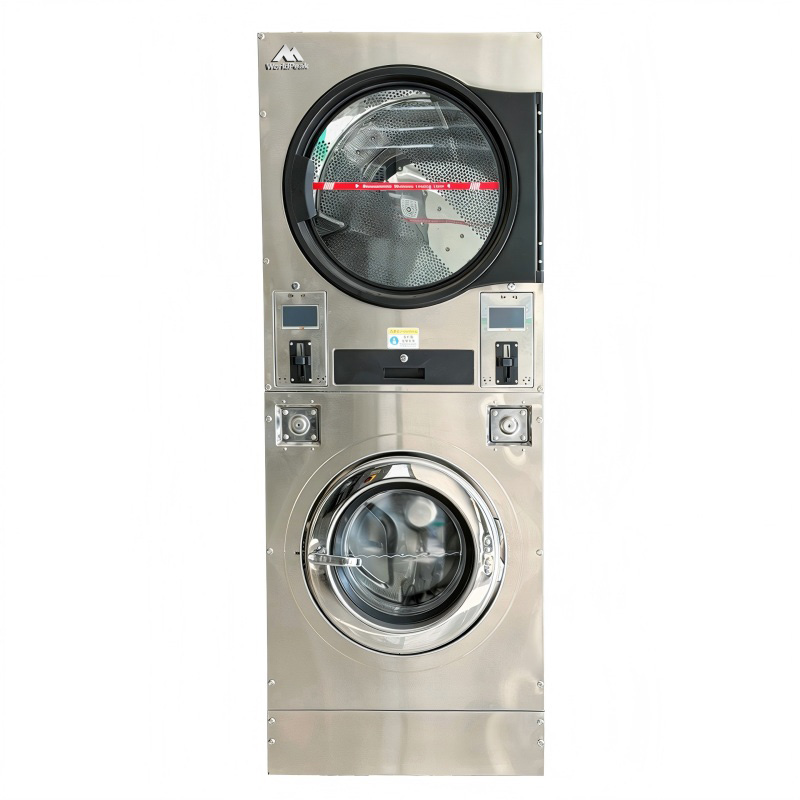
Not every laundry operation requires a complete industrial production line. Campuses, apartment buildings, dormitories, and self-service laundromats may use coin-operated or payment-enabled washer-dryers.
These machines integrate washing, extraction, and drying functions and can support unattended self-service operation. Depending on the system, payment may be made through coins, cards, mobile applications, or other electronic payment methods.
This type of equipment is suitable for locations where individual users wash relatively small loads and where reducing staffing requirements is an important consideration.
Advantages of a Complete Fully Automatic Laundry Equipment System
The main advantage of a complete automated laundry system is that each machine is selected and arranged as part of one production process rather than as an isolated piece of equipment.
1. Improved Production Efficiency
A coordinated equipment configuration reduces waiting time between washing, drying, ironing, and folding, allowing more linen to be processed within the same operating period.
2. Reduced Manual Handling
Automatic washing programs, chemical dosing systems, feeders, ironers, and folding machines reduce repetitive manual tasks and allow employees to focus on loading, unloading, inspection, classification, and production management.
3. Consistent Linen Quality
Standardized washing and finishing programs help maintain more consistent cleanliness, drying levels, flatness, and folding quality across different batches.
4. Better Control of Water, Energy, and Chemicals
Programmable equipment allows washing time, water consumption, chemical dosing, extraction speed, and drying parameters to be controlled according to actual textile requirements. Proper equipment matching can also reduce unnecessary waiting and repeated processing.
5. Reduced Risk of Rewashing
Standardized washing procedures can help reduce incomplete washing caused by inconsistent manual operation. Appropriate temperature, chemical dosage, and washing time also help protect textiles from unnecessary damage.
6. Easier Capacity Expansion
A complete system can be expanded as laundry volume grows. Additional washer-extractors, tumble dryers, ironing equipment, or folding machines can be added when production demand increases.
Laundry Equipment Configuration by Business Type
The ideal commercial laundry equipment configuration varies according to the business model, daily linen volume, textile type, and required level of automation.
Small Guesthouse or Boutique Hotel
For a small guesthouse or hotel with relatively limited linen volume, a basic system may include:
- 1 fully automatic washer-extractor
- 1 industrial tumble dryer
- 1 small or single-roll flatwork ironer
This configuration can handle routine washing, drying, and finishing without requiring a large laundry production area.
Medium-Sized or Large Hotel
Hotels with more rooms and higher daily linen turnover may require:
- Multiple industrial washer-extractors
- Multiple tumble dryers
- Linen feeder
- Multi-roll flatwork ironer
- Automatic folding machine
- Optional dry-cleaning equipment
The production capacity of each stage should be balanced to prevent washing, drying, or ironing from becoming a bottleneck.
Hospital or Medical Laundry
Hospital laundry systems require greater attention to hygiene zoning and contamination control. Typical equipment may include:
- Barrier washer-extractors
- Industrial tumble dryers
- Flatwork ironers
- Automatic folding equipment
- Linen transportation and sorting equipment
The layout should maintain separation between the soiled and clean areas and comply with applicable local healthcare laundry and infection-control requirements.
Large Commercial Laundry Plant
A professional laundry plant processing linen for hotels, hospitals, restaurants, and external customers normally requires a higher level of automation.
A typical system may include:
- Multiple 50 kg or 100 kg washer-extractors
- High-capacity tumble dryers
- Automatic chemical dosing system
- Linen feeders
- Multi-roll flatwork ironers
- Automatic folding and stacking machines
- Sorting and transportation equipment
For very large centralized laundry operations, tunnel washers and automated material-handling systems may also be considered depending on daily processing volume.
How to Choose a Complete Laundry Equipment System
Selecting laundry equipment should begin with production requirements rather than purchasing machines individually. Before deciding on a system configuration, operators should evaluate several factors.
Daily Linen Processing Volume
Calculate the approximate weight of linen that must be processed each day. Washing, drying, ironing, and folding capacities should then be matched to the required production volume.
Type of Linen
Hotels mainly process sheets, towels, and table linen, while factories may focus on uniforms and workwear. Hospitals require equipment capable of supporting stricter hygiene procedures. Different textile categories require different washing and finishing processes.
Available Laundry Room Space
Machine dimensions, maintenance access, loading areas, linen transportation paths, ventilation, drainage, and utility connections should all be considered during layout planning.
Required Level of Automation
A small laundry may not require fully automatic feeding and folding equipment, while large commercial facilities can benefit substantially from greater automation because of their higher production volumes.
Utility Conditions
Available electricity, steam, gas, water supply, drainage, and ventilation can affect equipment selection. The heating method used for washers, dryers, and ironers should therefore be considered during the planning stage.
Future Expansion
If laundry volume is expected to increase, the layout should leave sufficient space and utility capacity for additional machines. A scalable system can reduce the need for major reconstruction later.
Frequently Asked Questions About Fully Automatic Laundry Equipment
What equipment is included in a complete commercial laundry system?
A typical system may include washer-extractors, industrial tumble dryers, flatwork ironers, linen feeders, folding machines, automatic chemical dosing systems, and other auxiliary equipment. The exact combination depends on the type and volume of textiles being processed.
What is the difference between semi-automatic and fully automatic laundry equipment?
Semi-automatic equipment normally requires more manual operation between different washing stages or machines. Fully automatic equipment uses programmable controls to complete more processes automatically, reducing manual intervention and improving process consistency.
How do I choose washer and dryer capacities?
Washer and dryer capacity should be selected according to the daily laundry volume and required number of operating cycles. The capacities of different production stages should also be balanced so that wet linen does not accumulate while waiting for drying or finishing.
Do hotels need automatic folding machines?
Small hotels with low linen volumes may be able to fold linen manually. Medium-sized and large hotels or commercial laundries processing large quantities of sheets and pillowcases may benefit from automated folding equipment.
What laundry equipment is suitable for hospitals?
Hospitals commonly use barrier washer-extractors together with dryers, ironing equipment, and folding systems. The overall laundry layout should separate contaminated and clean linen areas according to applicable local hygiene and infection-control requirements.
Can a complete laundry system be expanded later?
Yes. Commercial laundry systems can usually be expanded by adding additional washer-extractors, dryers, ironers, folding equipment, or automation modules, provided that adequate space and utility capacity are reserved during the initial design.
Conclusion
A complete fully automatic laundry equipment system is not simply a collection of individual laundry machines. It is a coordinated textile-processing solution designed around washing, extraction, drying, ironing, folding, and finishing.
By matching equipment capacity with actual production requirements, commercial laundries can reduce process bottlenecks, improve consistency, decrease unnecessary manual handling, and create a more efficient linen-processing workflow.
Whether the facility serves a small hotel, large resort, hospital, factory, campus, or professional commercial laundry, the most suitable equipment configuration should be determined according to daily linen volume, textile type, hygiene requirements, available space, utilities, and future expansion plans.