
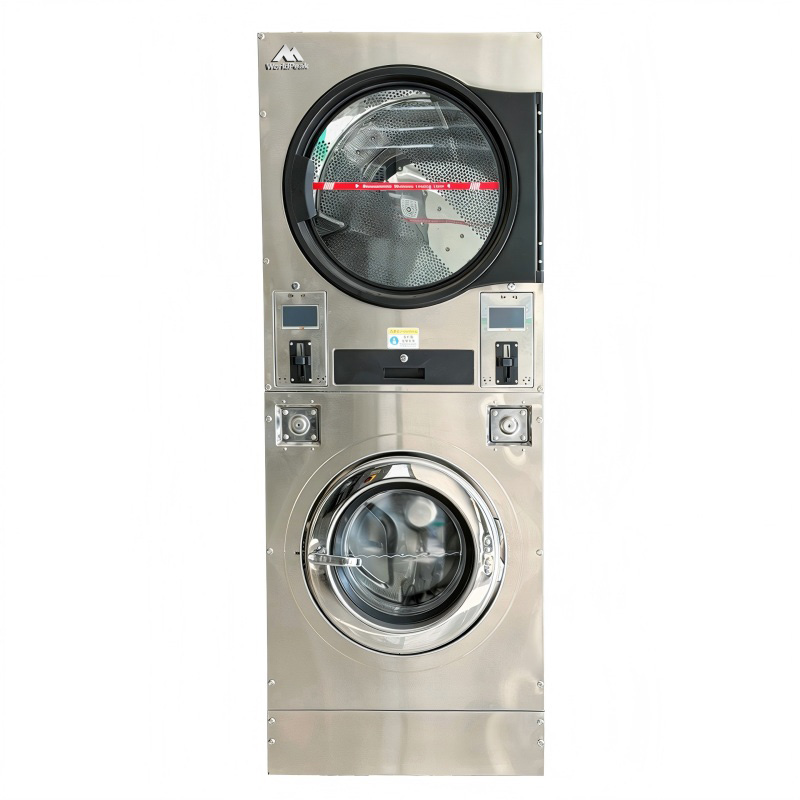
Many people assume that all washing machines perform essentially the same function, but industrial washing machines and household washing machines are designed for very different operating conditions. They differ in capacity, construction materials, durability, washing performance, power requirements, control systems, and intended applications. Household machines are designed for ordinary family laundry, while industrial machines are built for hotels, hospitals, factories, commercial laundries, and other facilities that process large volumes of textiles every day. Understanding these differences can help businesses choose the right type of laundry equipment and avoid using machines that are unsuitable for their actual workload.
- Industrial vs. Household Washing Machines: Main Differences
- Different Application Scenarios
- Construction Materials and Durability
- Washing Capacity and Processing Efficiency
- Washing and Extraction Performance
- Power Supply and Control Systems
- Purchase Price and Operating Cost
- How to Choose the Right Washing Machine
- Frequently Asked Questions
Industrial Washing Machine vs. Household Washing Machine: Main Differences
The main difference between a commercial industrial washing machine and a domestic washing machine is not simply physical size. Industrial machines are engineered for larger loads, more frequent operation, heavier textiles, and standardized commercial laundry processes.
Key differences include:
- Application environment
- Washing capacity
- Machine construction
- Operating frequency
- Extraction performance
- Programmable washing functions
- Utility requirements
- Service life and maintenance
- Purchase and operating costs
Different Application Scenarios
Application is one of the most fundamental differences between household and industrial washing machines.
Household Washing Machines
Household washing machines are designed primarily for family use. They typically process everyday clothing, towels, bed sheets, duvet covers, and other domestic textiles in relatively small quantities.
A household machine may operate only a few cycles per day and is generally designed for intermittent rather than continuous operation.
Industrial Washing Machines
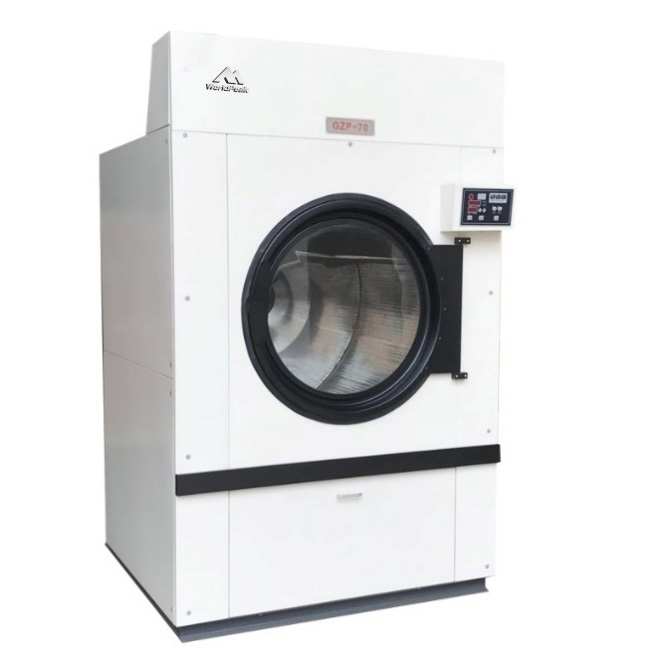
Industrial machines are designed for professional environments where large quantities of textiles must be washed repeatedly throughout the day.
Common applications include:
- Hotels and resorts
- Hospitals and healthcare facilities
- Commercial laundries
- Factories and workwear laundries
- Nursing homes
- Schools and universities
- Restaurants and catering facilities
These facilities may process bed linen, towels, uniforms, workwear, tablecloths, medical textiles, and other commercial fabrics for several hours or multiple shifts every day.
Construction Materials and Durability
Machine construction is another major difference between household and industrial laundry equipment.
Household Machine Construction
Household washing machines are designed to balance appearance, low weight, manufacturing cost, and normal domestic use. Depending on the model, they may use stainless steel drums together with lightweight steel, coated metal, or polymer exterior components.
This construction is appropriate for normal family operation but is generally not intended for prolonged commercial workloads.
Industrial Machine Construction
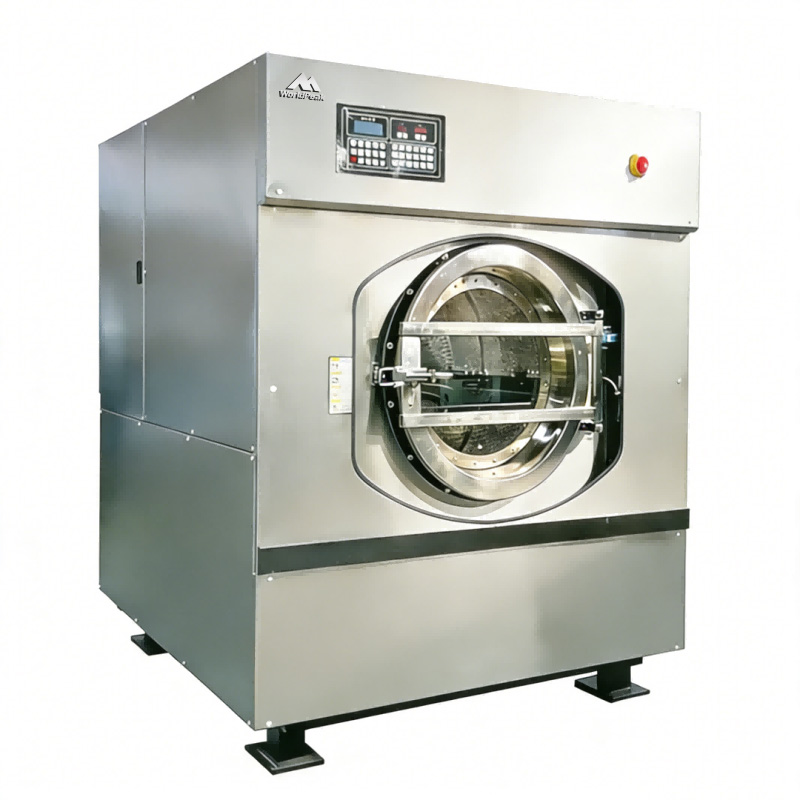
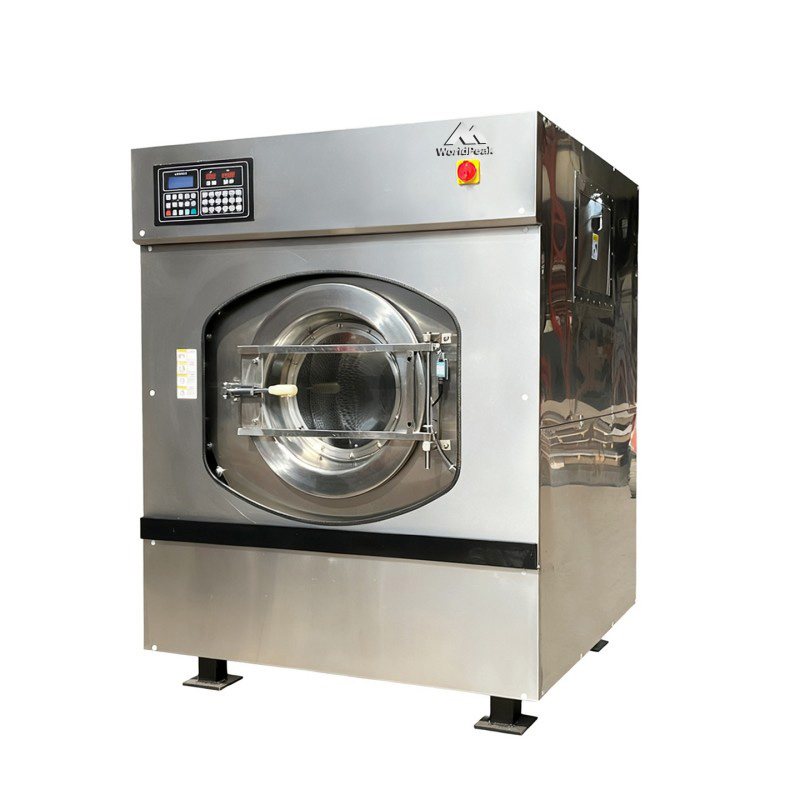
Industrial washer-extractors typically use more robust frames, heavy-duty drums, commercial-grade bearings, reinforced suspension systems, and stainless steel components in areas exposed to water and laundry chemicals.
Many commercial models use 304 stainless steel for key wet-contact components because of its corrosion resistance and suitability for repeated laundry operations.
Why Durability Matters
A commercial laundry machine may complete many cycles every day. The frame, bearings, motor, drum, door system, and suspension therefore need to withstand repeated loading, washing, and high-speed extraction.
Actual equipment life depends on machine quality, operating frequency, water quality, chemical usage, loading practices, installation, and preventive maintenance.
Washing Capacity and Processing Efficiency
Capacity is one of the easiest differences to identify when comparing industrial washing machines vs. household washing machines.
Household Washing Machine Capacity
Many domestic washing machines fall within a relatively small-capacity range suitable for family laundry loads. Typical capacities vary by market and manufacturer, but household machines are designed mainly for individual or family use.
Industrial Washing Machine Capacity
Industrial machines are available in much larger capacities. Common commercial sizes include:
- 15 kg
- 20 kg
- 30 kg
- 50 kg
- 70 kg
- 100 kg
- 120 kg and larger
Larger machines can process substantial quantities of linen in a single cycle, which makes them more suitable for centralized laundry operations.
Why Larger Capacity Improves Productivity
Commercial facilities need to process hundreds or thousands of textile items within limited operating hours. Larger drum capacity reduces the number of separate washing cycles required and can improve overall production efficiency when the equipment is properly loaded.
Washing and Extraction Performance
Household and industrial machines are also optimized for different washing performance requirements.
Household Washing Performance
Domestic machines place significant emphasis on gentle fabric care, convenience, low noise, and efficient use of water and electricity for everyday clothing.
Industrial Washing Performance
Industrial washer-extractors are designed to process larger and often more heavily soiled textile loads. Their programmable controls can adjust:
- Water temperature
- Washing time
- Water level
- Drum speed
- Rinse cycles
- Chemical dosing
- Extraction speed
This allows the laundry process to be adapted for hotel linen, towels, workwear, restaurant textiles, uniforms, and other commercial fabrics.
High-Speed Extraction
One important feature of industrial washer-extractors is high-speed water extraction. After washing and rinsing, the machine removes a significant amount of residual water from the textiles.
Lower residual moisture can shorten subsequent drying time and improve the efficiency of industrial tumble dryers.
Power Supply and Control Systems
Utility requirements and machine controls also differ between household and industrial equipment.
Household Electrical Supply
Domestic machines are designed for standard residential electrical systems. Exact voltage requirements vary by country and region.
Industrial Electrical Supply
Larger commercial washer-extractors may require three-phase industrial electrical supplies, especially when high-power motors or electric heating systems are used. Specific voltage and frequency requirements depend on the country, machine size, and manufacturer.
Programmable Commercial Controls
Industrial machines generally provide more detailed control over washing parameters. Depending on the model, users may store multiple custom programs for different fabrics and soil conditions.
Features can include:
- Programmable wash recipes
- Variable-frequency drum control
- Automatic water-level control
- Automatic chemical dosing connections
- Temperature programming
- Multiple extraction speeds
- Fault alarms and safety protection
Purchase Price and Operating Cost
There is also a substantial difference in initial investment between domestic and industrial machines.
Household Washing Machine Cost
Household washing machines are mass-produced for residential use and generally have a much lower purchase price than professional industrial machines.
Industrial Washing Machine Cost
Industrial machines can range from tens of thousands of RMB for smaller commercial washer-extractors to substantially higher prices for large-capacity machines, medical barrier washers, tunnel systems, and complete automated laundry production lines.
The price depends on:
- Machine capacity
- Stainless steel construction
- Motor and inverter configuration
- Extraction speed
- Heating method
- Automation level
- Special hygiene features
- Brand and after-sales service
Cost Per Kilogram of Laundry
Although industrial equipment requires a higher initial investment, it can process much larger quantities per cycle. For a high-volume commercial operation, the cost per kilogram or per textile item may therefore be more economical than attempting to use multiple household machines.
How to Choose Between an Industrial and Household Washing Machine
Choose a Household Washing Machine If:
- The machine is used primarily for family laundry
- Daily washing volume is relatively low
- The machine operates only a few cycles per day
- Large commercial linen loads are not involved
- Professional laundry processing is unnecessary
Choose an Industrial Washing Machine If:
- The facility processes large quantities of laundry every day
- The machine must operate for extended periods
- Hotel linen, workwear, restaurant linen, or institutional textiles are involved
- High extraction performance is required
- Programmable washing processes are needed
- The equipment is part of a professional laundry production line
Consider a Barrier Washer-Extractor If:
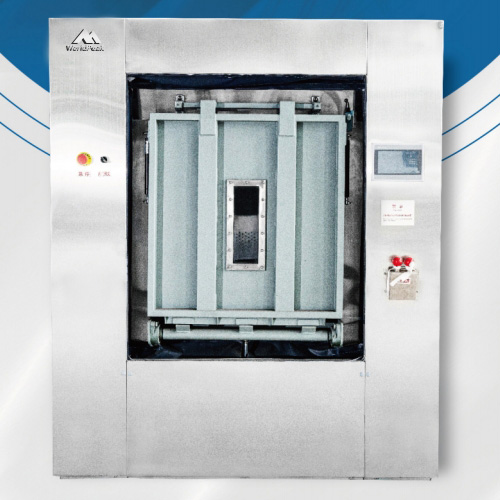
Healthcare facilities and medical laundries may require specialized barrier washer-extractors where soiled and clean areas must be physically separated. The exact equipment and laundry workflow should follow applicable healthcare hygiene and infection-control requirements.
Frequently Asked Questions About Industrial and Household Washing Machines
What is the main difference between an industrial washing machine and a household washing machine?
The main difference is the intended workload. Household washing machines are designed for relatively small domestic loads and intermittent use, while industrial washing machines are designed for larger loads, higher operating frequency, and commercial laundry applications.
Can a household washing machine be used in a hotel?
A household machine may handle very small occasional loads, but it is generally not designed for the continuous high-volume operation required by hotels. Commercial washer-extractors are usually more suitable for professional hotel laundry rooms.
Why are industrial washing machines more expensive?
Industrial machines generally use larger drums, stronger frames, heavy-duty motors, commercial-grade bearings, more advanced controls, and higher-capacity extraction systems. These features increase manufacturing cost but support more demanding operation.
What sizes are industrial washing machines available in?
Common industrial capacities include approximately 15 kg, 20 kg, 30 kg, 50 kg, and 100 kg, with larger models also available. The correct capacity depends on daily laundry volume and operating hours.
Do industrial washing machines require three-phase electricity?
Many larger industrial machines use three-phase electrical systems, but requirements vary by machine size, heating method, country, and manufacturer. Buyers should confirm the electrical specification before installation.
Can industrial washing machines wash normal clothing?
Yes. Industrial machines can process many types of clothing and textiles as long as the correct washing program, load level, temperature, and chemical settings are used.
Do industrial washing machines damage fabrics?
Properly configured commercial washer-extractors should not inherently damage fabrics. Textile wear depends on washing temperature, mechanical action, chemical dosage, extraction speed, loading practices, and fabric type. Appropriate programs help protect linen while maintaining cleaning performance.
Are industrial washing machines more energy-efficient?
Efficiency should be evaluated according to the amount of laundry processed rather than the total energy used by one cycle. Industrial machines consume more resources per cycle because they handle larger loads, but they can provide efficient processing on a per-kilogram basis when correctly sized and operated.
How long does an industrial washing machine last?
Service life varies significantly according to machine quality, daily operating hours, loading practices, water quality, maintenance, and component availability. Preventive maintenance is important for extending equipment life in commercial environments.
Conclusion
The difference between a household washing machine and an industrial washing machine goes far beyond size. Household machines are optimized for convenient, relatively light domestic use, while industrial washer-extractors are designed for larger loads, frequent operation, programmable commercial washing, and high-speed extraction.
Hotels, hospitals, factories, nursing homes, schools, and commercial laundries usually require industrial equipment because their daily laundry volume and operating intensity exceed the design conditions of typical household machines.
When choosing between the two, buyers should consider daily laundry volume, textile type, operating hours, required capacity, extraction performance, utility conditions, maintenance support, and total operating cost. Selecting equipment according to actual workload is the most reliable way to achieve efficient washing performance and stable long-term operation.