
Whether you operate a hotel laundry, hospital laundry room, professional linen service, or small commercial laundry, household washing machines are generally not designed to handle the high-volume and frequent workloads required for commercial textile processing. A properly planned commercial laundry equipment system helps improve washing efficiency, maintain consistent linen quality, reduce manual handling, and support reliable day-to-day operations. Understanding which machines are essential for different laundry applications is therefore one of the first steps when setting up or upgrading a professional laundry facility.
What Equipment Does a Commercial Laundry Need?
A complete commercial laundry equipment system can generally be divided into five categories: washing equipment, drying equipment, ironing and finishing equipment, specialty garment-care equipment, and application-specific machines.
The basic machines required by most laundries include a washer extractor, tumble dryer, and appropriate finishing equipment. Additional machines such as automatic feeders, folding machines, dry cleaning machines, or barrier washer extractors can then be selected according to business size, linen type, hygiene standards, and required production capacity.
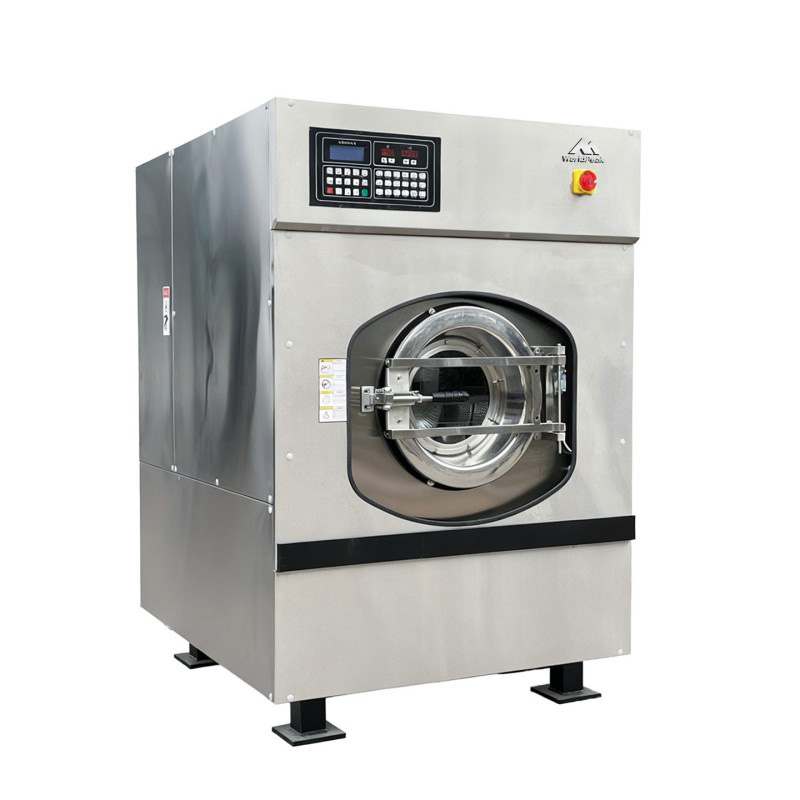
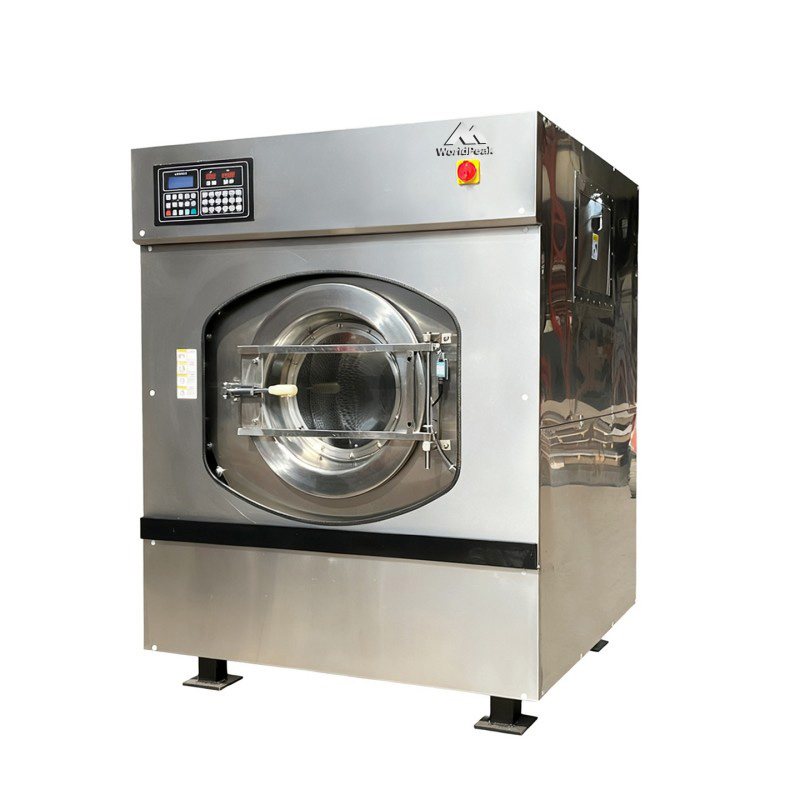
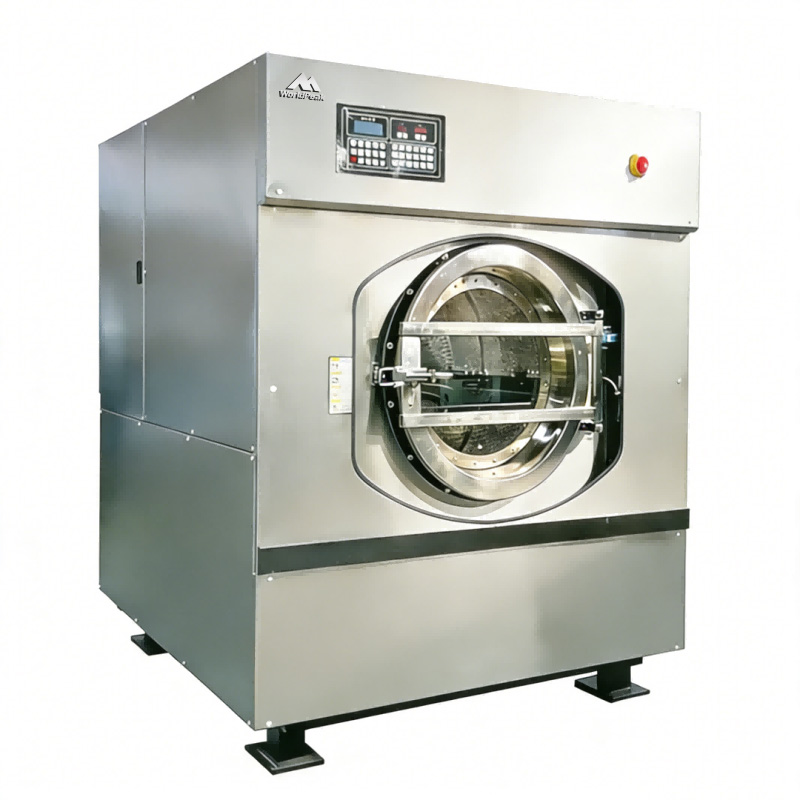
Industrial Washer Extractor: The Core Commercial Laundry Machine
An industrial washer extractor is the core machine in most commercial laundry facilities and the starting point of the laundry process. Unlike a household washing machine, it combines washing, rinsing, and high-speed extraction in a single piece of equipment.
Industrial washer extractors are designed for frequent operation and larger textile loads. Depending on the model, a single cycle can process substantial quantities of bed sheets, duvet covers, towels, uniforms, workwear, or other commercial textiles.
Why High-Speed Extraction Matters
After washing and rinsing, the washer extractor rotates at high speed to remove a significant amount of water from the textiles. Lower residual moisture can shorten subsequent drying time and improve the overall efficiency of the laundry process.
This also helps reduce unnecessary energy consumption in the drying stage, especially in facilities that process multiple batches of linen every day.
Common Washer Extractor Capacities
Commercial washer extractors are available in different capacities to suit various operating scales.
- Below 30 kg: suitable for small hotels, guesthouses, salons, and neighborhood laundries
- 50 kg: suitable for medium-sized hotels and small commercial linen-processing facilities
- 100 kg and above: suitable for large hotels, central laundries, and high-volume commercial laundry plants
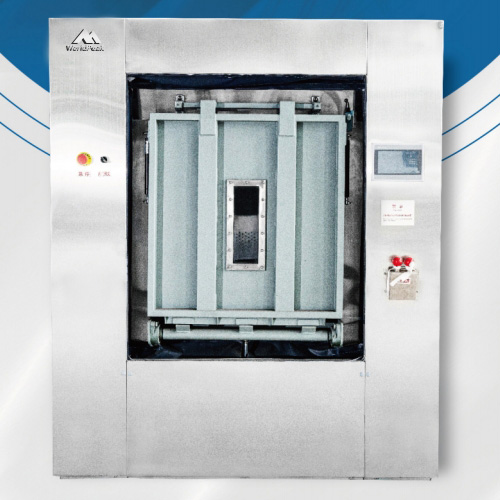
Hospital Barrier Washer Extractors
Hospital and healthcare laundries often require specialized equipment because contaminated and clean linen must be managed according to stricter hygiene procedures.
A medical barrier washer extractor normally features separate loading and unloading doors positioned on opposite sides of a physical partition. Contaminated linen enters from the soiled side, while washed linen is removed from the clean side.
This design helps reduce the risk of cross-contamination and supports the hygiene zoning requirements of medical laundry facilities.
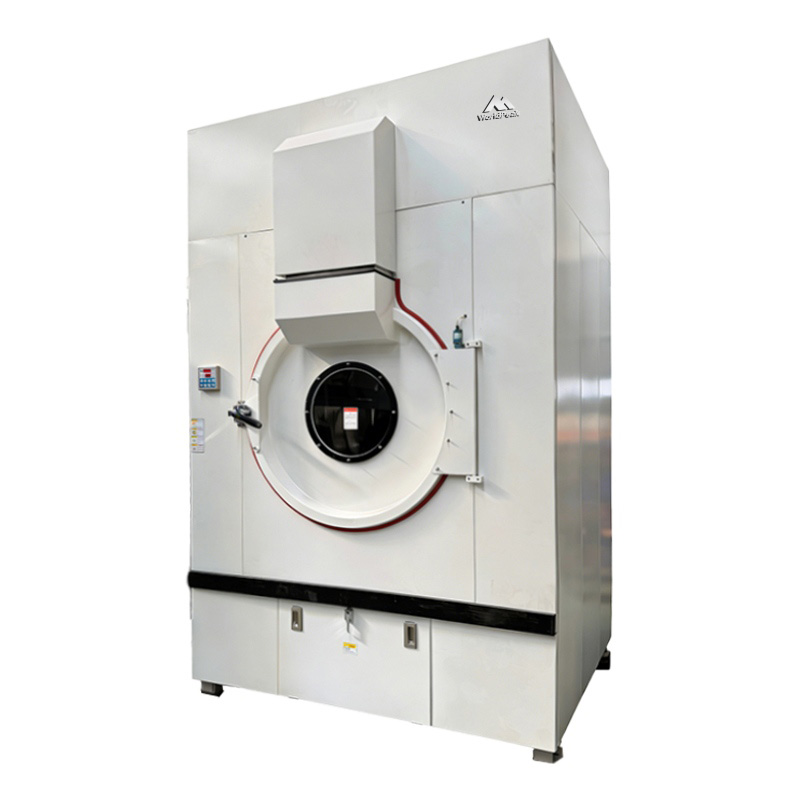
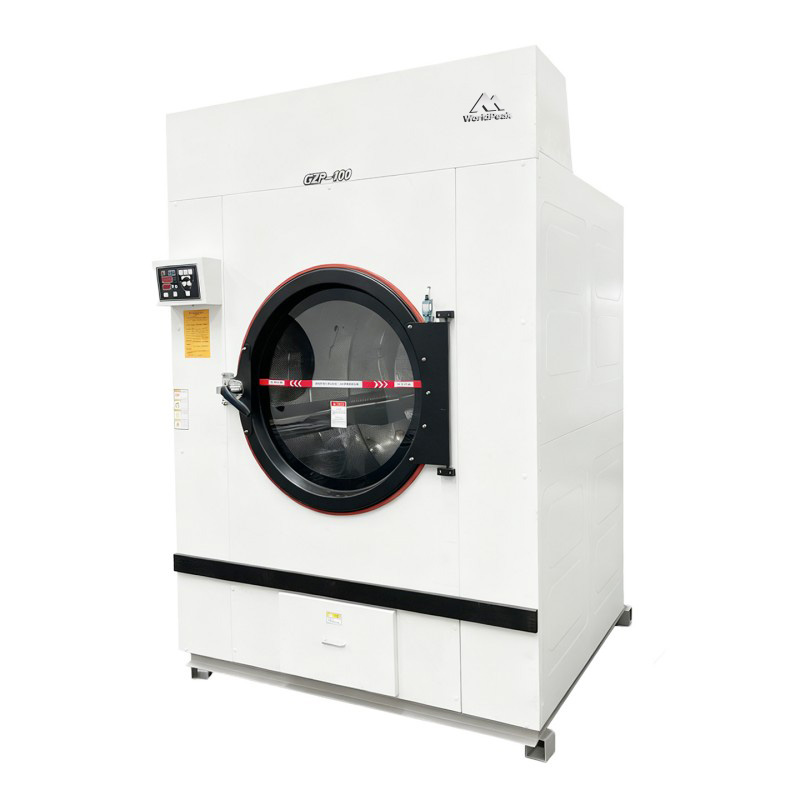
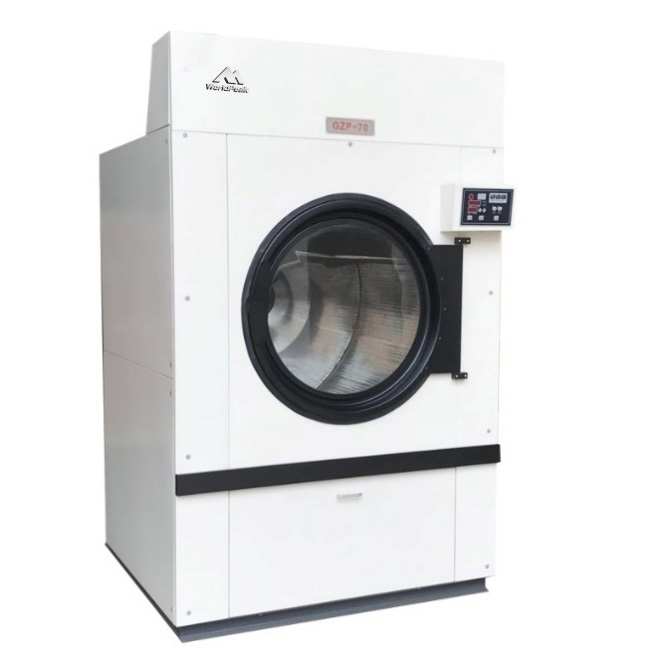
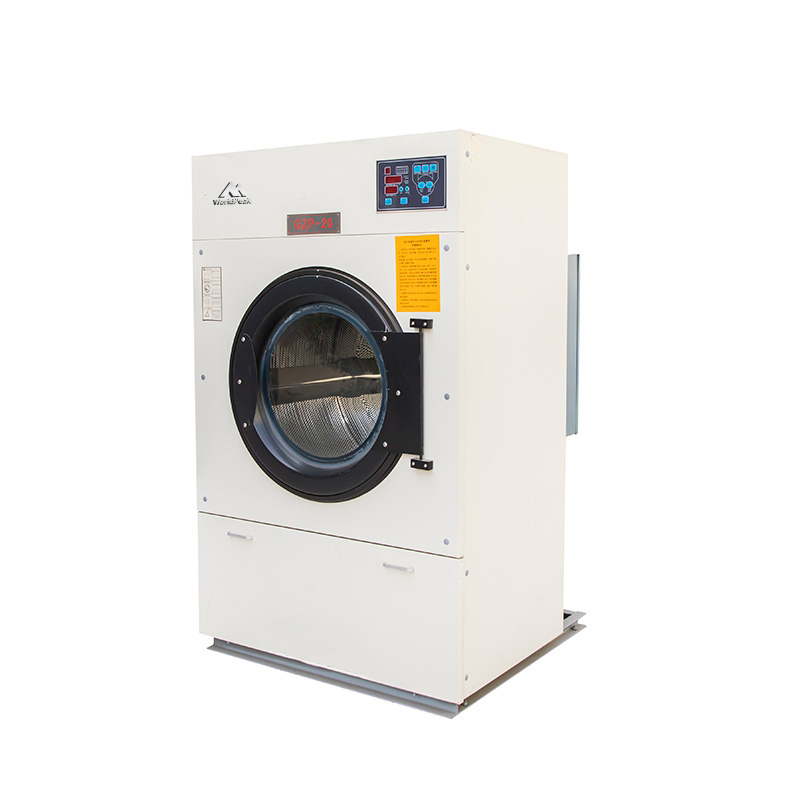
Commercial Tumble Dryer: Essential for Efficient Linen Drying
After washing and extraction, a commercial tumble dryer is used to remove the remaining moisture from towels, uniforms, sheets, and other textiles.
Industrial tumble dryers are designed for larger loads and more frequent operation than household dryers. Modern commercial models typically provide adjustable drying temperatures and cycle times so that different fabrics can be processed under appropriate conditions.
Why Commercial Laundries Need a Dryer
Relying entirely on natural air drying can require large amounts of floor space and makes laundry operations dependent on weather conditions. During humid or rainy periods, drying times can increase significantly, and improperly dried textiles may develop unpleasant odors or mildew.
A commercial tumble dryer provides a more predictable drying process and helps maintain a stable production schedule throughout the year.
Choosing Dryer Capacity
Small laundry operations may use compact dryers for towels, salon linen, and other lightweight textile loads. Medium-sized and large laundries commonly use 50 kg or 100 kg industrial dryers to match their washer extractor capacity.
Dryer capacity should be selected as part of the overall production system so that wet linen does not accumulate between the washing and drying stages.
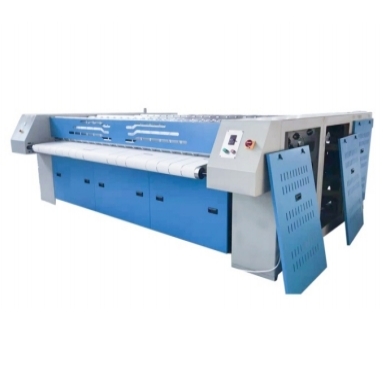
Ironing and Finishing Equipment
For hotels, hospitals, and professional linen laundries, clean linen often requires additional finishing before it can be returned to use. Sheets, duvet covers, pillowcases, tablecloths, and similar flatwork need to be pressed, smoothed, folded, and organized.
Common commercial laundry finishing equipment includes:
- Flatwork ironers
- Automatic linen feeders
- Automatic folding machines
- Utility pressing tables
- Stacking and collection equipment
Flatwork Ironer
A flatwork ironer is used to press and smooth large flat textiles such as bed sheets, duvet covers, pillowcases, and table linen.
Compared with manual ironing, a flatwork ironer provides continuous processing and is much more suitable for commercial environments where large quantities of linen must be finished every day.
Single-roll ironers are often suitable for small and medium laundry facilities, while multi-roll flatwork ironers are designed for higher-capacity operations.
Automatic Linen Feeder
An automatic feeder helps spread and guide flat linen into the ironer. This reduces repetitive manual positioning and supports a more stable production speed.
Automatic Folding Machine
An automatic linen folding machine can fold sheets, pillowcases, and other flatwork according to preset programs. Depending on the model, it may also support counting, stacking, and classification.
Medium-sized and large commercial laundries often combine a feeder, flatwork ironer, and folding machine into a complete finishing line.
Utility Pressing Table
For uniforms, jackets, guest garments, and other shaped clothing, a utility pressing table can be added to provide more precise finishing than flatwork equipment.
Dry Cleaning Equipment for Delicate Garments
Hotels, garment-care shops, and professional laundry businesses that process premium clothing may also require commercial dry cleaning equipment.
Certain garments made from wool, silk, cashmere, and other delicate materials may not be suitable for conventional water washing. Dry cleaning machines are designed to process these items using specialized solvents and controlled cleaning cycles.
Typical dry cleaning applications include:
- Hotel guest garments
- Suits and formalwear
- Wool uniforms
- Premium coats and outerwear
- Delicate curtains
- Silk and cashmere garments
Modern fully enclosed dry cleaning machines are designed to recover and recycle much of the solvent used during operation, helping improve process control and reduce unnecessary solvent loss.
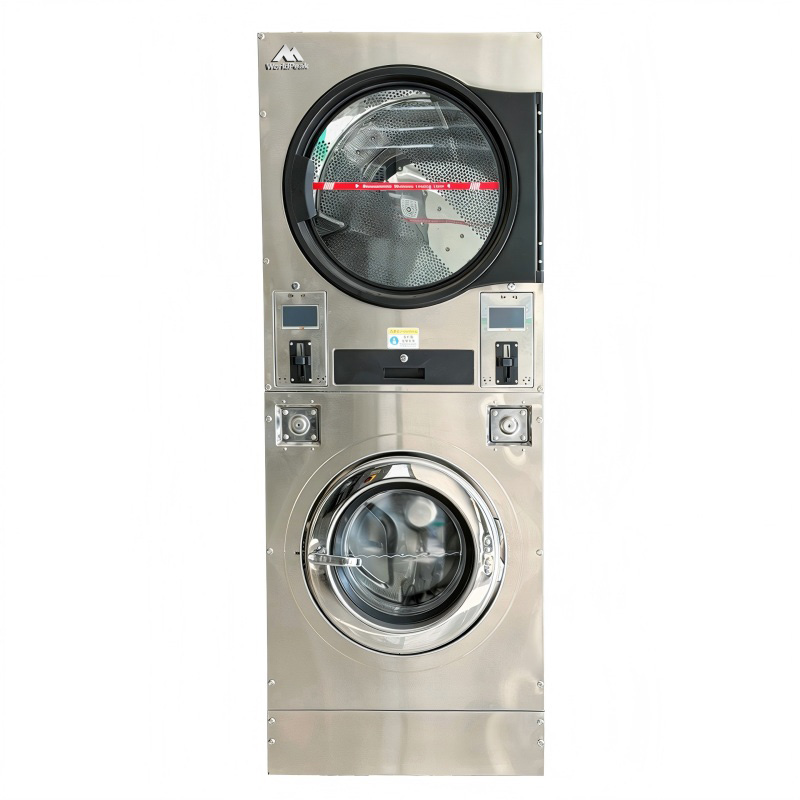
Self-Service Laundry Equipment
Universities, apartment buildings, dormitories, residential communities, and self-service laundromats often have different operating requirements from hotels or centralized commercial laundries.
In these environments, coin-operated or payment-enabled washer dryers can provide a practical solution. Depending on the model, machines may integrate washing, extraction, and drying in a compact configuration.
Customers can operate the machines independently using coins, cards, mobile payment systems, or other supported payment methods. This makes self-service laundry equipment suitable for locations that require extended operating hours with limited staffing.
Commercial Laundry Equipment Configurations by Business Type
The correct laundry equipment configuration depends on the type of business, daily laundry volume, linen categories, required hygiene standards, and available workspace.
Small Hotel or Guesthouse
A small hotel or guesthouse with limited daily linen volume may only require a basic equipment combination:
- 1 industrial washer extractor
- 1 commercial tumble dryer
- 1 single-roll flatwork ironer
This basic system can handle routine washing, drying, and ironing of hotel linen without requiring a large production line.
Large or Star-Rated Hotel
A larger hotel with substantial daily linen turnover may require:
- Multiple washer extractors
- Multiple industrial tumble dryers
- Automatic linen feeder
- Multi-roll flatwork ironer
- Automatic folding machine
- Optional dry cleaning equipment
- Utility pressing equipment
The aim is to balance each production stage so that washing, drying, ironing, and folding capacities are appropriately matched.
Hospital Laundry
A hospital laundry typically requires equipment designed around hygiene zoning and contamination control.
A typical configuration may include:
- Medical barrier washer extractors
- Industrial tumble dryers
- Flatwork ironers
- Automatic folding equipment
- Linen sorting and transportation equipment
The complete laundry layout should comply with applicable local healthcare laundry and infection-control requirements.
Large Commercial Laundry
A large laundry processing linen for hotels, hospitals, restaurants, factories, or external customers generally requires higher-capacity and more automated equipment.
A typical system may include:
- Multiple 50 kg or 100 kg washer extractors
- Multiple high-capacity tumble dryers
- Automatic chemical dosing system
- Linen feeders
- Multi-roll flatwork ironers
- Automatic folding and stacking machines
- Sorting and transportation equipment
For very high production volumes, tunnel washing systems and automated linen-handling equipment may also be considered.
How to Choose Commercial Laundry Equipment
When purchasing commercial laundry machines, businesses should avoid selecting equipment based only on individual machine capacity or purchase price. The entire laundry process should be planned as one production system.
1. Calculate Daily Laundry Volume
Estimate the total weight of linen that must be processed each day. This provides the basis for determining washer extractor, dryer, ironing, and folding capacity.
2. Identify the Main Textile Types
Hotels primarily process sheets and towels, hospitals handle medical linen, factories wash workwear, and professional laundries may handle several textile categories. Equipment and washing programs should match the fabrics being processed.
3. Match Equipment Capacities
A large washer combined with an undersized dryer can create a production bottleneck. Washing, drying, ironing, and folding capacities should therefore be planned together.
4. Consider Available Space
Machine footprints, loading areas, maintenance access, ventilation, drainage, utility connections, and linen transportation routes should all be considered during laundry room design.
5. Evaluate Hygiene Requirements
Healthcare and other hygiene-sensitive facilities may require barrier washing systems and physical separation between contaminated and clean textile areas.
6. Plan for Future Expansion
If the business expects laundry volume to increase, sufficient floor space, electrical capacity, water supply, steam or gas capacity, and drainage should be reserved for additional equipment.
Frequently Asked Questions About Commercial Laundry Equipment
What are the three most important machines for a commercial laundry?
For many small hotel and commercial laundry applications, the three basic machines are an industrial washer extractor, a commercial tumble dryer, and a flatwork ironer. Additional equipment depends on textile type and production volume.
What is the difference between a washer extractor and a household washing machine?
A washer extractor is designed for larger loads, frequent commercial operation, programmable washing processes, and high-speed extraction. Household washing machines are generally intended for intermittent domestic use.
What size commercial washer extractor do I need?
The correct capacity depends on daily laundry volume and the number of washing cycles available. Common commercial capacities include 20 kg, 30 kg, 50 kg, and 100 kg.
Do I need a commercial dryer if I already have a washer extractor?
In most professional laundry facilities, a dryer is recommended because it provides predictable drying times, reduces reliance on weather conditions, and helps maintain a continuous production process.
Do hotels need automatic folding machines?
Small hotels may fold linen manually, while larger hotels and professional laundries processing large quantities of flatwork can benefit from automatic folding equipment.
What laundry machine should hospitals use?
Hospitals commonly use medical barrier washer extractors when physical separation between contaminated and clean linen is required. Equipment selection and laundry room layout should follow applicable local healthcare hygiene standards.
Conclusion
A successful commercial laundry equipment setup is not based on purchasing as many machines as possible, but on selecting the right combination of equipment for the actual production requirements.
Small hotels may only need a washer extractor, dryer, and flatwork ironer, while large hotels and commercial laundries may require feeders, automatic folders, multiple high-capacity machines, and additional finishing equipment. Hospitals require specialized hygiene-oriented solutions such as barrier washer extractors, while self-service laundries may use compact washer dryer systems.
By considering daily laundry volume, textile type, hygiene requirements, available space, equipment capacity, utility conditions, and future expansion, operators can build a commercial laundry system that provides stable production, consistent linen quality, and efficient long-term operation.