
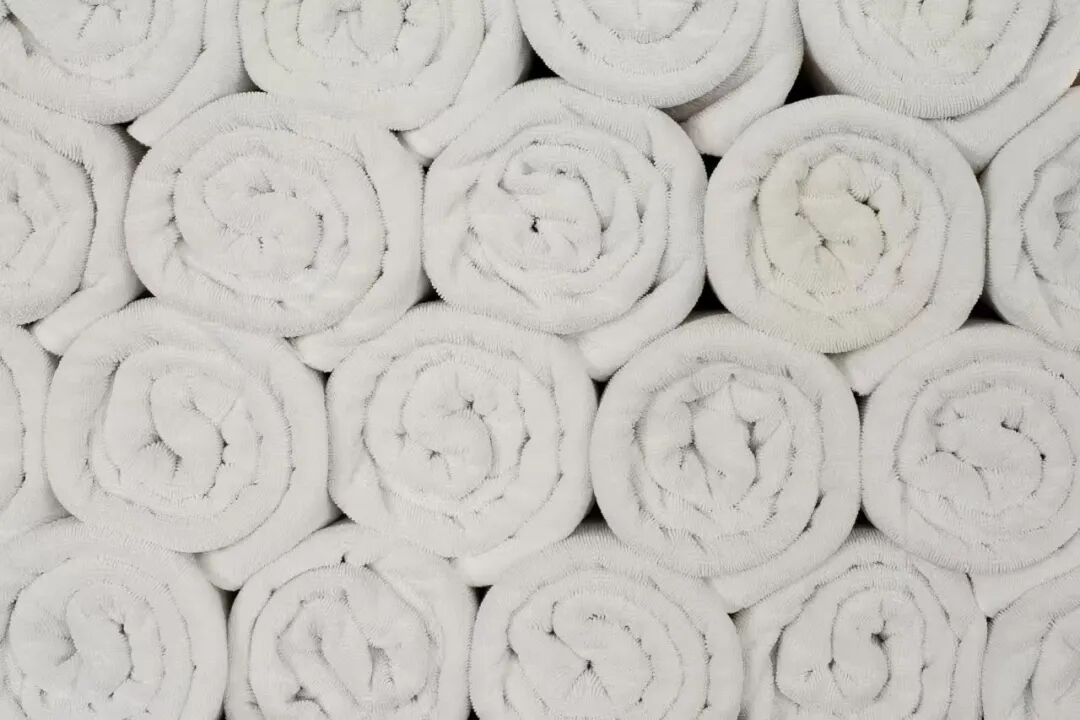
Hospital laundry rooms are primarily responsible for the washing, ironing, finishing, and replacement of healthcare textiles (reusable textiles used in hospitals and other healthcare institutions, including patient gowns, bed sheets, duvet covers, surgical drapes, medical staff uniforms, and other items). Although the laundry room does not come into direct contact with patients, the quality of textile processing directly affects hospital infection control, medical safety, and reputation.
- Major Components of a Hospital Laundry Room
- Washing and Processing Area
- Auxiliary Rooms
- Independent Clean Processing Area for Operating-Room Textiles
- Major Equipment in a Hospital Laundry Room
- Washing and Extraction Machine (Washer-Extractor)
- Barrier Washer-Extractor
- Continuous Batch Washer / Tunnel Washer System
- Tumble Dryer
- Garment Tunnel Finisher
- Flatwork Ironer
- Flatwork Folding Machine
- Garment Folding Machine
- Ironing Table
- Air Compressor
- Water Softening Equipment
- New Automated Laundry Systems
The laundry room is an important department within a hospital, and its normal operation depends on close cooperation with other departments. In daily operations, laundry staff need to communicate regularly with wards and clinical departments to determine collection and delivery schedules for linen and workwear. Poor washing quality or delayed linen delivery must not interfere with the normal operation of the hospital.
At certain stages and within appropriate conditions, outsourcing healthcare textile processing can be one way to address the high costs, low efficiency, and inconsistent quality of hospital logistics operations. Therefore, over the past decade, as hospitals have increasingly outsourced non-clinical support services, some hospitals have chosen to outsource their laundry operations to commercial laundry plants. However, due to concerns about hygiene assurance and infection control, many hospitals still maintain their own laundry facilities to provide reliable in-house healthcare textile processing services.
Although more hospitals are currently outsourcing their laundry operations, it should also be recognized that the washing quality provided by some commercial laundry plants has not always met hospital requirements. Problems may exist in washing procedures, washing quality, disinfection, sterilization, and other areas. This is one of the reasons why some hospitals continue to maintain their own laundry rooms, while some newly built or expanded hospitals still choose to establish in-house laundry facilities.
Regardless of which operating model is adopted, healthcare textile processing remains an essential part of hospital logistics support. In particular, non-standardized operating practices caused by intense competition among commercial laundry plants should receive serious attention from hospital management.
Major Components of a Hospital Laundry Room
Washing and Processing Area
This area accommodates the main industrial laundry equipment and is used for washing, extraction, drying, ironing, folding, stacking, packing, and other textile-processing operations.
Auxiliary Rooms
Auxiliary facilities may include offices, staff facilities (toilets, changing rooms, shower rooms, etc.), storage rooms (for textiles and laundry consumables), maintenance rooms, boiler rooms, water-treatment rooms, electrical distribution rooms, temporary medical-waste storage areas, and centralized medical compressed-air supply facilities. Some of these facilities, such as shower rooms, boiler rooms, and water-treatment rooms, may be shared with other hospital departments.
Independent Clean Processing Area for Operating-Room Textiles
This area is used for the cleaning, disinfection, drying, inspection, folding, packaging, sterilization, storage, and distribution of surgical gowns, surgical drapes, and similar products (infection-control textile devices that provide liquid resistance, bacterial barrier performance, breathability, wearability, foldability, and two-way protection in accordance with the classification requirements for surgical medical devices; ordinary medical textiles are excluded). The facility should have a building area of no less than 2,000m². Major equipment includes containers for sorting and collecting contaminated textiles, needle detectors, barcode scanning equipment; mechanical washing and disinfection equipment: barrier washer-extractors [either individual machines or continuous batch washer/tunnel washer systems depending on processing volume], automatic chemical dosing systems, and cleaning and disinfection equipment for carts and transport containers; drying equipment: clean tumble dryers equipped with air-filtration systems and garment tunnel finishers; inspection, folding, and packaging equipment: three-dimensional illuminated inspection machines for surgical gowns, illuminated inspection tables for surgical drapes and dressings, automatic surgical-gown folding machines, packing tables, traceability systems, bundling machines, sealing machines, and transport equipment; sterilization equipment: steam sterilizers, clean-steam generators, and other basic sterilization equipment; storage and distribution facilities: sterile-item storage facilities, clean enclosed transport carts, and related handling equipment.
Major Equipment in a Hospital Laundry Room
The major equipment used in a hospital laundry room includes washer-extractors (or barrier washer-extractors or continuous batch washer systems), tumble dryers, garment tunnel finishers, flatwork ironers, folding machines, garment folding machines, air compressors, and water-softening equipment. Auxiliary equipment may include garment finishing machines, ironing tables, and dry-cleaning machines, although these are not always standard equipment. The following sections introduce several commonly used types of hospital laundry equipment.
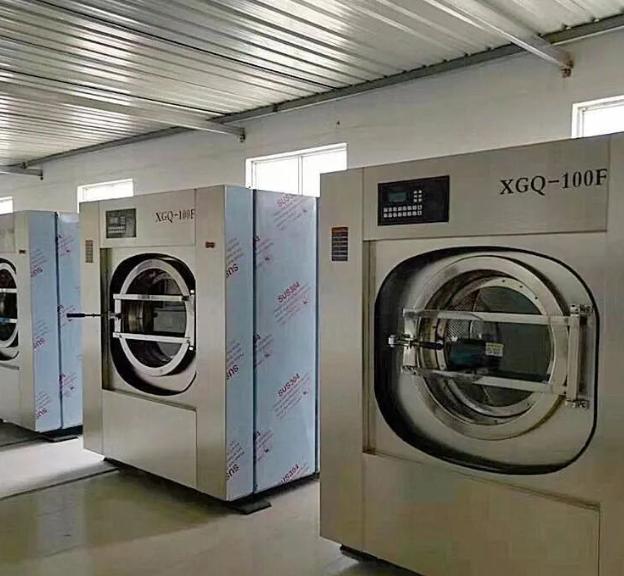
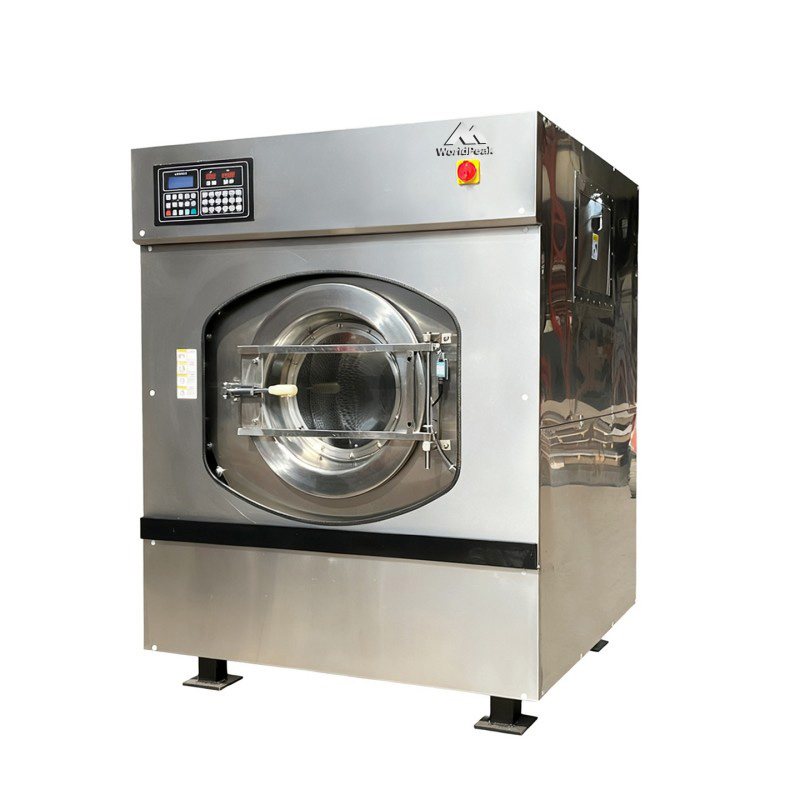
Washing and Extraction Machine (Washer-Extractor)
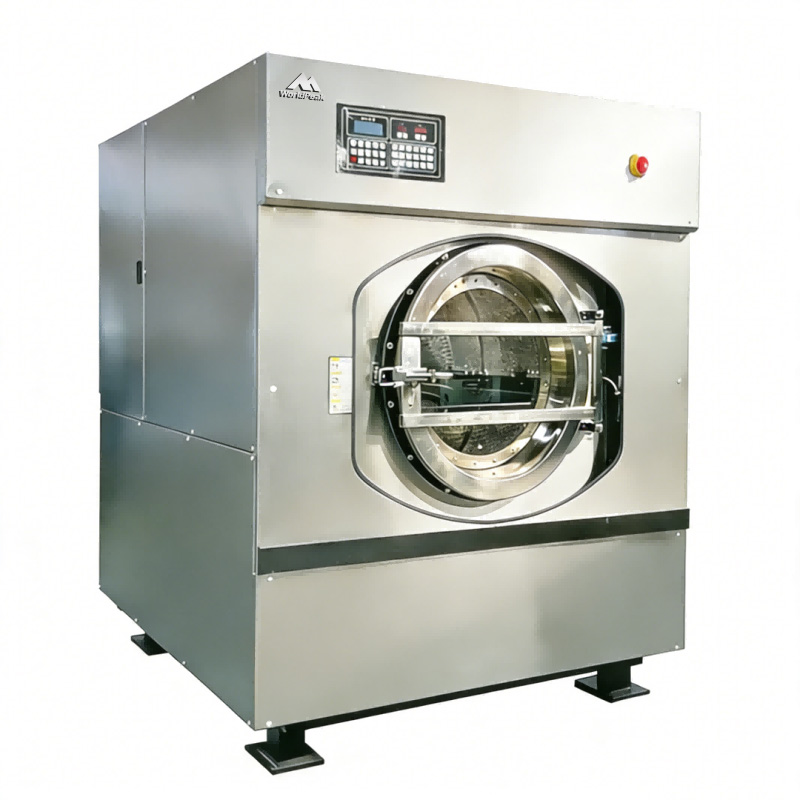
Textiles are cleaned by tumbling and rubbing against one another inside a rotating drum containing water, detergent, and controlled-temperature wash liquor. After washing, the textiles are rinsed with clean water and finally extracted at high speed. Washer-extractor capacity is rated according to the dry weight of textiles processed per load. A complete wash cycle generally takes approximately 50–70min. From the perspective of energy and water conservation, washer-extractors with high extraction force (300G or even 400G) and dual-drain systems should generally be given priority. For facilities with high processing volumes, an automatic unloading function should also be considered. The typical service life of a washer-extractor is approximately 15–20 years (based on 8h of operation per day).
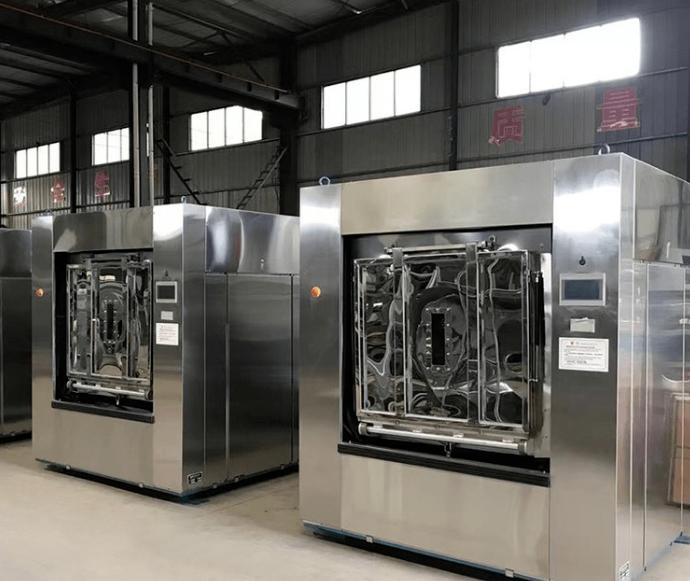
Barrier Washer-Extractor
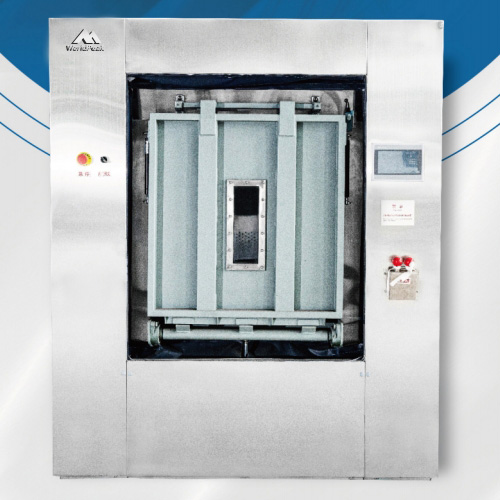
The basic concept of a barrier washer-extractor is to divide the laundry room into two completely separate operating zones: a soiled side and a clean side. Contaminated textiles are loaded through the machine door on the soiled side. After the washing process is completed, the clean textiles are unloaded through a separate door on the clean side. This design helps prevent cross-contamination caused by loading and unloading textiles in the same area and prevents airborne dust from the soiled area from entering the clean area. It is therefore an ideal solution for hospital laundry facilities. When selecting a barrier washer-extractor, high extraction force and a dual-drain system should also be considered. The typical service life of a barrier washer-extractor is approximately 15–20 years (based on 8h of operation per day).
Continuous Batch Washer / Tunnel Washer System
A continuous batch washer, also known as a tunnel washer system, is widely used for high-volume linen processing. Tunnel washer systems offer significant advantages in terms of energy efficiency, water conservation, and production capacity. A typical system consists of a weighing and loading unit, the main tunnel washer, a press extractor (or centrifugal extractor), a shuttle conveyor, and several tumble dryers. Where conditions permit, an overhead bag weighing and loading system may also be installed. The choice between a press extractor and a centrifugal extractor should be based on actual production requirements. When selecting a tunnel washer system, important considerations include whether textiles are transferred through an upper or lower transfer system (upper transfer can reduce color migration and allows a larger compartment diameter), whether the washing compartment diameter is sufficiently large (which also affects mechanical action), whether the tunnel compartments leak, whether textile transfer between compartments is smooth and free from blockage, whether dryer capacity matches the rate at which compressed linen cakes are discharged from the tunnel washer, and whether major components of the press extractor, such as columns and water membranes, are reliable. Particular attention should also be paid to spare-parts availability and service response time because a failure of the tunnel washer system can seriously disrupt the entire laundry production process. The typical service life of a tunnel washer is approximately 20 years, while the typical service life of a press extractor is approximately 15 years (based on 8h of operation per day).
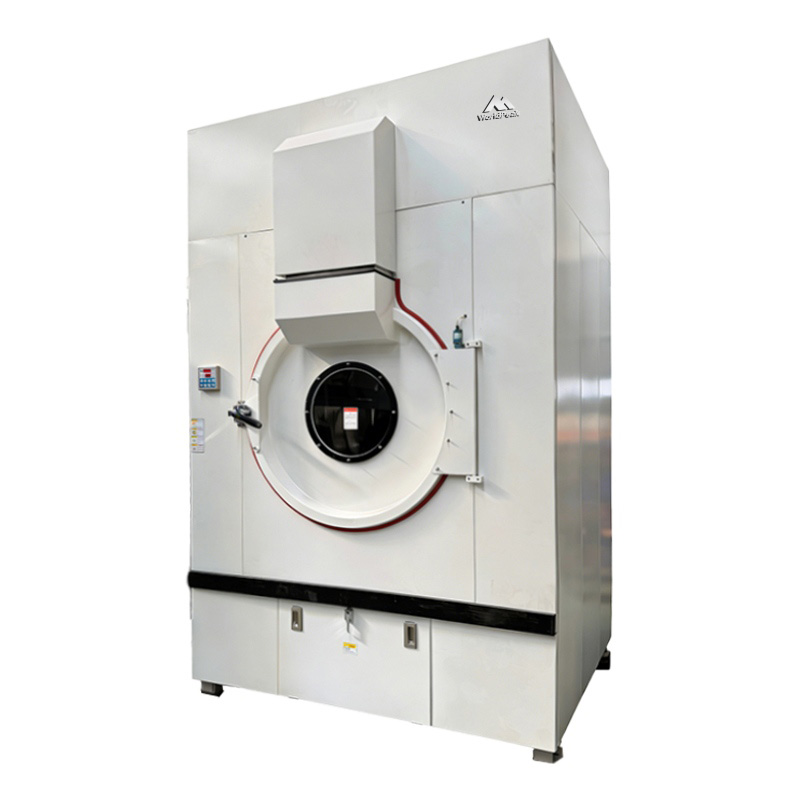
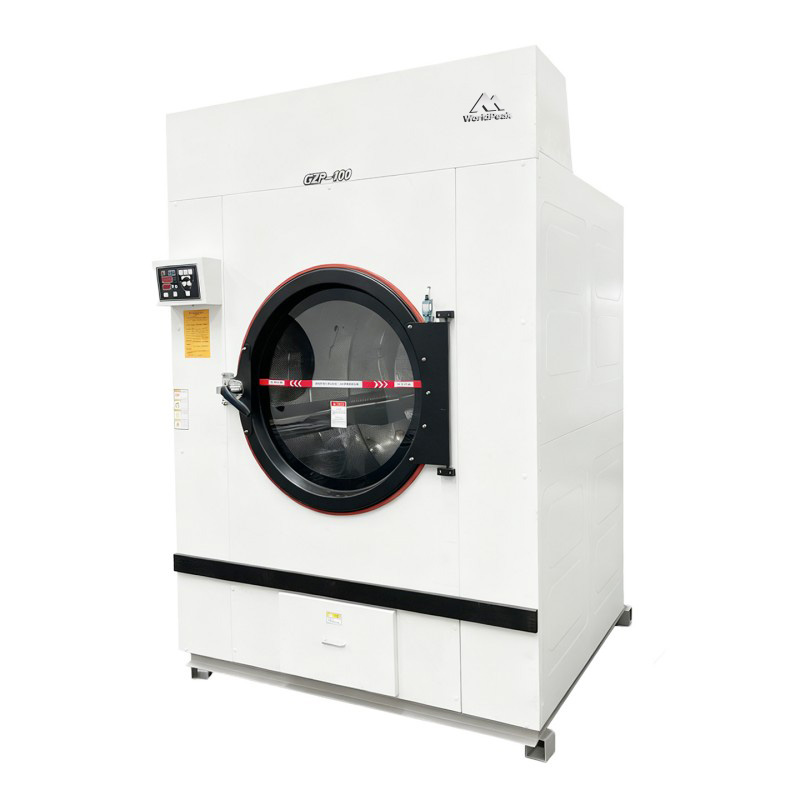
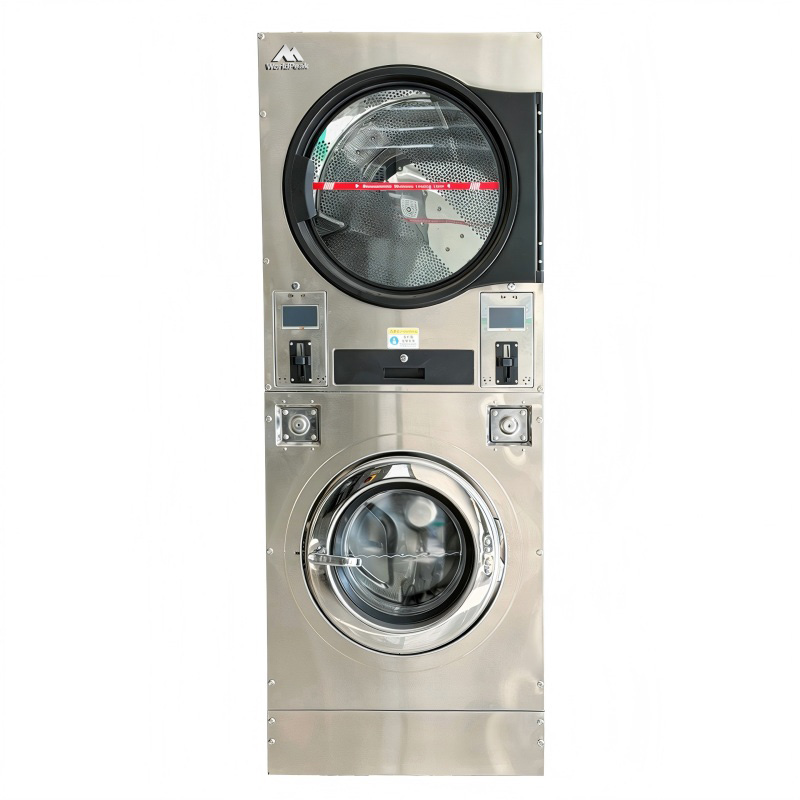
Tumble Dryer
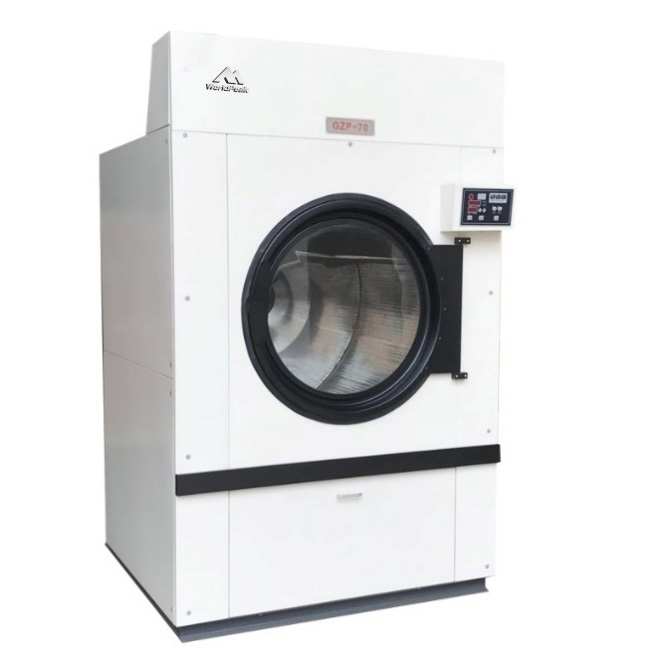
The function of a tumble dryer is to further reduce the moisture content of washed textiles until they reach the required level of dryness. During operation, hot air passes through the rotating drum while the textiles continuously tumble, allowing moisture to evaporate. Tumble dryers are mainly used for drying workwear, operating-room textiles, towels, and other items. When selecting a tumble dryer, the main considerations are drying speed and energy efficiency. Models equipped with moisture sensors are generally preferable. The typical service life of a tumble dryer is approximately 10–15 years (based on 8h of operation per day).
Garment Tunnel Finisher
The full name is a tunnel-type garment finishing and drying machine. Operators only need to place extracted garments individually onto the overhead conveying system. The garments then enter the tunnel finisher, where high-temperature steam and heated airflow act on the fabric to remove wrinkles, reshape the garments, and complete the drying process before they move to the next production stage. Garments may then be automatically folded or manually transferred for folding. Garment tunnel finishers are particularly efficient and economical when processing polyester-cotton garments such as hospital white coats, nurses' uniforms, and patient gowns. When selecting a garment tunnel finisher, consideration should be given to whether its processing capacity is sufficient, its garment drying and finishing speed, and whether it is equipped with an energy-recovery system. The typical service life of a garment tunnel finisher is approximately 15 years (based on 8h of operation per day).
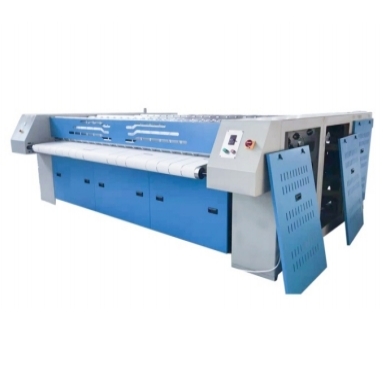
Flatwork Ironer
Flatwork ironers are mainly used for ironing and drying flat textiles such as bed sheets, duvet covers, and pillowcases. Flatwork ironers are generally divided into chest-type ironers and roller-type ironers. A chest-type ironer uses a heated ironing chest to finish the linen. Pressure is applied between the ironing roll and the heated chest, and the rotating roll pulls the linen forward while pressing and ironing it. This type of machine offers high processing speed and produces very smooth finished linen. A roller-type ironer uses pressure belts and guide belts to move linen over the surface of heated rollers, thereby drying and smoothing the fabric. The main advantages of chest-type ironers are excellent finishing quality and high production speed. Their disadvantages are higher steam-pressure requirements, generally above 8kg, and relatively high purchase prices. Roller-type ironers have a simpler structure and lower purchase price and require lower steam quality, generally operating at approximately 3–4kg of steam pressure. Their disadvantages are lower finishing quality and slower processing speed. This is one reason why roller-type ironers have been designed with increasing numbers of rollers in recent years, with some models incorporating as many as six rollers. However, additional rollers naturally require more energy. When selecting a flatwork ironer, the main considerations include available steam pressure, required finishing quality, and production volume. The typical service life of a flatwork ironer is approximately 15–20 years (based on 8h of operation per day).
Flatwork Folding Machine
After flat textiles have been ironed, they need to be folded and stacked for transportation and storage. Folding machines are normally installed directly after the flatwork ironer. When selecting a flatwork folding machine, the primary considerations are folding speed and operational stability. For machines used to fold duvet covers, buyers should also consider whether the machine uses a full-knife folding system and whether it is equipped with photoelectric sensors capable of detecting and rejecting inadequately washed or damaged linen. The typical service life of a folding machine is approximately 7–12 years (based on 8h of operation per day).
Garment Folding Machine
Garment folding machines are used to fold clothing such as white coats, nurses' uniforms, and patient gowns and are generally used together with garment tunnel finishers. Garment folding machines can be divided into manually fed folding machines and fully automatic folding machines. Manually fed folding machines are relatively affordable, while fully automatic systems are considerably more expensive. Both types can significantly improve labor productivity. When selecting a garment folding machine, the main considerations are folding speed, operating stability, and the overall volume of garment processing. The typical service life of a garment folding machine is approximately 7–12 years (based on 8h of operation per day).
Ironing Table
Ironing tables are used for garment finishing. When selecting an ironing table, models equipped with both vacuum suction and blowing functions are recommended. The typical service life of an ironing table is approximately 6–8 years (based on 8h of operation per day).
Air Compressor
An air compressor provides compressed-air power for pneumatic components used in washer-extractors, tunnel washer systems, press extractors, tilting tumble dryers, feeding and spreading machines, garment conveyor systems, garment tunnel finishers, pressing machines, folding machines, and other equipment. When selecting an air compressor, consideration should be given to installing a refrigerated compressed-air dryer. The lower the moisture content of the compressed air, the more precise and reliable the pneumatic control system will be. The typical service life of an air compressor is approximately 10–12 years (based on 8h of operation per day).
Water Softening Equipment
Water quality is an essential factor in ensuring good washing results. General water supplies may contain relatively high levels of calcium and magnesium ions, resulting in hard water. Hard water reduces detergent effectiveness and can negatively affect the whiteness and hand feel of processed linen. Therefore, water should be softened to reduce hardness to below 75ppm. Water-softening equipment should be selected according to the facility's daily washing-water demand so that the soft-water production capacity matches actual laundry consumption. The typical service life of water-softening equipment is approximately 10–15 years (based on 8h of operation per day).
New Automated Laundry Systems
(1) Integrated Laundry System. An integrated laundry system is based on a high level of automation, including automatic loading, automatic conveying, and automatic unloading. After operators have sorted the soiled linen, the conveying system automatically weighs the linen and transfers it to the washer-extractor (which may be either a conventional washer-extractor or a barrier washer-extractor). After washing is completed, the linen is automatically unloaded and transferred by a shuttle conveyor to the appropriate tumble dryer. After the linen has been fully or partially dried, the dryer automatically unloads it onto a conveyor that transports it to the appropriate towel folder or to the corresponding flatwork ironing and folding line for sheets, duvet covers, and other flat linen. Almost no manual handling is required during the entire process. This not only helps maintain hygiene requirements throughout the laundry process but also reduces dependence on manual labor, saves substantial labor costs, and increases overall production efficiency.
(2) Automatic Feeding and Spreading System. With the increasing adoption of tunnel washer systems, rising energy prices, and growing difficulties in recruiting labor, automatic feeding and spreading systems have become increasingly important. Tunnel washers and integrated laundry systems have addressed problems at the front end of the process, such as slow washing, high labor intensity, and excessive staffing requirements. However, this has created a new bottleneck at the finishing end, where ironing and folding capacity may not be able to keep up with front-end washing capacity. Automatic feeding and spreading systems can rapidly feed and spread flat linen into high-efficiency flatwork ironers, helping the entire production line operate more smoothly and significantly improving overall laundry productivity.